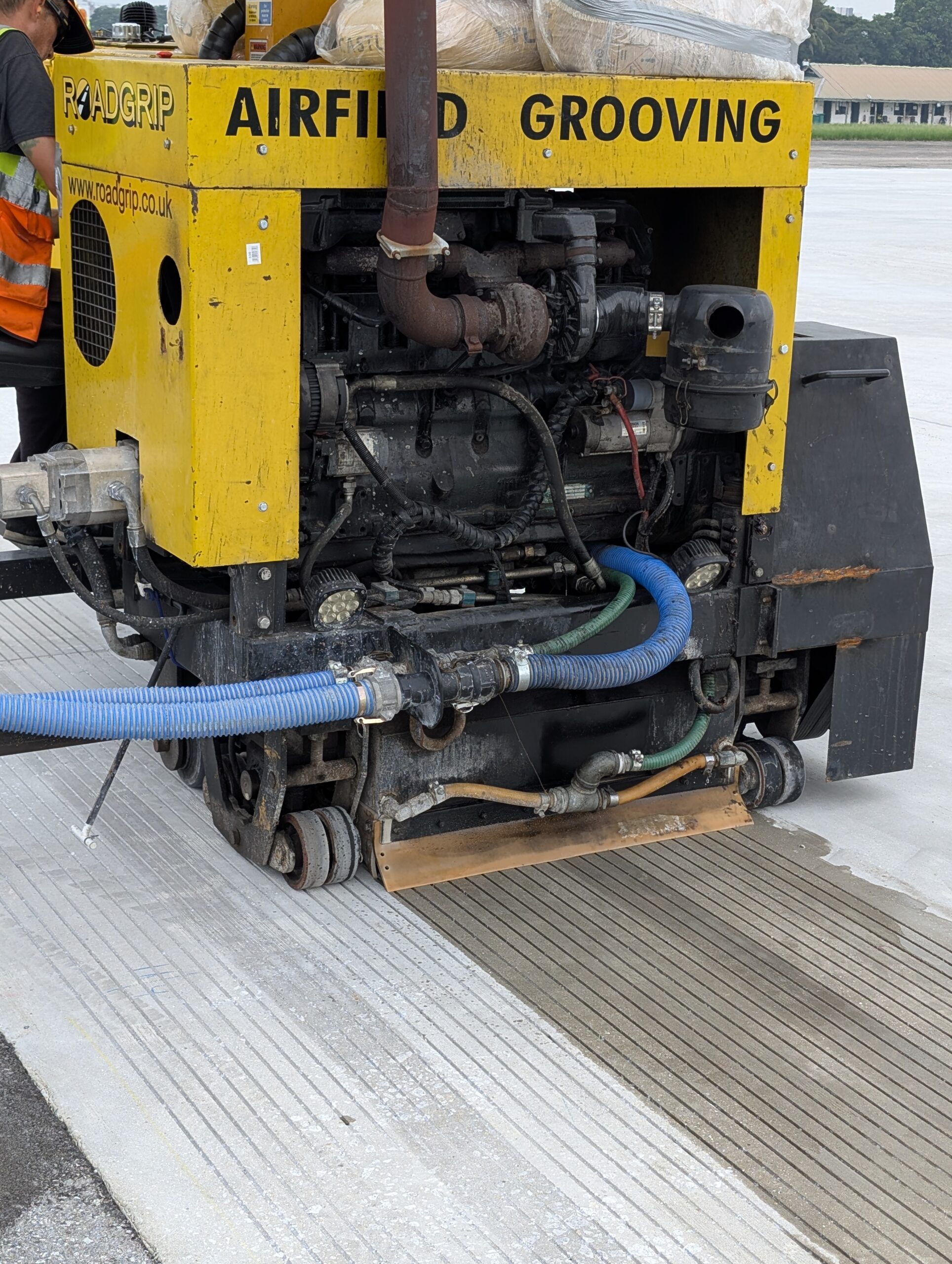
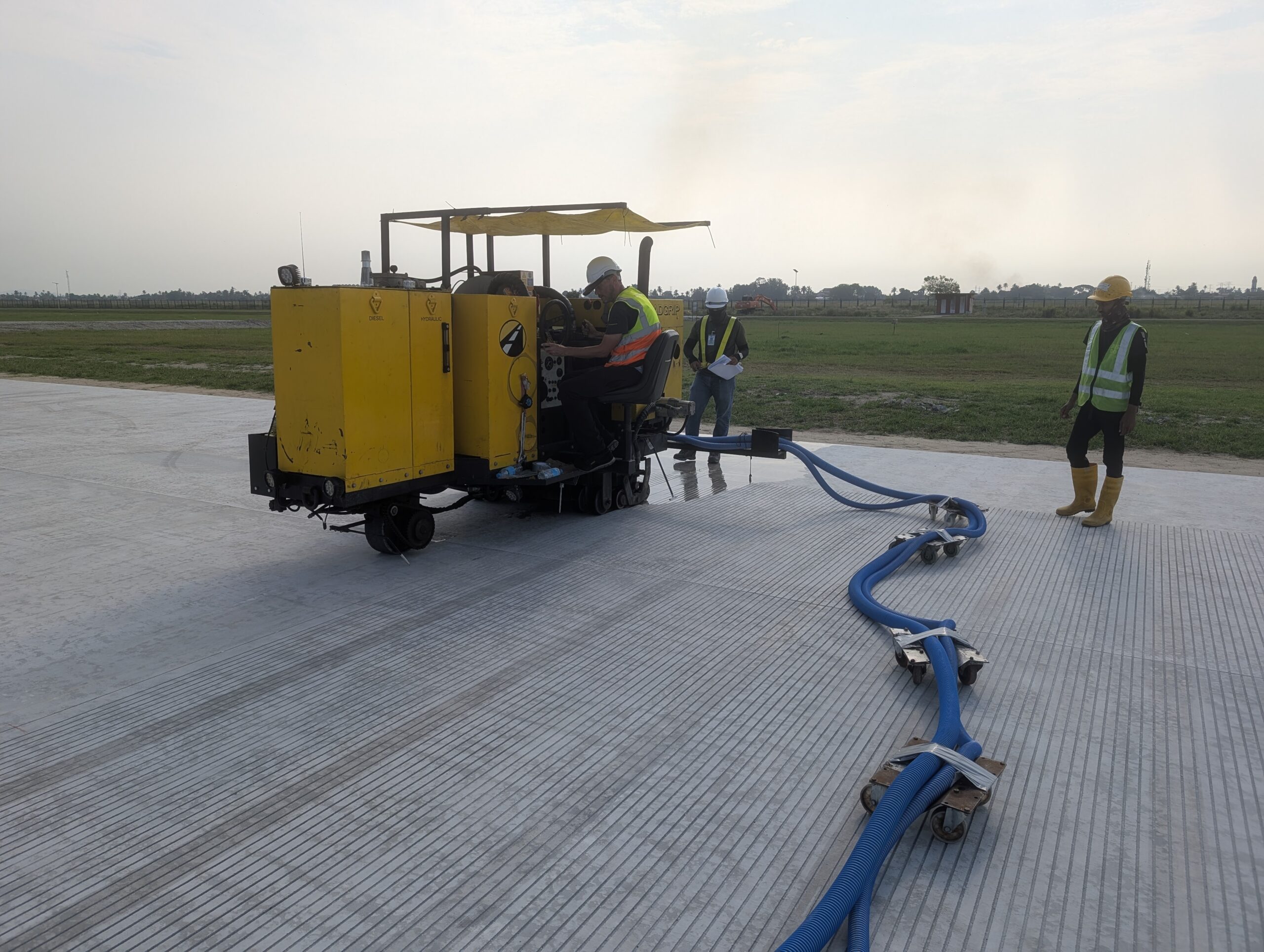
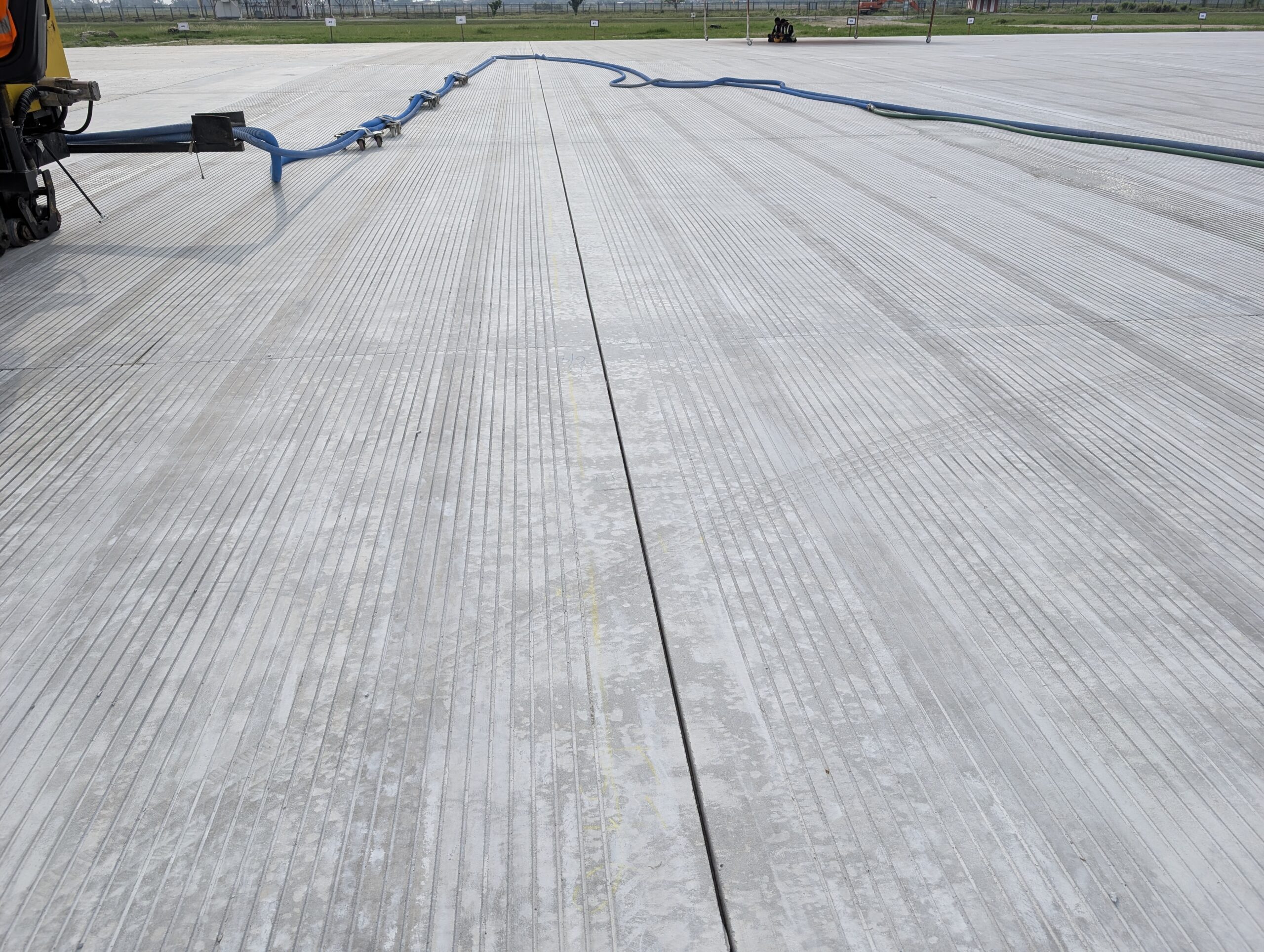
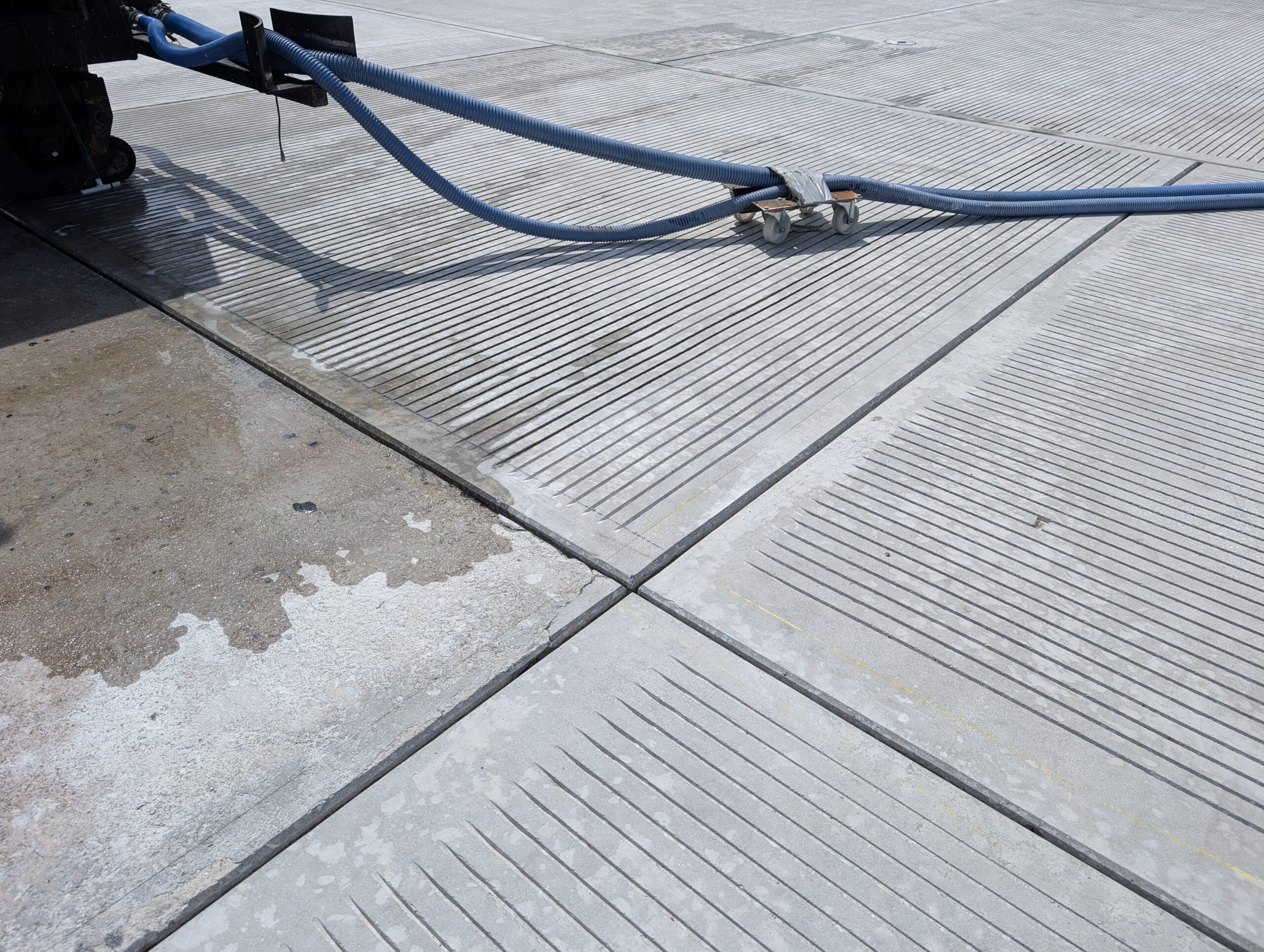
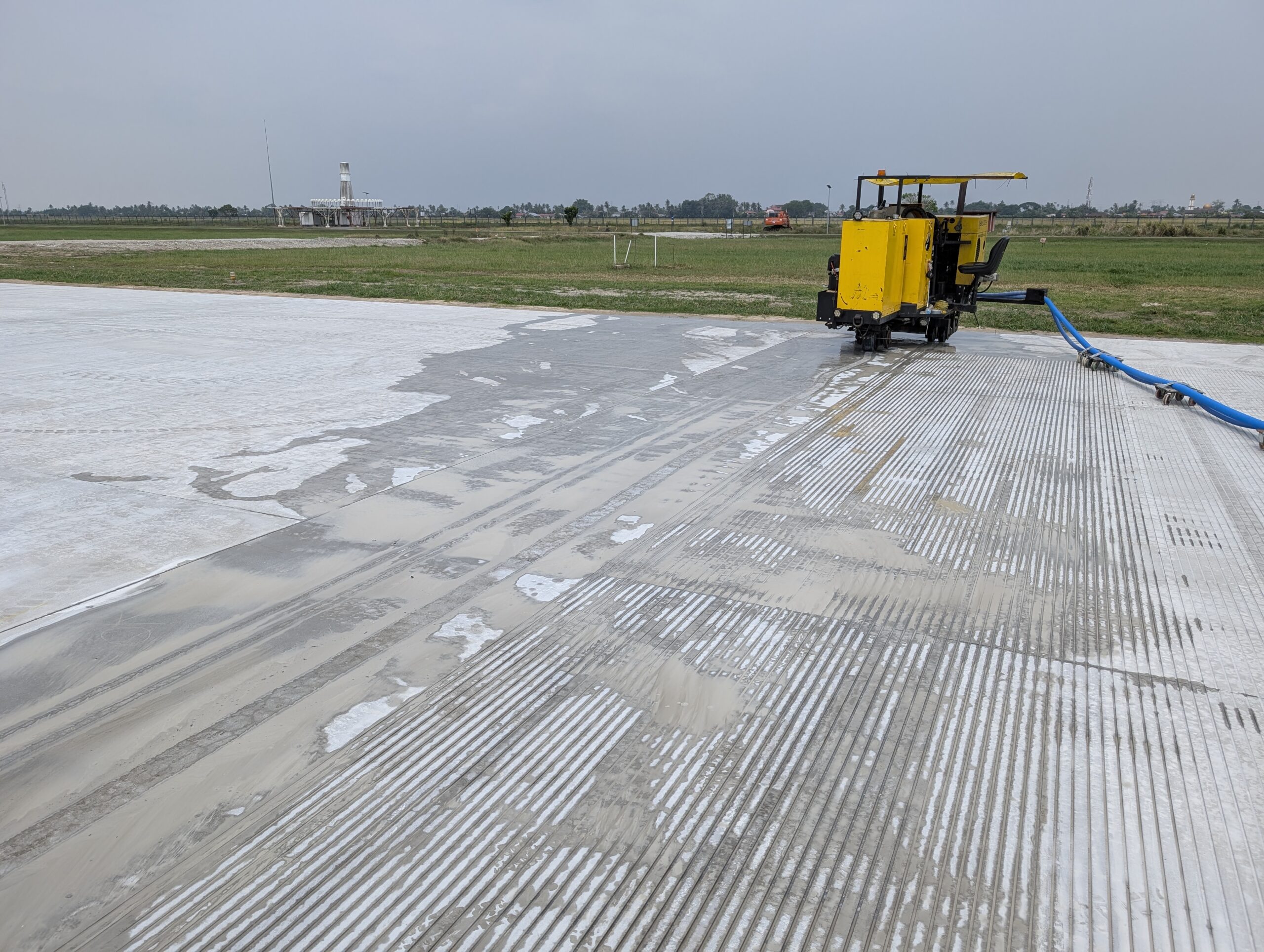
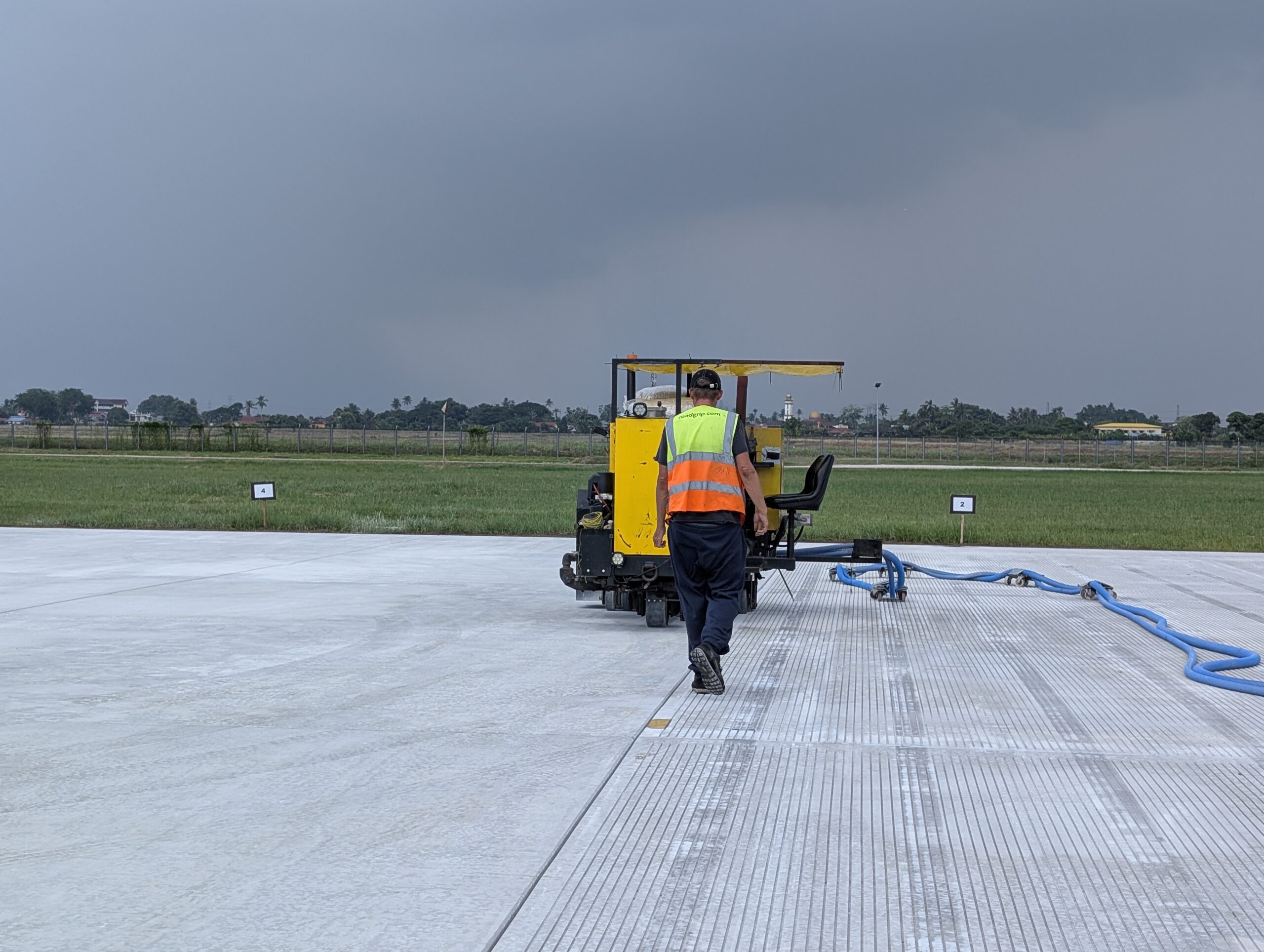
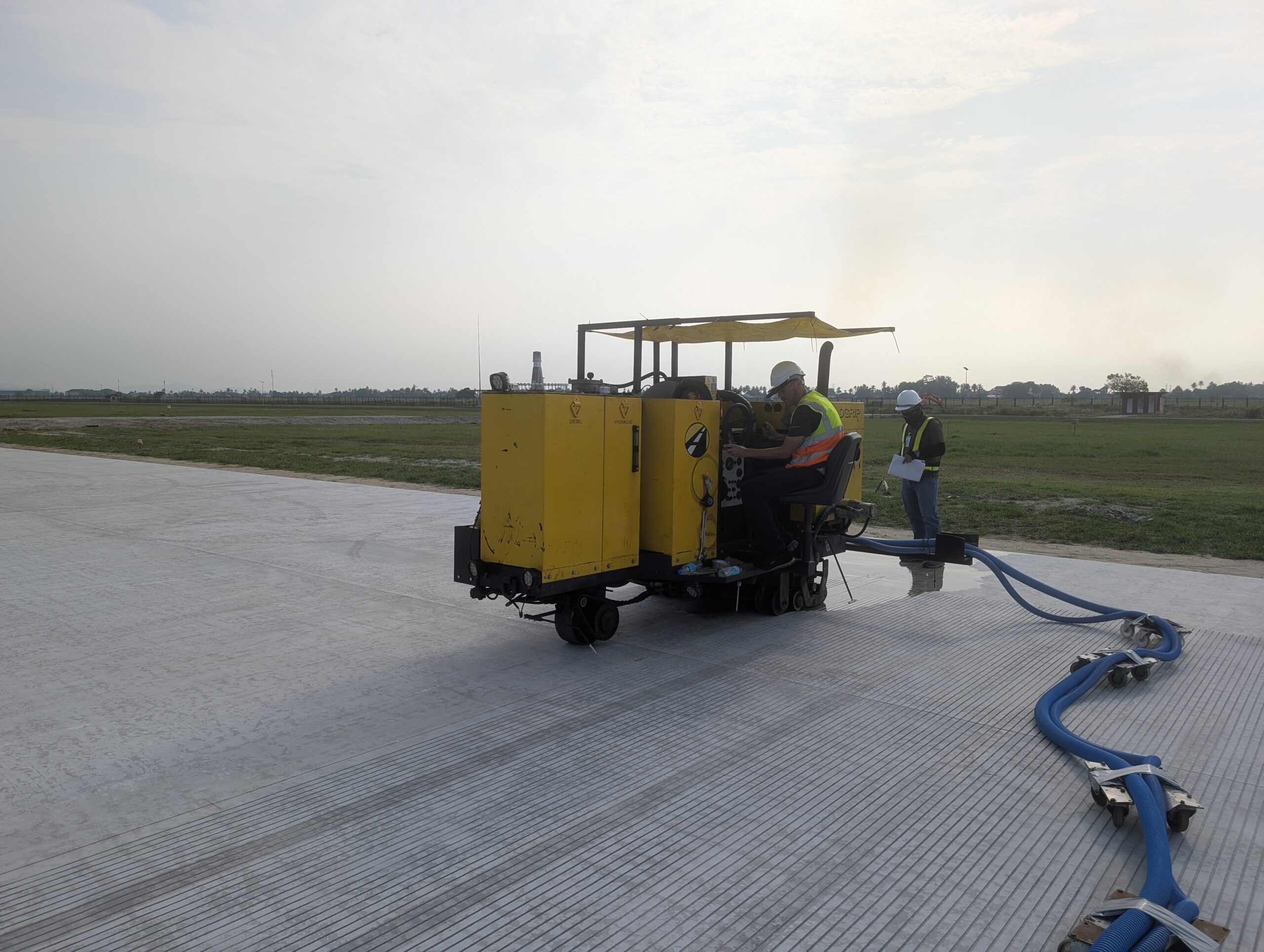
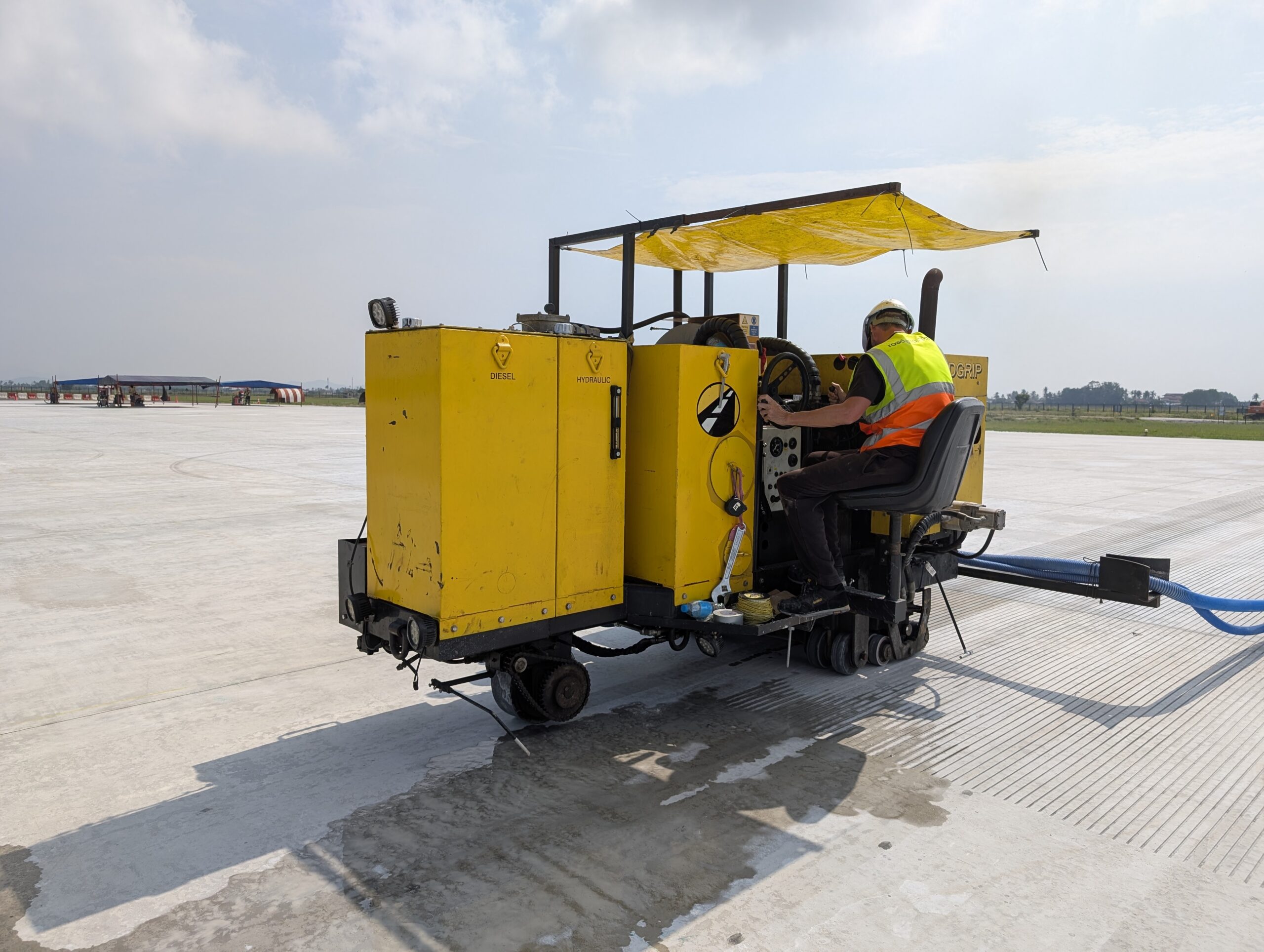
Roadgrip Airports has recently completed a PQC runway and taxiway grooving programme in Malaysia, delivering 35,000m² of grooving works across the concrete airfield surfaces.
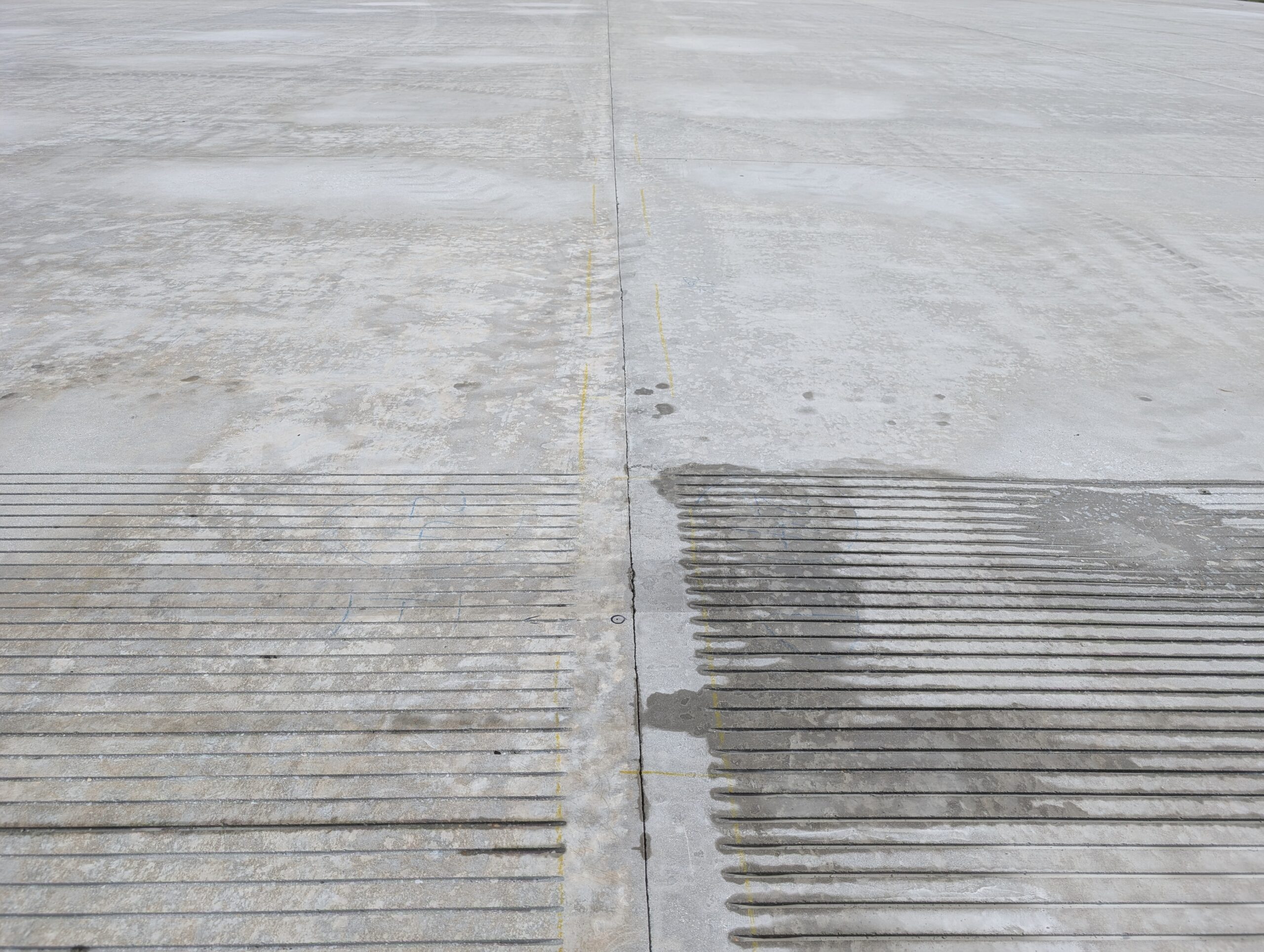
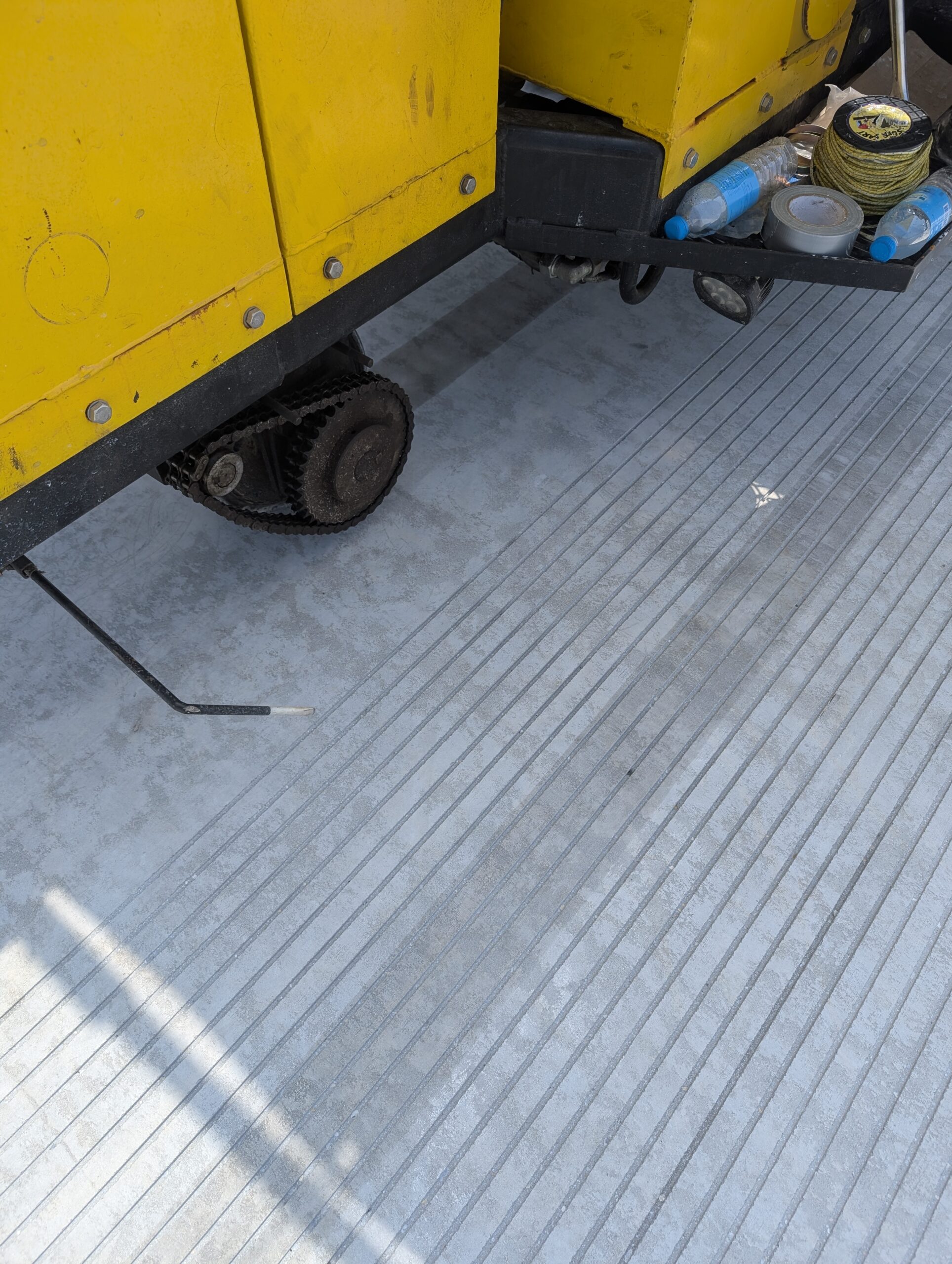
The project involved cutting precision grooves into the Pavement Quality Concrete (PQC) runway and taxiway surfaces to an FAA specification of 6mm x 6mm at 38mm centres, helping improve surface drainage and aircraft braking performance during wet weather operations.
In regions like Southeast Asia, where intense tropical rainfall is a regular operational challenge, runway grooving plays a critical role in maintaining safe aircraft movement on the ground.
Unlike road vehicle tyres, aircraft tyres have very limited tread. As a result, the runway surface itself must assist with dispersing water during landing and braking.
Without effective drainage, water can become trapped beneath the tyre footprint at high speed, increasing the risk of hydroplaning and reducing braking efficiency.
Runway grooving addresses this by creating precisely spaced channels within the concrete surface that allow water to escape laterally beneath the aircraft tyres. This improves tyre-to-surface contact, enhances braking performance and helps maintain directional control during wet conditions.
On high-traffic runways and taxiways, particularly in tropical climates, this is a fundamental part of maintaining operational safety.
For this project, the grooves were cut to Federal Aviation Administration (FAA) specification, measuring:
Maintaining these tolerances consistently across large pavement areas requires specialist equipment and experienced operators.
Although grooving can appear straightforward from a distance, the process demands extremely accurate machine control. Each pass of the grooving machine must remain perfectly aligned to maintain uniform spacing and ensure consistent surface performance across the entire airfield area.
Completing approximately 35,000m² of grooving across runway and taxiway infrastructure requires detailed planning and efficient execution, particularly within operational airport environments.
Works must be carefully coordinated around airfield operations while ensuring quality remains consistent across the full programme. Factors such as concrete condition, surface cleanliness and weather conditions all influence the grooving process and final result.
Runway and taxiway grooving is not simply a compliance exercise. It is a long-term operational investment that helps airports maintain safe and reliable performance during adverse weather conditions.
In climates like Malaysia’s, where sudden heavy rainfall is common, effective surface drainage becomes even more important to maintaining runway usability and minimising operational risk.
Learn more about our global support to the world’s airports at Roadgrip Airports