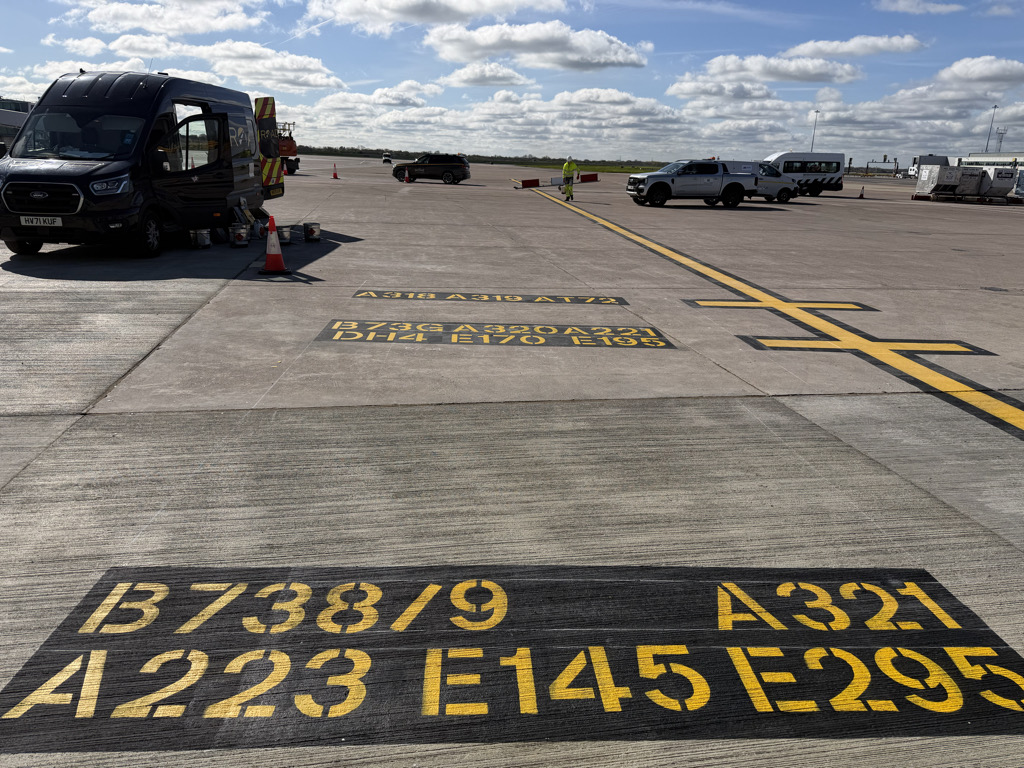
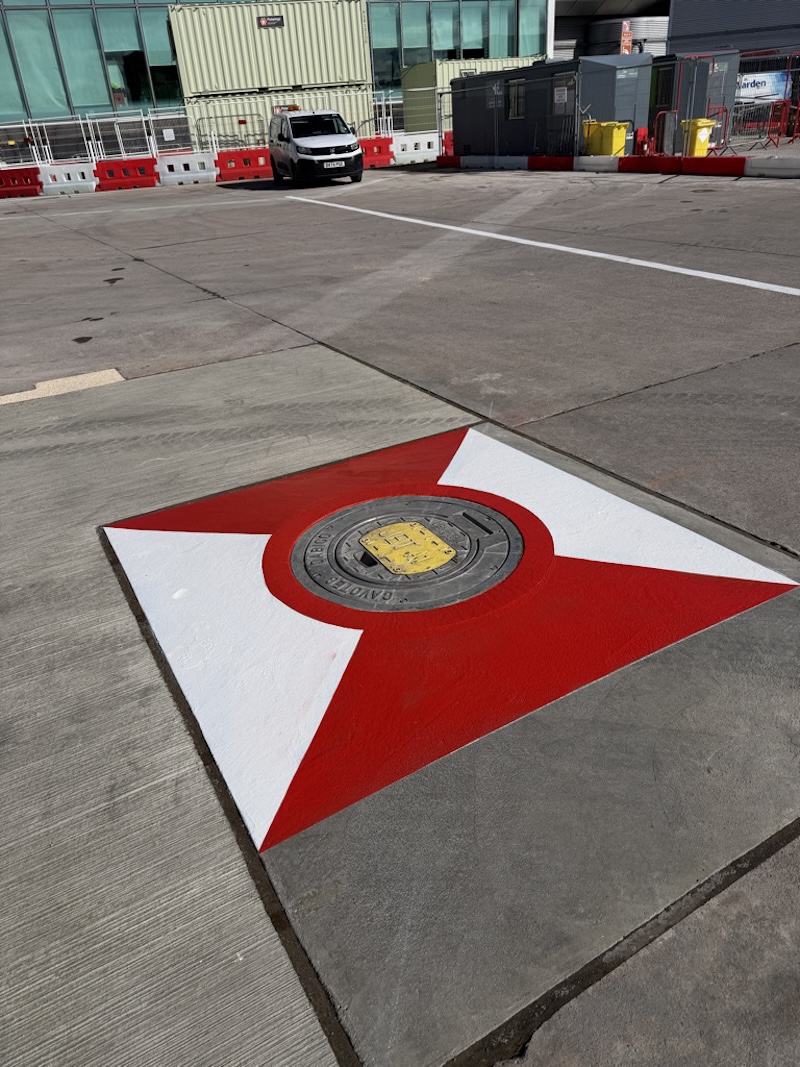
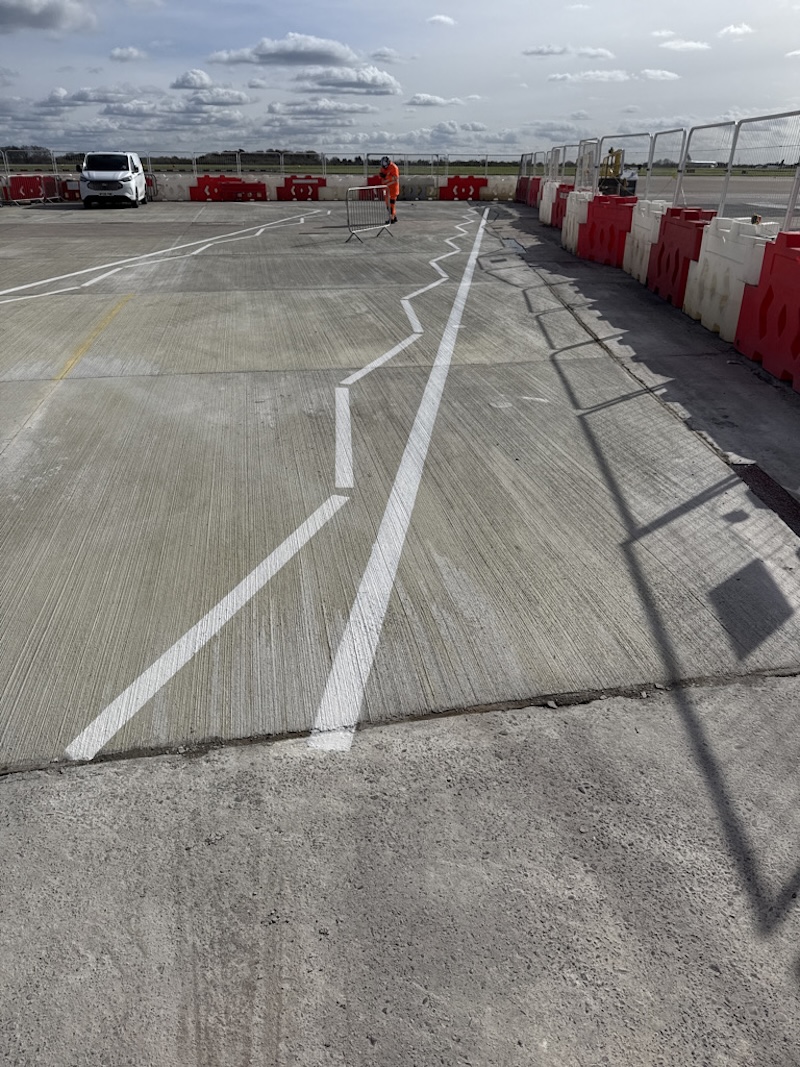
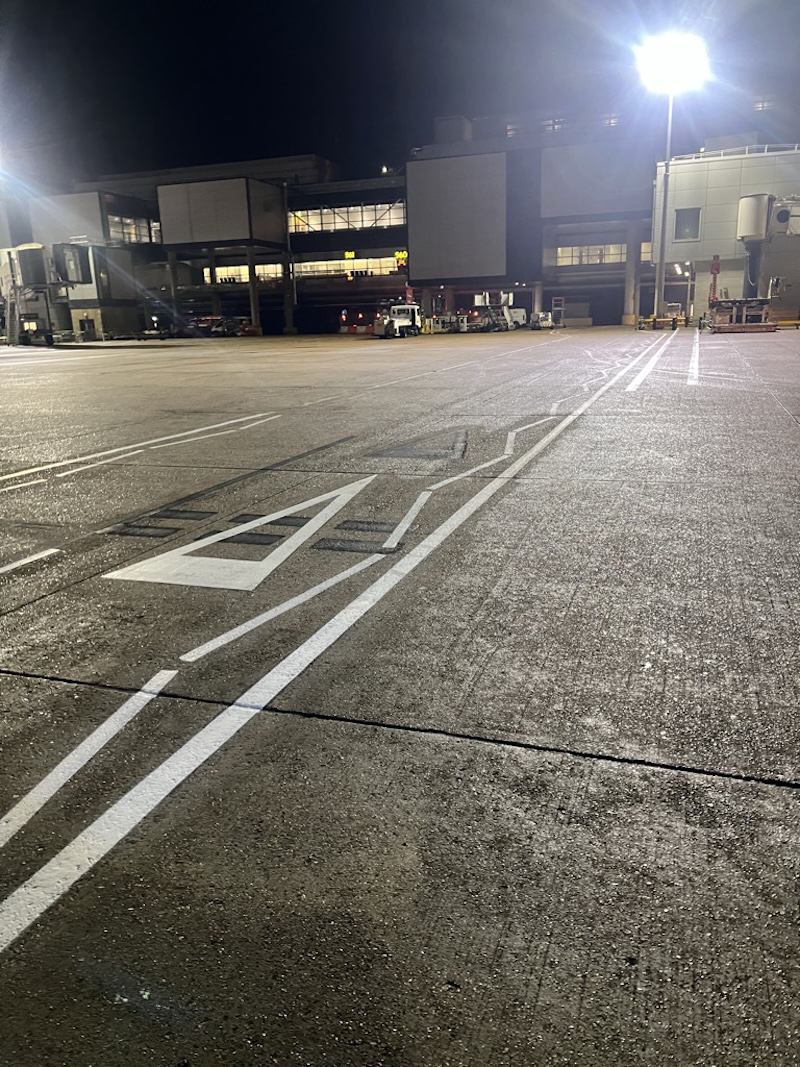
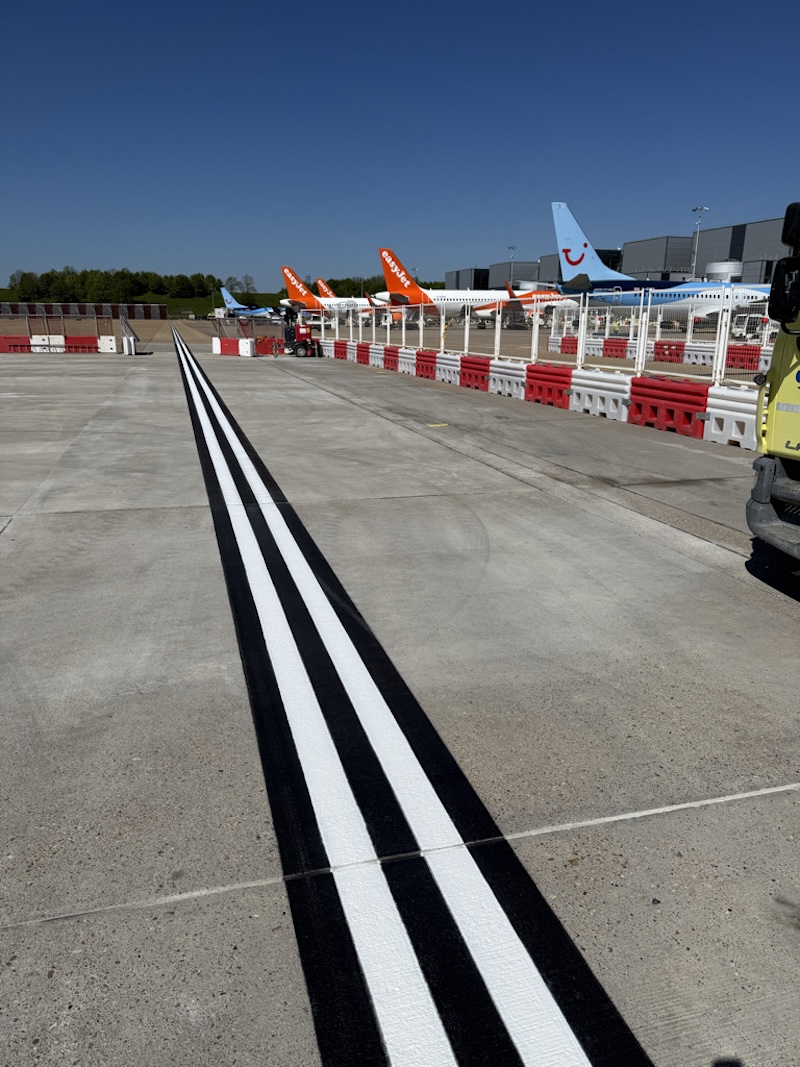
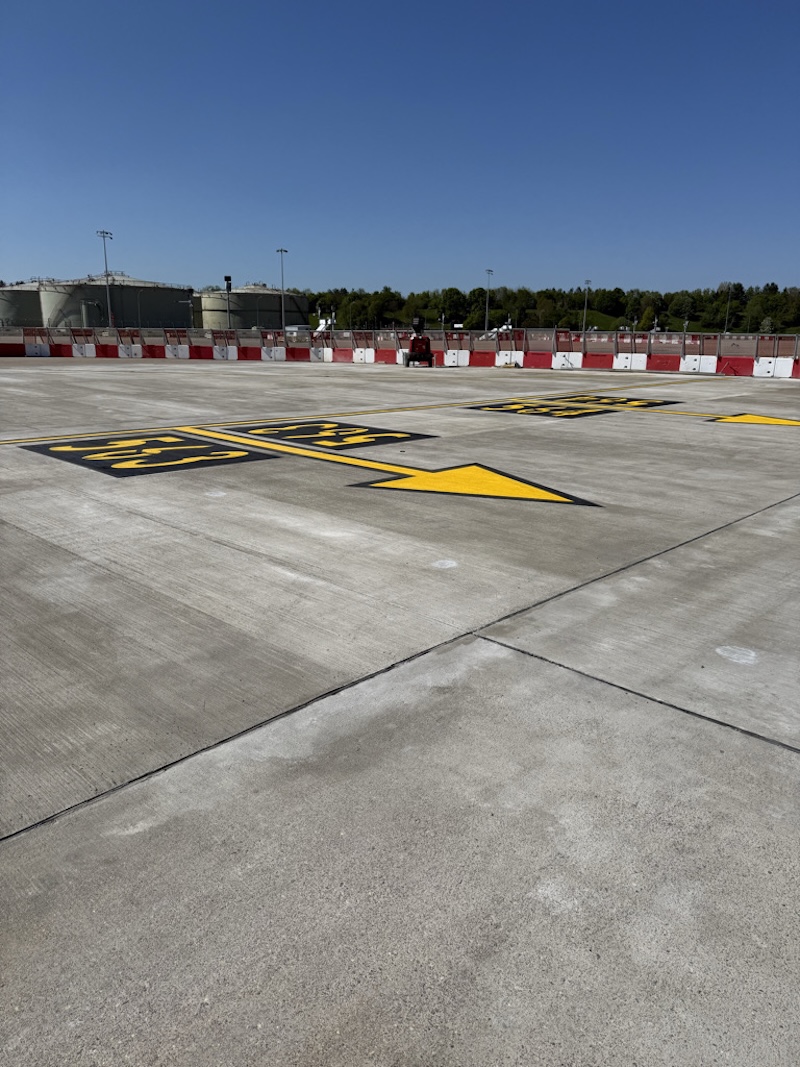
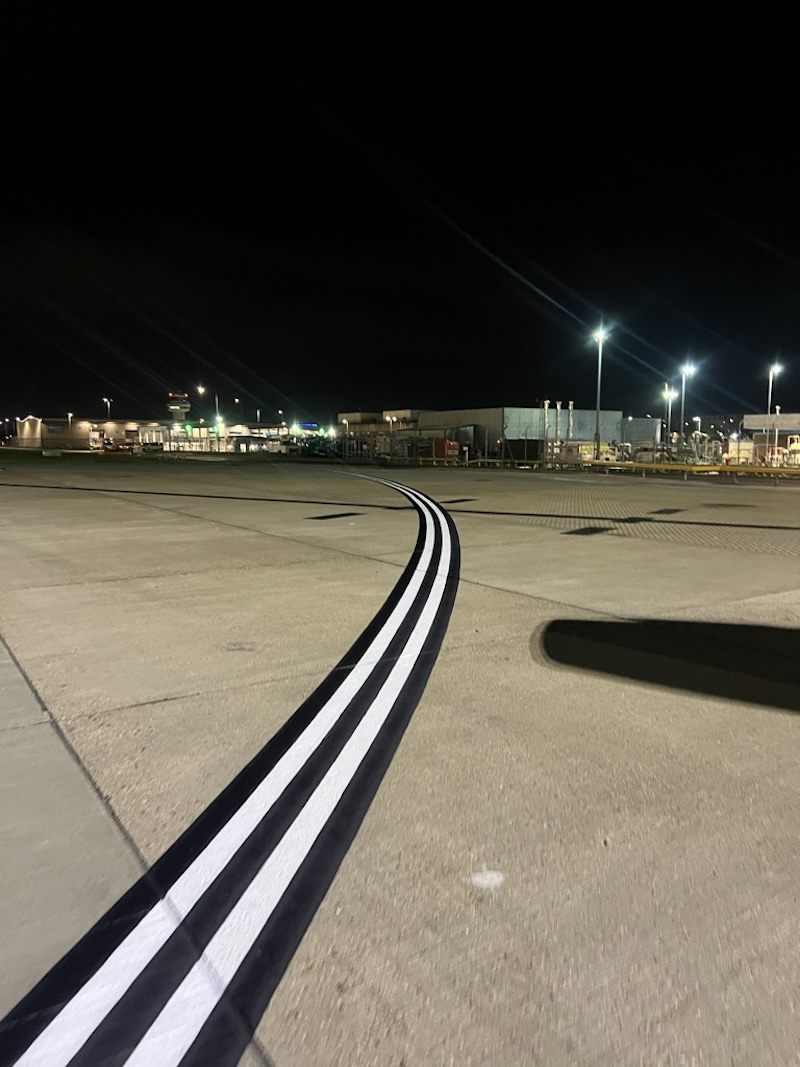
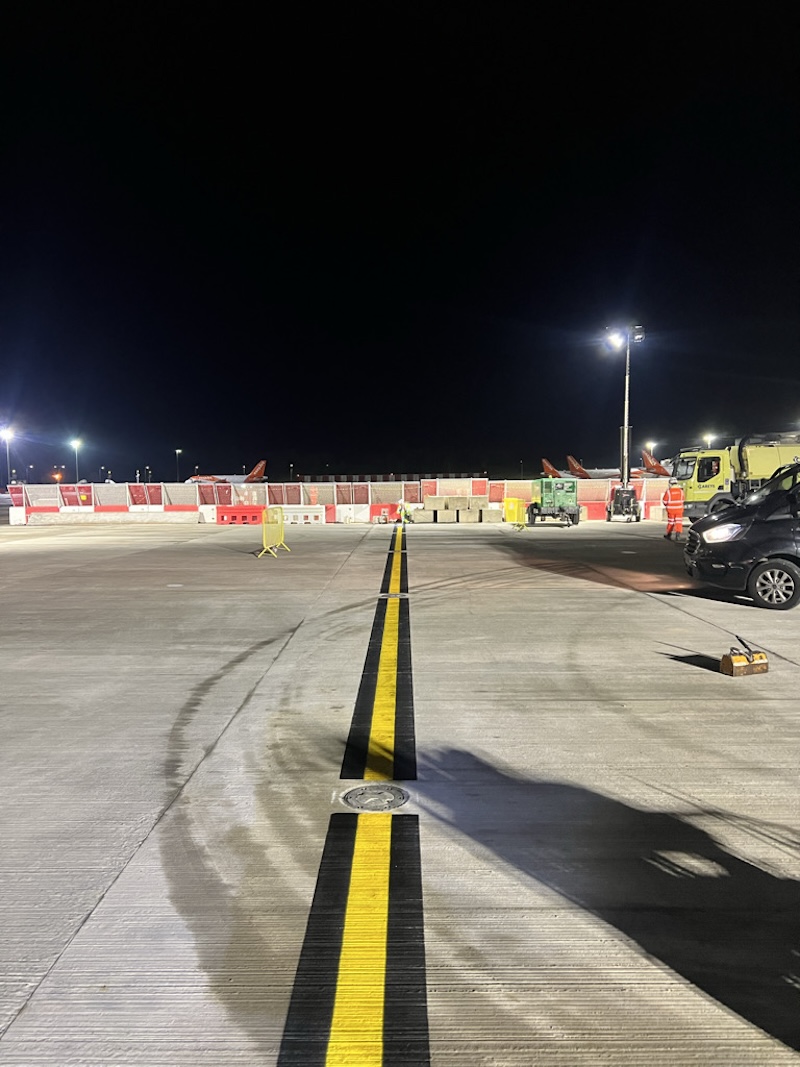
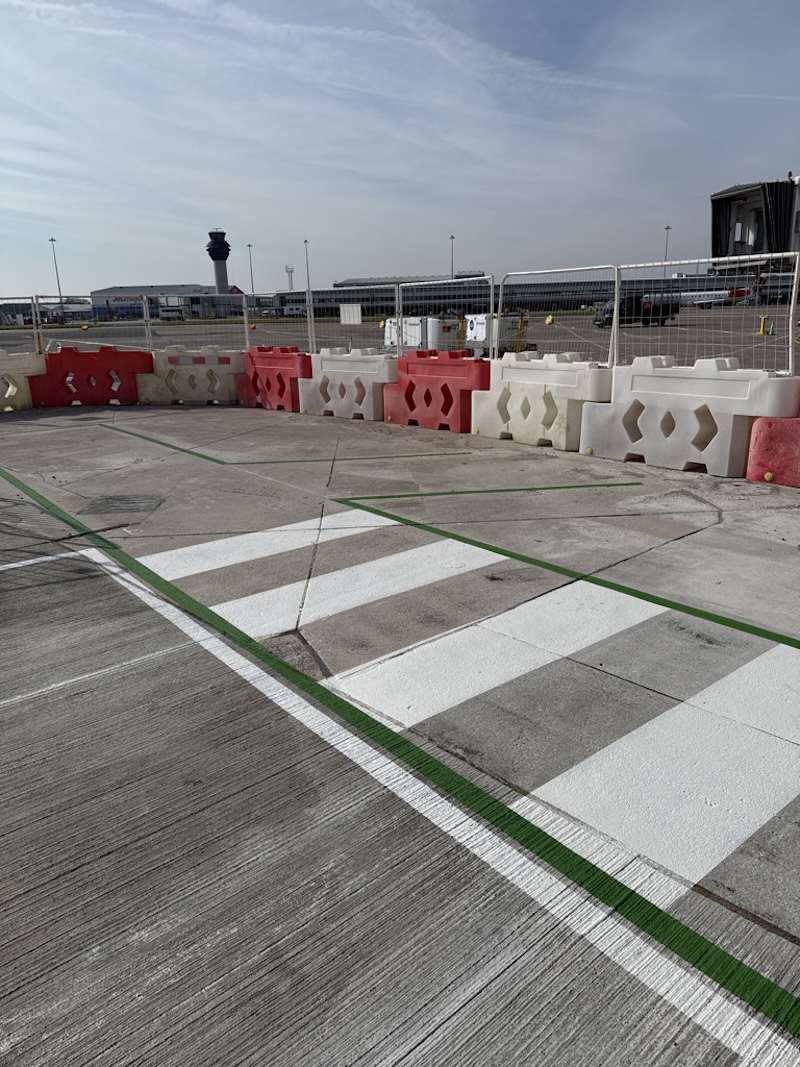
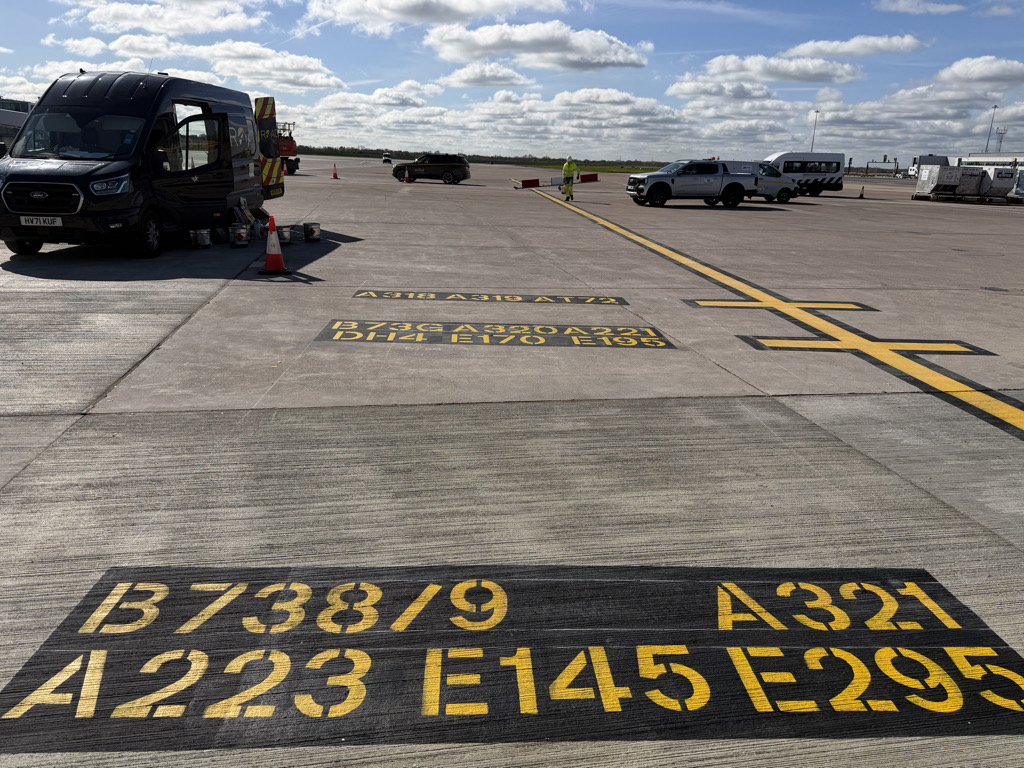
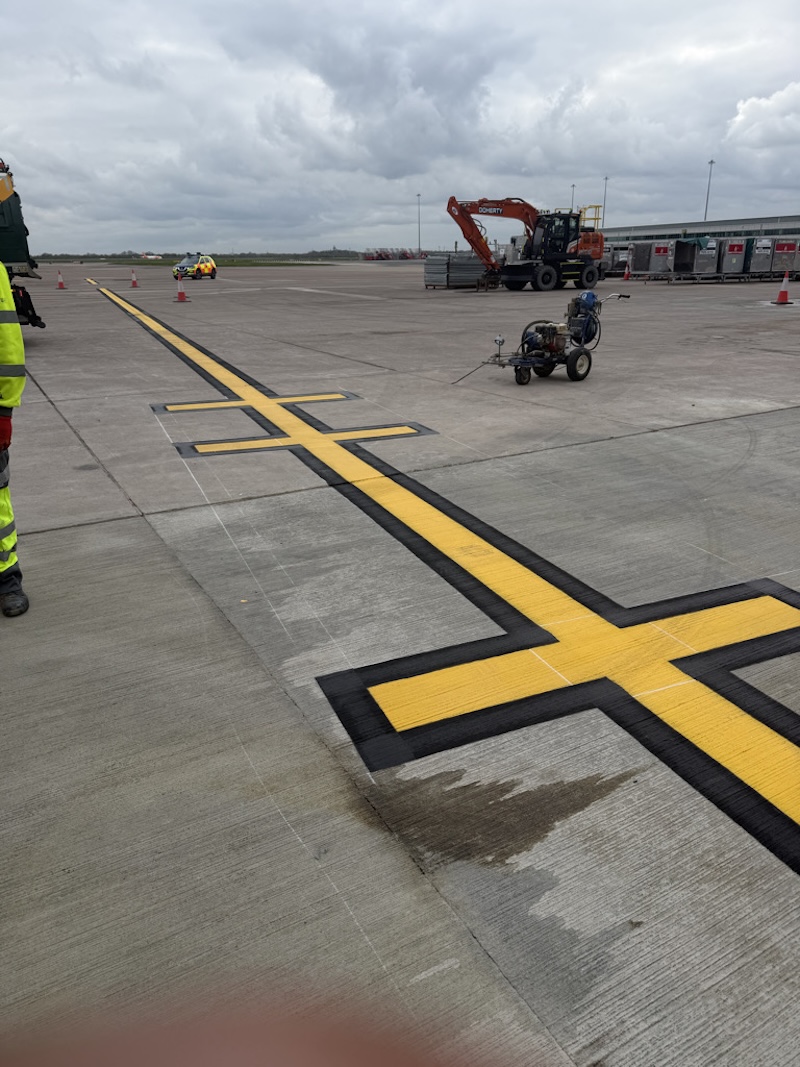
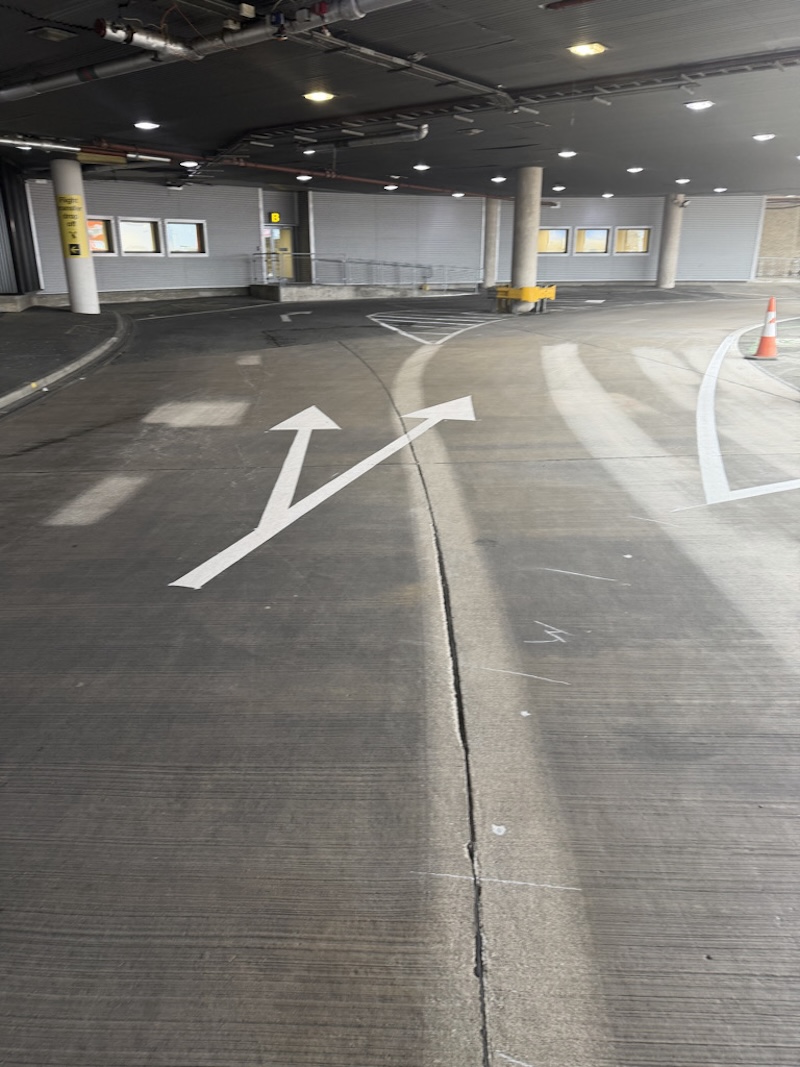
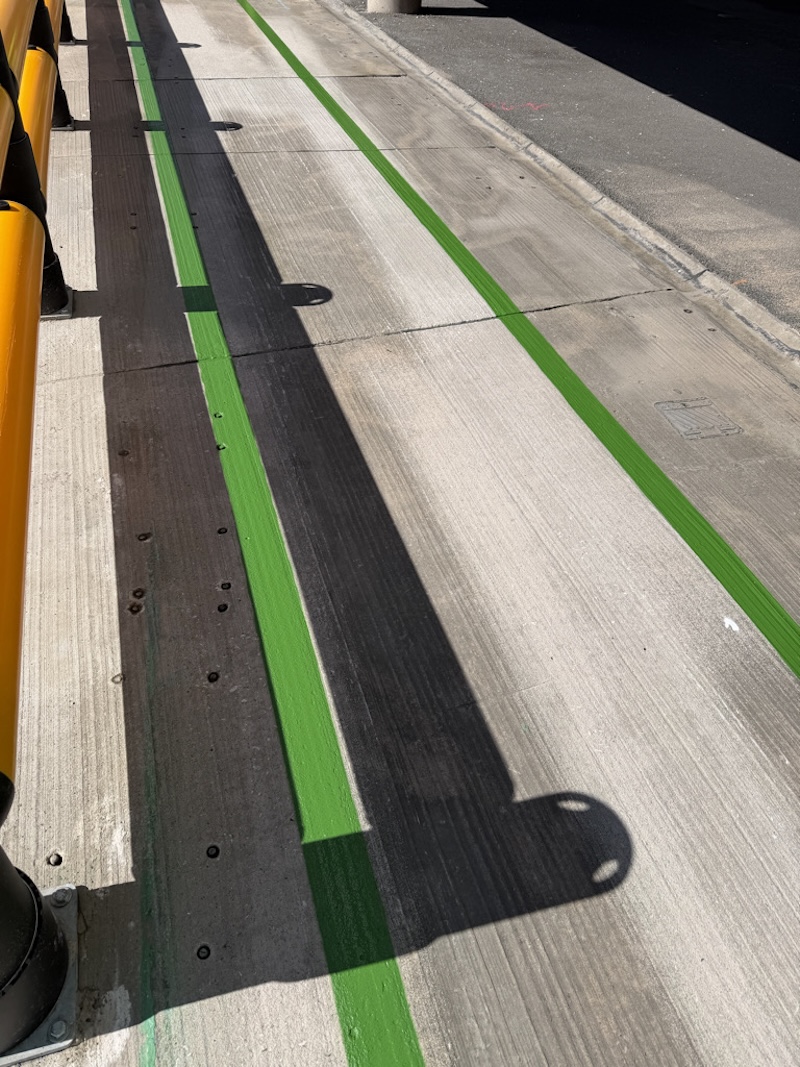
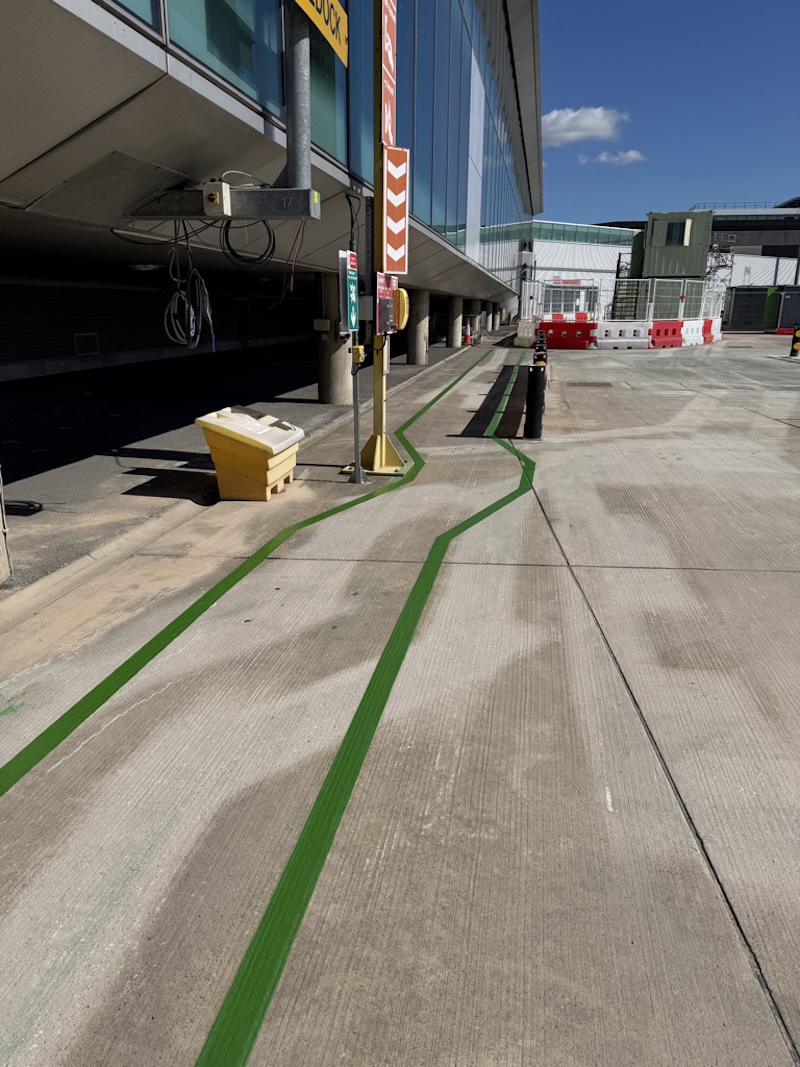
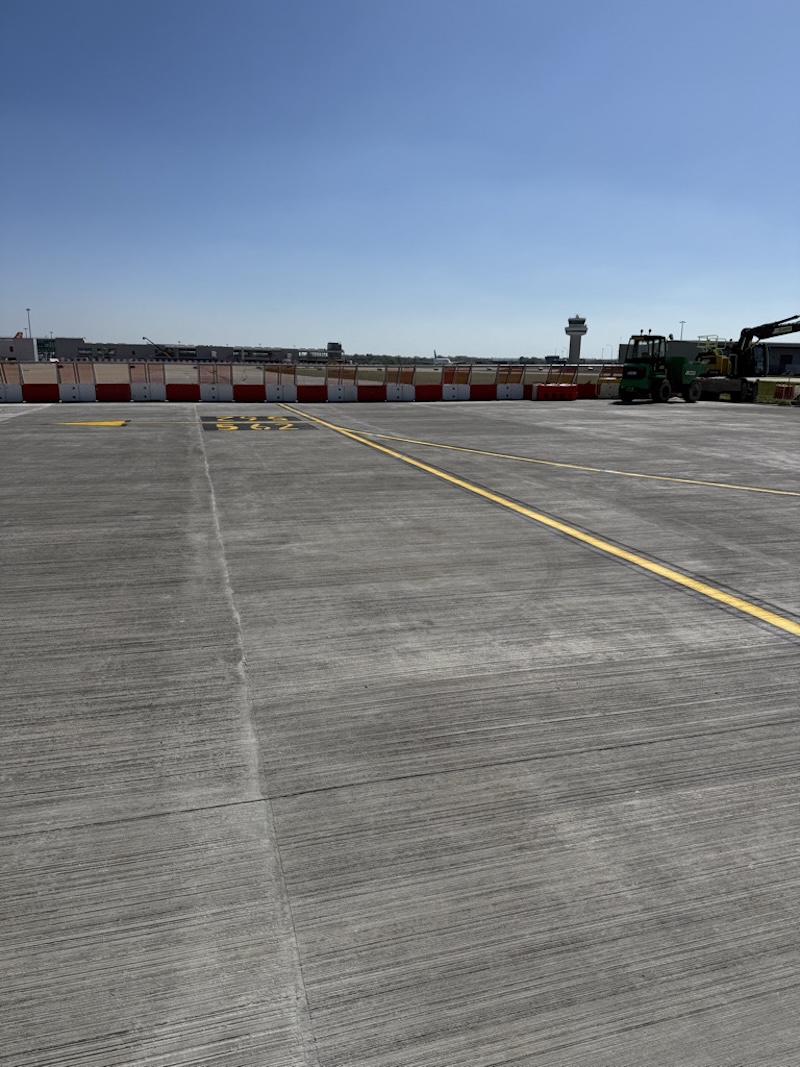
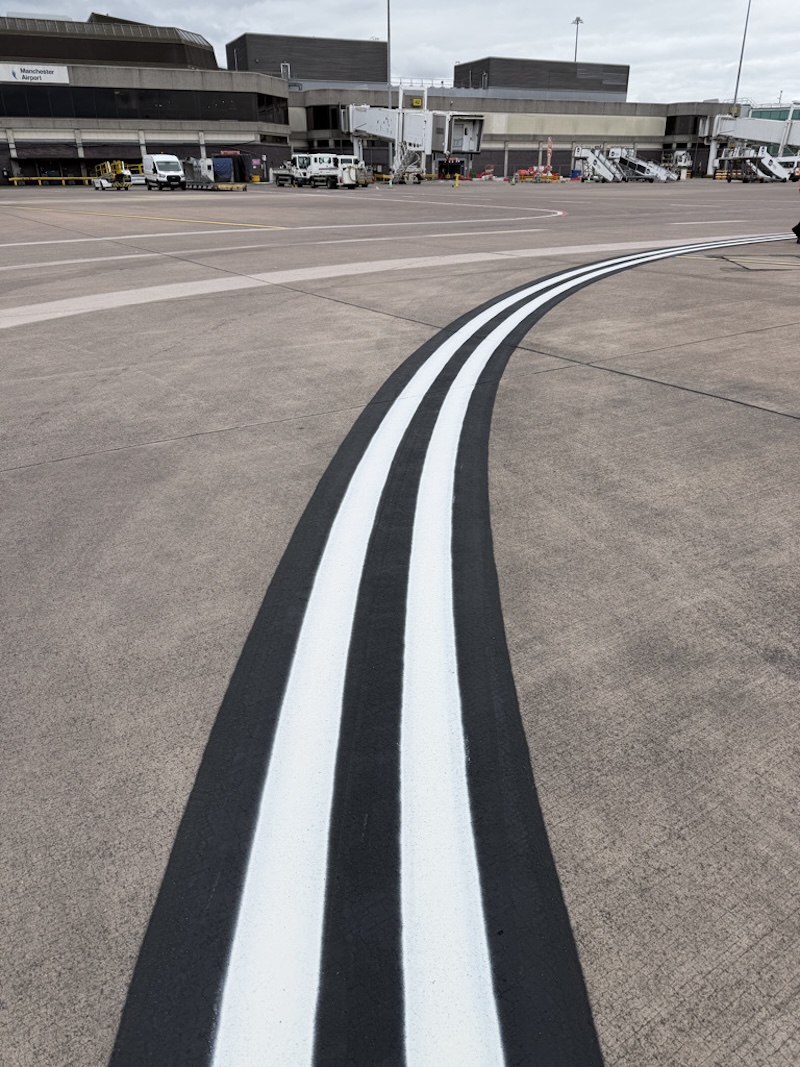
Roadgrip Airports has recently completed a programme of stand reconfiguration works at London Gatwick airport and Manchester airport, two major international hubs in the UK. Works included the installation and modification of aircraft stand markings, taxiway markings and associated airside roadway layouts.
Stand reconfiguration is driven by the need to accommodate changing fleet mixes, optimise apron utilisation, improve aircraft handling efficiency and adapt existing infrastructure to evolving airport requirements.
For airports like London Gatwick and Manchester that operate at high capacity, even relatively small changes to stand geometry and surface guidance systems can have a measurable impact on operational resilience, turnaround efficiency and aircraft movement flexibility.
Unlike new-build apron developments, reconfiguration works are carried out within live operational environments where continuity is critical.
Existing stands, road systems and taxiway interfaces needed to remain partially operational throughout the programme, requiring phased delivery, careful sequencing and close coordination with airport operations teams.
This is where our experience as a global airfield maintenance company becomes particularly important. Reconfiguration projects demand more than accurate marking installation alone – they require an understanding of how operational decisions translate onto the apron surface itself.
Every amendment to a lead-in line, stand position or vehicle route has operational consequences. Clearance envelopes, docking tolerances, wingtip separations, vehicle circulation and aircraft manoeuvrability all need to be considered within the wider functioning of the airfield environment.
Despite weather and visibility challenges, our team delivered clear, consistent and immediately interpretable markings for pilots, handling agents and airside drivers.
Achieving this accurately requires detailed setting out, careful dimensional control and disciplined delivery standards.
One of the defining challenges of airside reconfiguration projects is the operational window available for delivery.
At major international airports like these, access is restricted to tightly controlled overnight possessions or short operational closures, meaning works must be delivered efficiently without compromising quality or safety. Our team remained flexible, able to pivot and work where needed without disrupting operations.
This can only happen thanks to our wider team’s skill in planning, logistics and workforce coordination.
Roadgrip Airports has extensive experience operating within these conditions, delivering works in live aviation environments where disruption tolerance is minimal and operational readiness is non-negotiable.
As airports continue to adapt to changing airline requirements, evolving aircraft fleets and increasing operational demand, stand reconfiguration will remain an important part of maintaining efficient apron infrastructure.
The success of these projects depends not only on technical accuracy, but on understanding how the airfield functions operationally as a whole.
For Roadgrip Airports, that operational understanding is central to delivery, ensuring that surface markings, stand layouts and movement systems perform as intended within the realities of a live international airport environment.
Visit Roadgrip Airports to learn more about how we work in airports around the world.