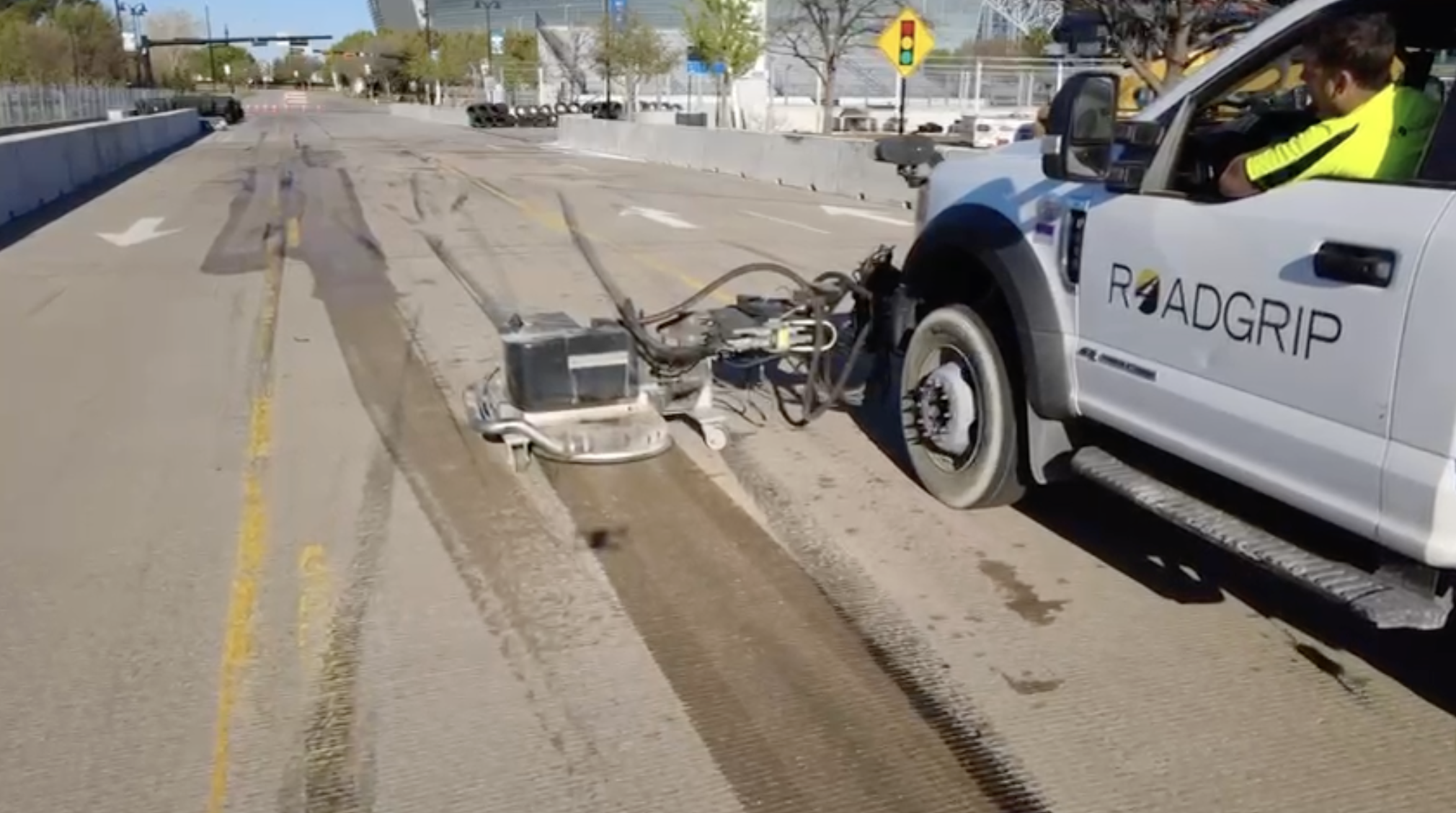
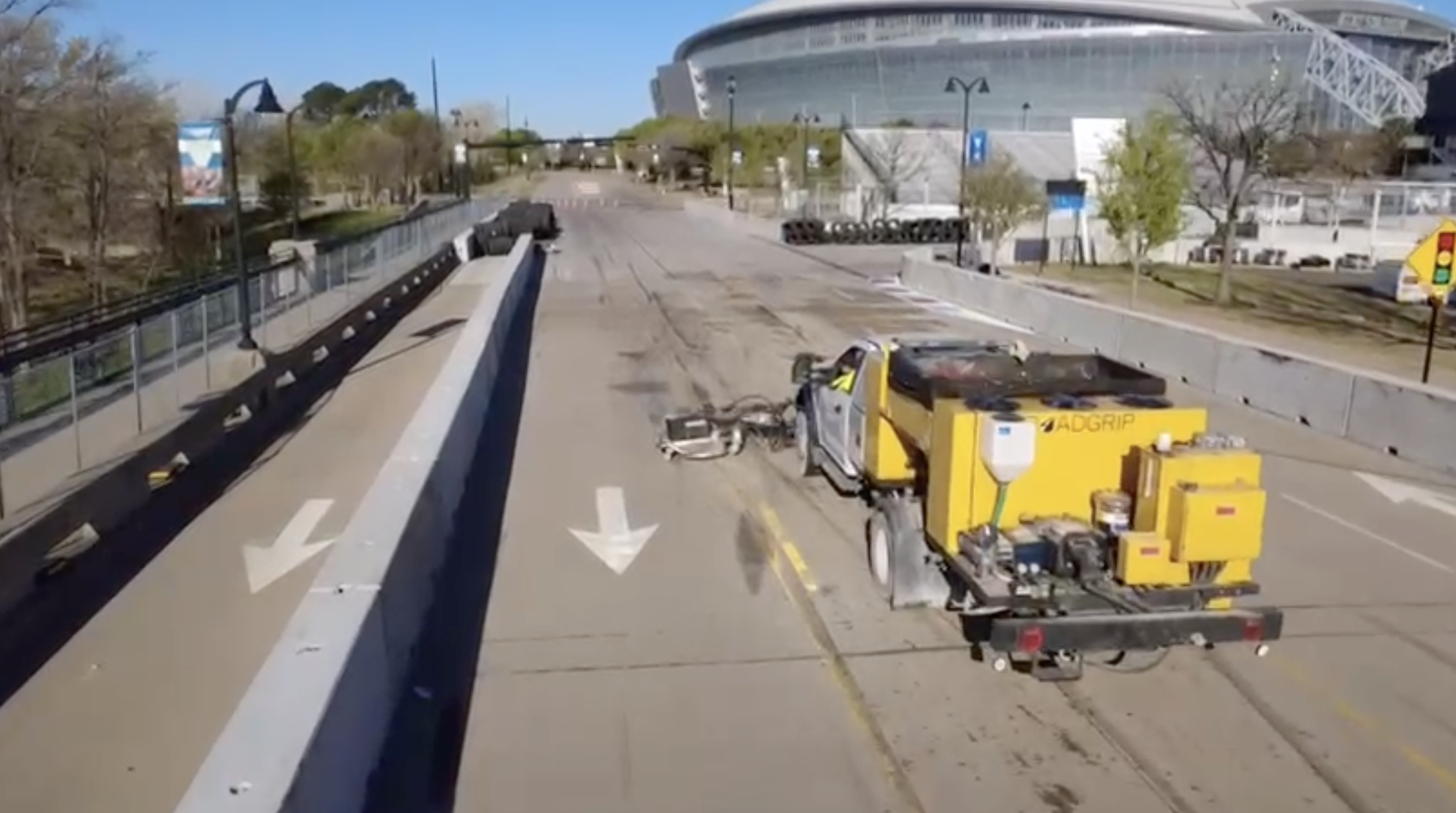
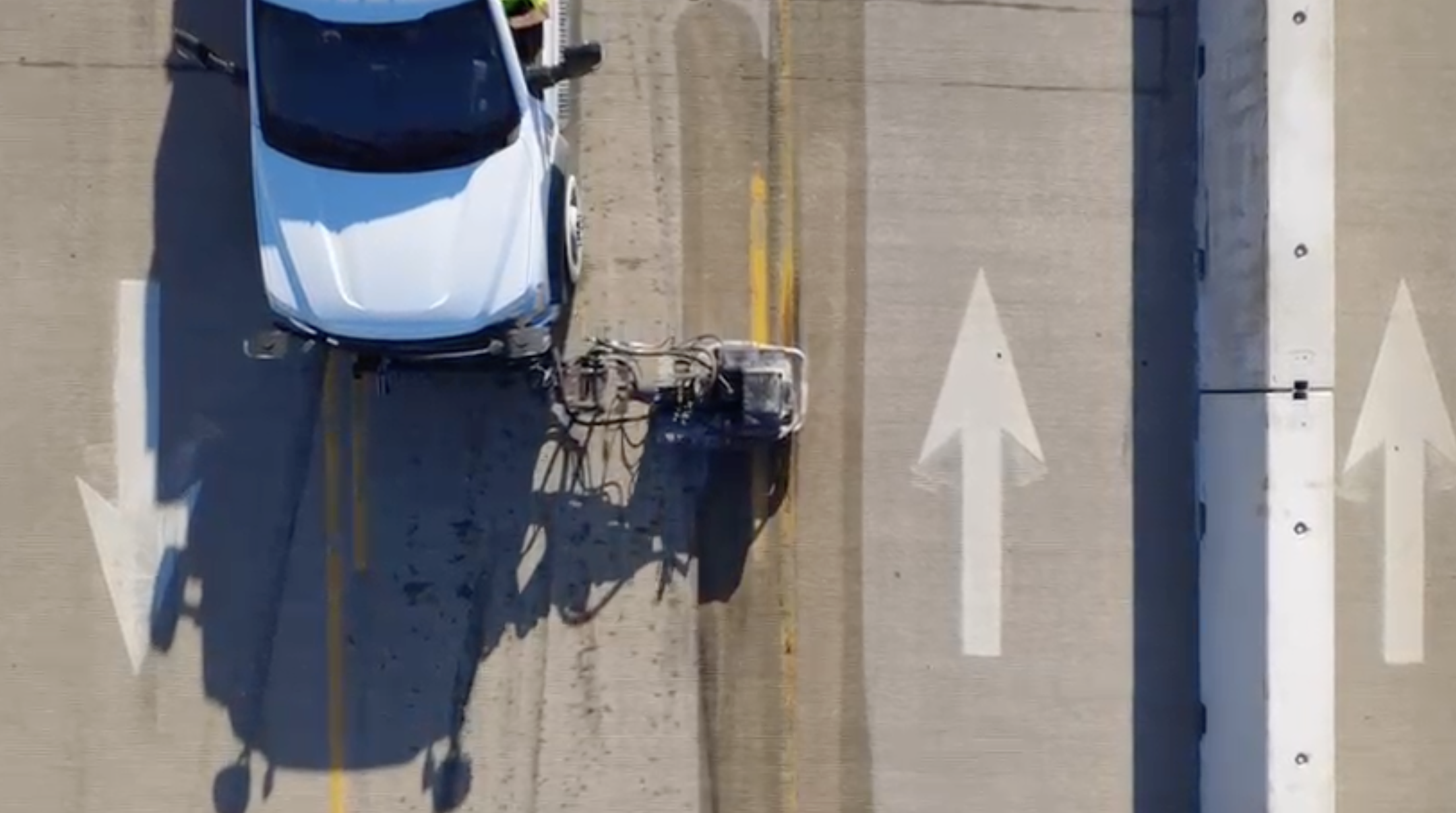
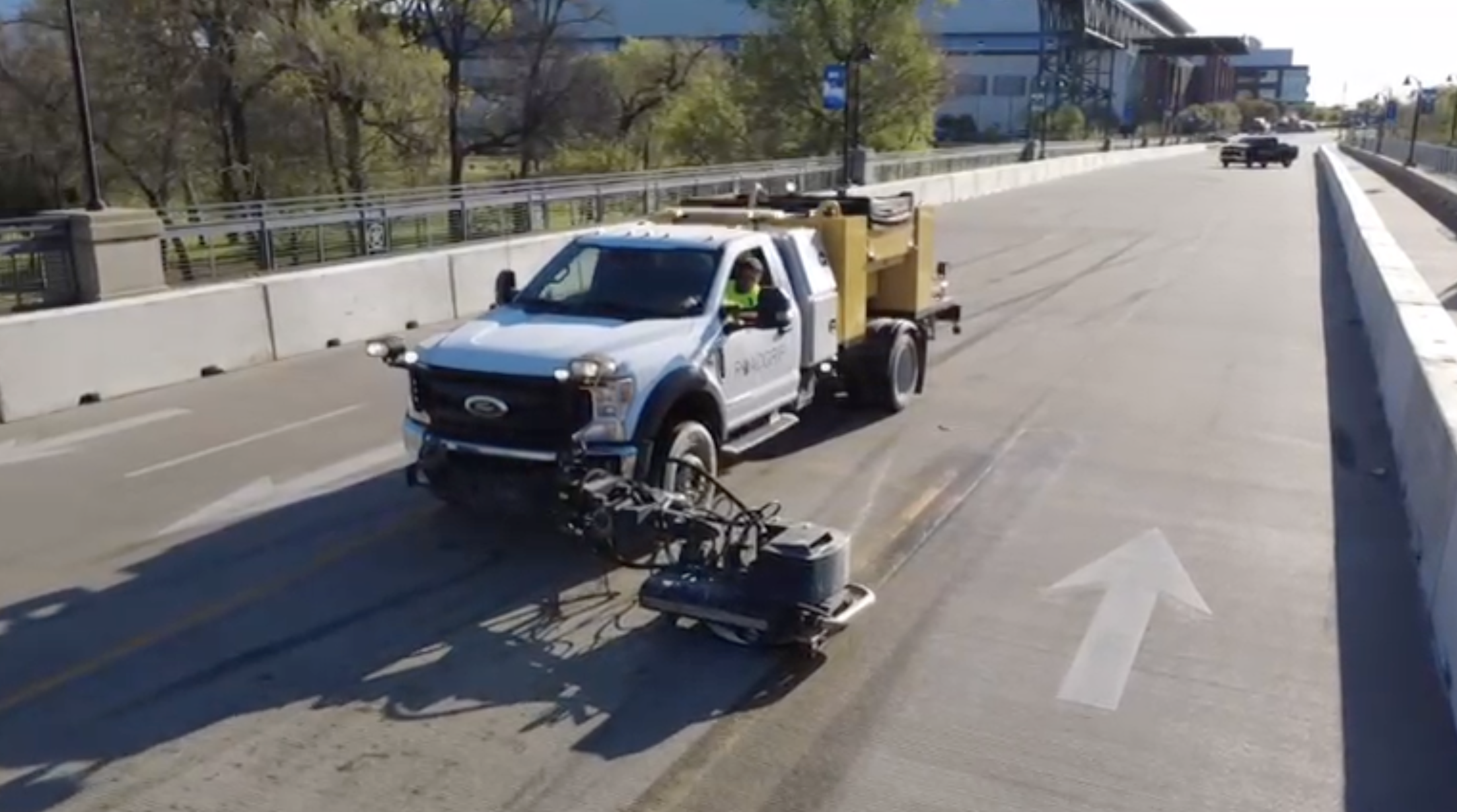
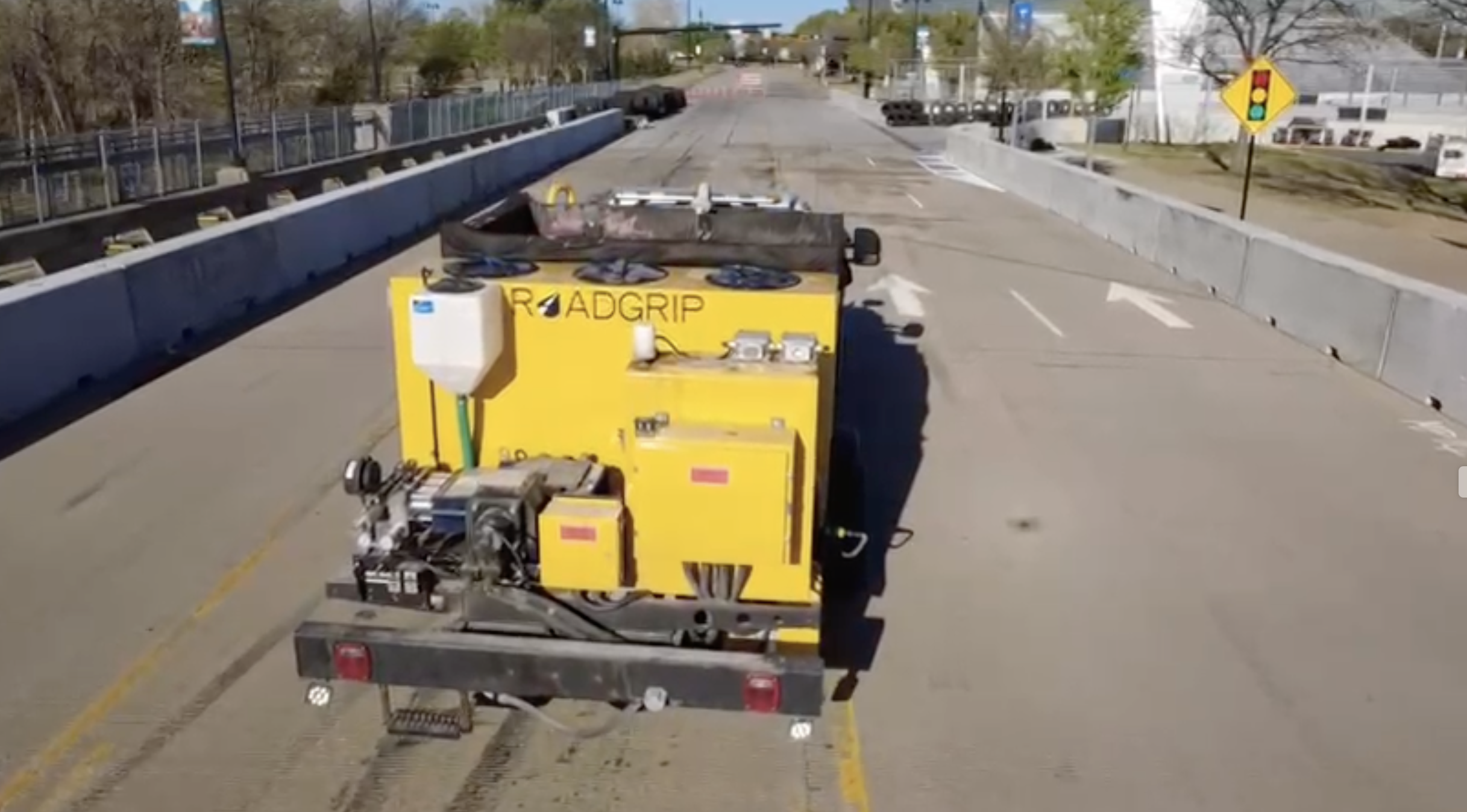
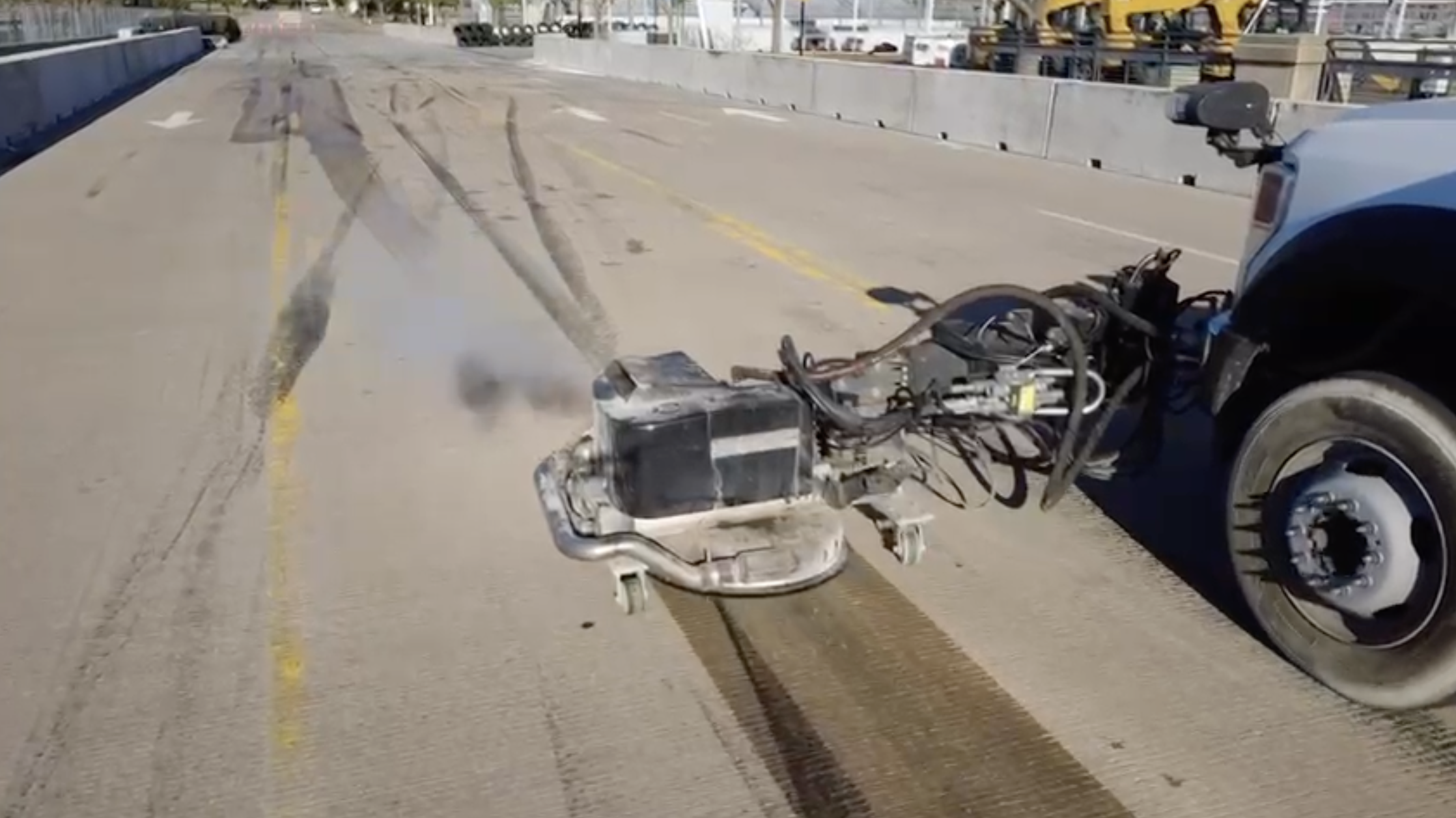
Following the IndyCar event in Arlington, Roadgrip Motorsport USA returned to the street circuit to remove the rubber build-up from the road surface and restore the streets for everyday use.
Street circuits are unique in that they must transition quickly from high-performance race environments back to public roads. That means every element installed for race weekend (from markings to surface conditions) needs to be carefully managed and, where necessary, removed.
During a race weekend, thousands of laps are completed by high-performance race cars. As tyres heat up under extreme braking, acceleration and cornering forces, they leave behind layers of rubber on the road surface.
On a permanent racetrack, this rubber build-up can enhance grip over time. But on public roads, it creates a very different challenge.
Excessive rubber deposits can reduce surface consistency for everyday vehicles, particularly in wet conditions where grip becomes less predictable. In braking zones and high-load areas, the surface can become polished and slick, while the natural texture of the asphalt (which helps to disperse water) can be compromised.
For normal traffic, this isn’t just a cosmetic issue. It’s a safety consideration.
Before the roads can safely reopen, the surface needs to be returned as closely as possible to its original condition.
Removing rubber build-up restores the natural microtexture of the asphalt, allowing tyres to interact with the surface as intended. This improves grip consistency, enhances braking performance and ensures water can drain effectively during rainfall.
Without this step, the road can behave very differently from what drivers expect, particularly in changing weather conditions.
To carry out this work, Roadgrip uses ultra-high-pressure (UHP) water jetting equipment.
We most commonly use this technique on runways, where rubber removal is a critical part of ongoing airfield maintenance. Aircraft landing at high speeds leave significant rubber deposits in touchdown zones, and if these aren’t removed, friction levels can drop below safe operating thresholds.
The same principle applies on a street circuit.
UHP water jetting uses extremely high-pressure water to break down and remove rubber deposits without damaging the underlying asphalt. It’s precise, efficient and doesn’t rely on chemicals, making it ideal for use in live urban environments.
By applying our runway expertise to a motorsport setting, we’re able to restore the road surface quickly and effectively.
One of the strengths of Roadgrip is how transferable our services are.
The techniques used to maintain airport runways – rubber removal, friction management, line marking, paint removal and surface preservation – directly apply to racetracks and, in cases like Arlington, to public roads that have temporarily become part of a racing circuit.
It’s the same focus on safety, surface performance and precision, adapted to different environments.
Learn more about our work across sectors in Markets or see our latest projects.
Contact our UK HQ team to discuss your surface requirements for road, runway or racetrack.