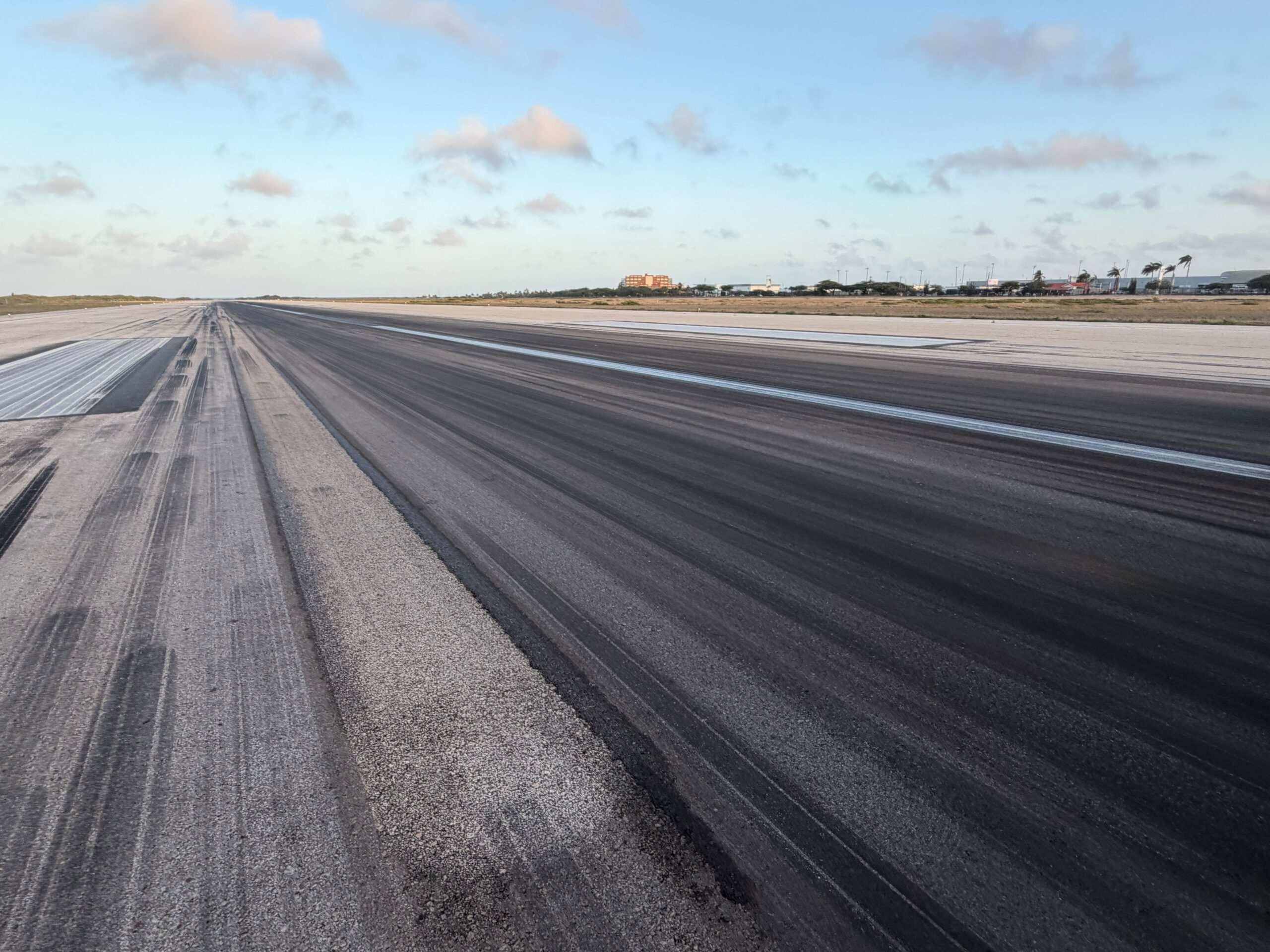
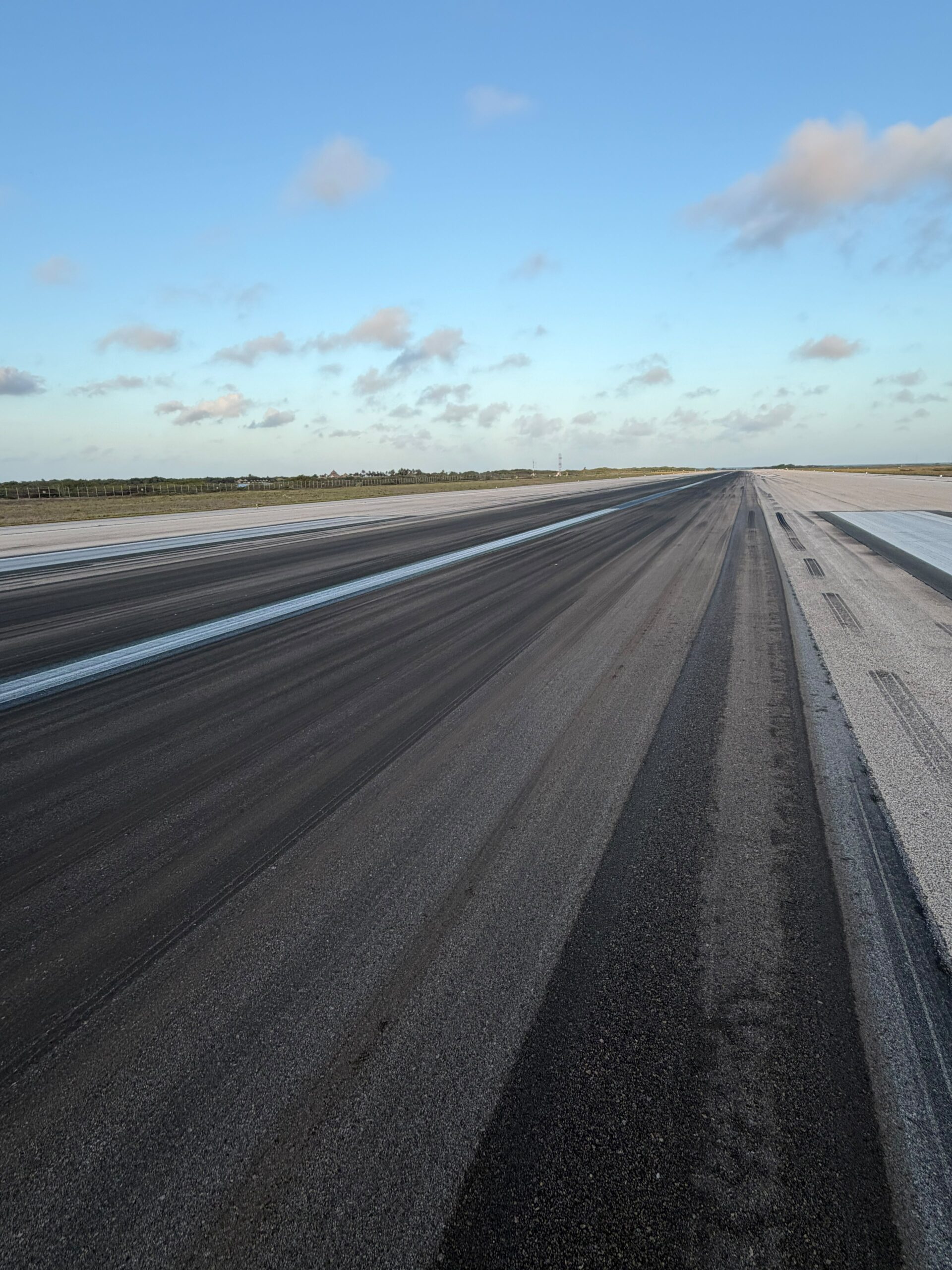
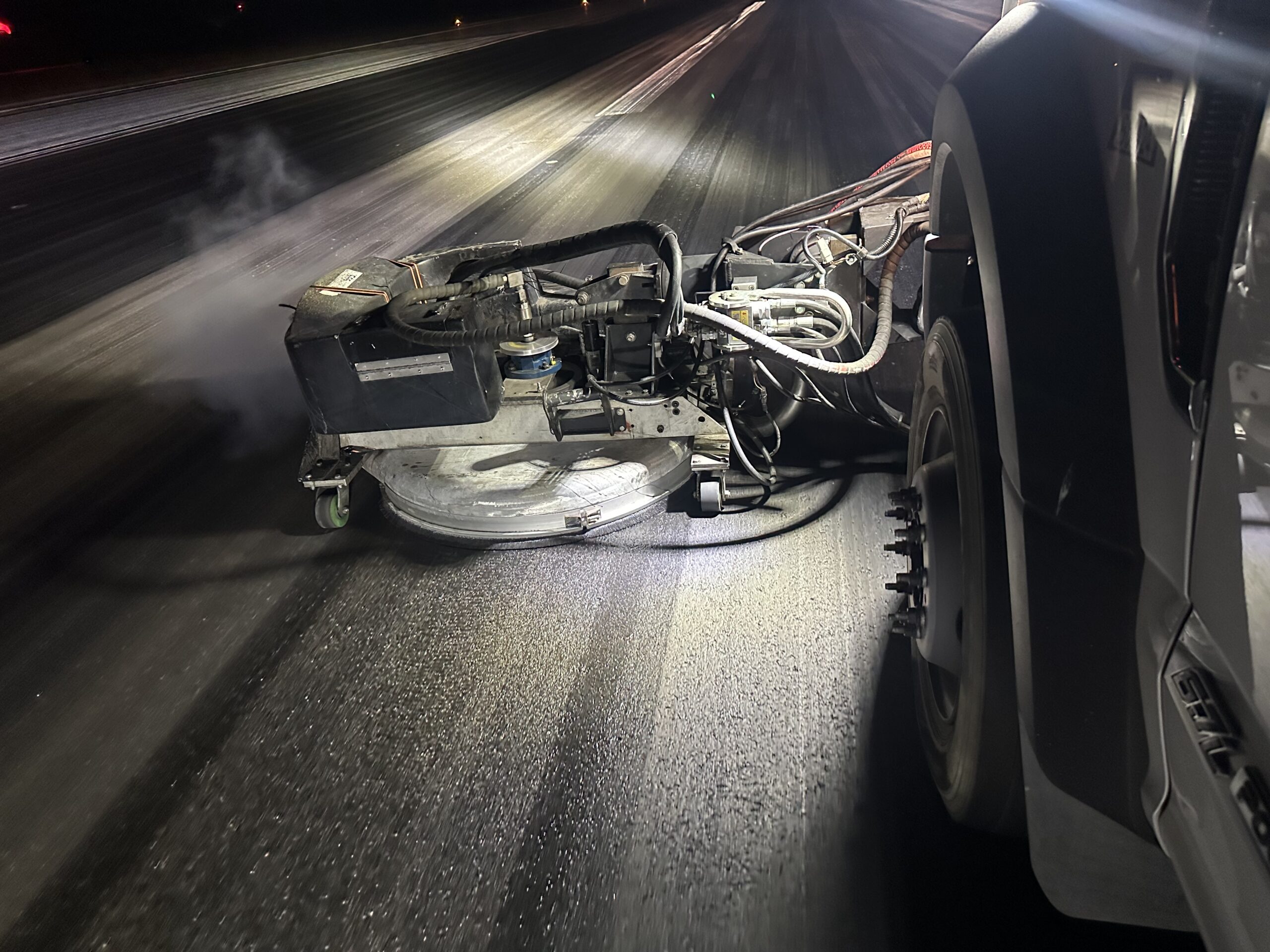
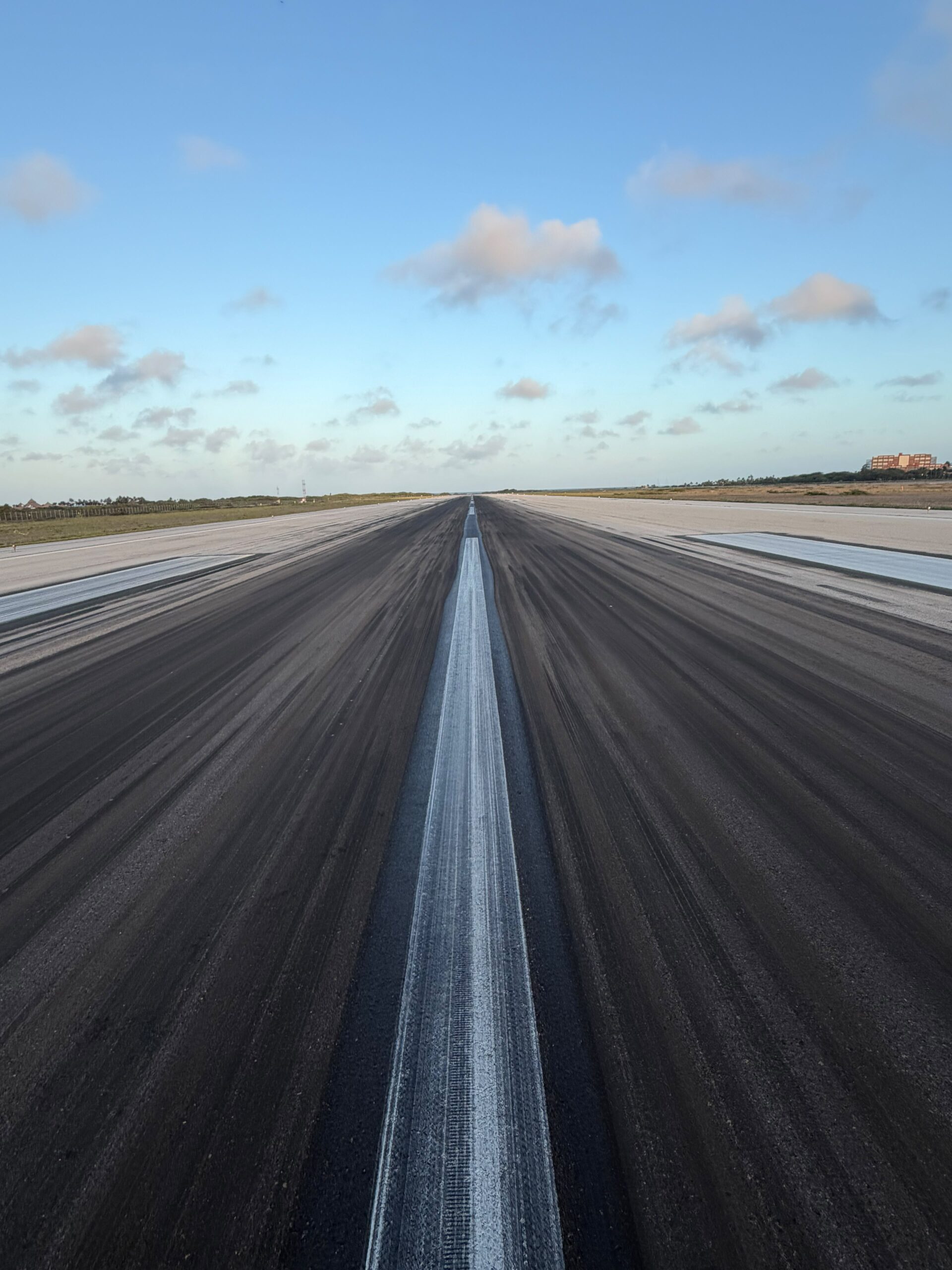
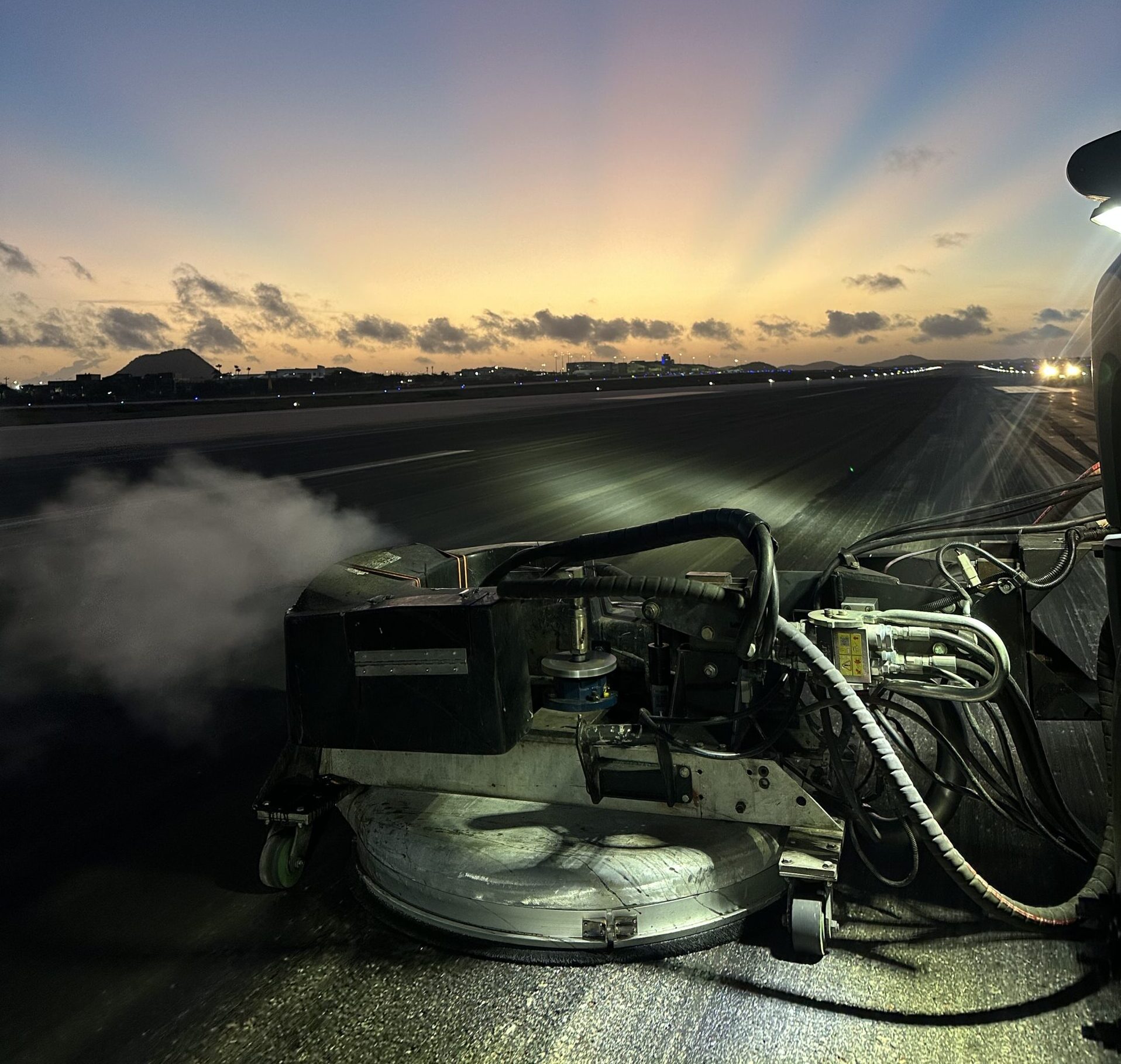
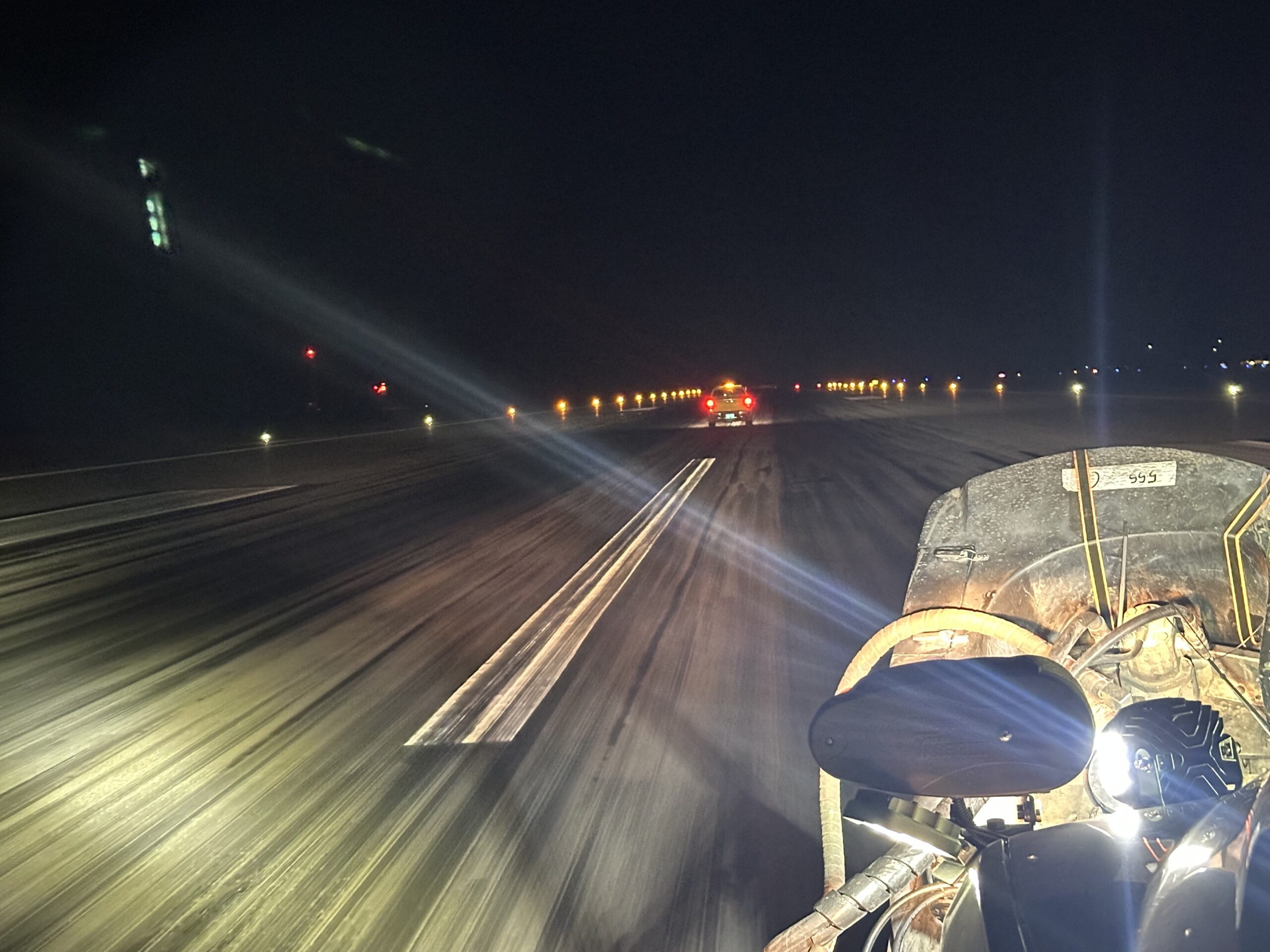
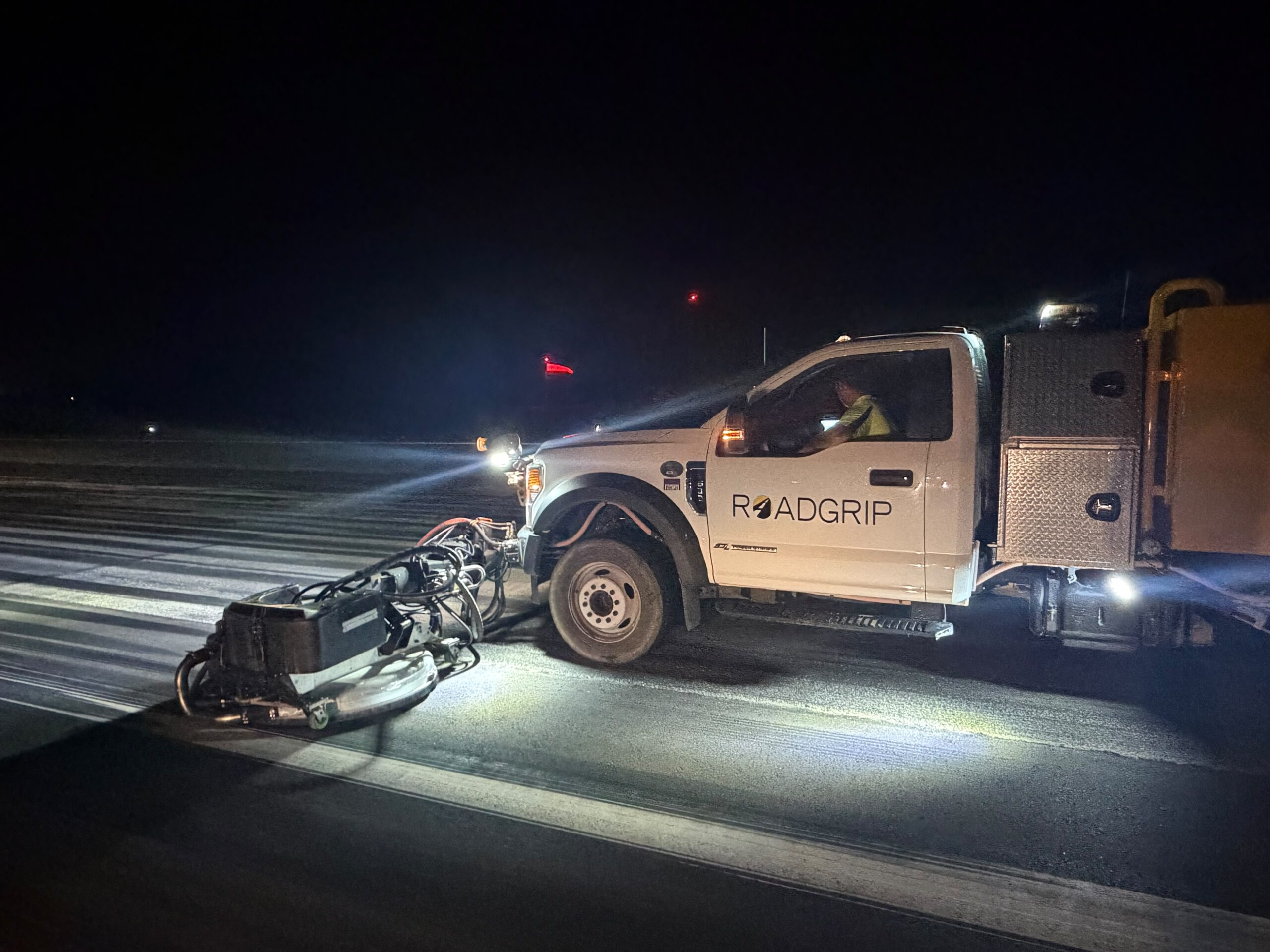
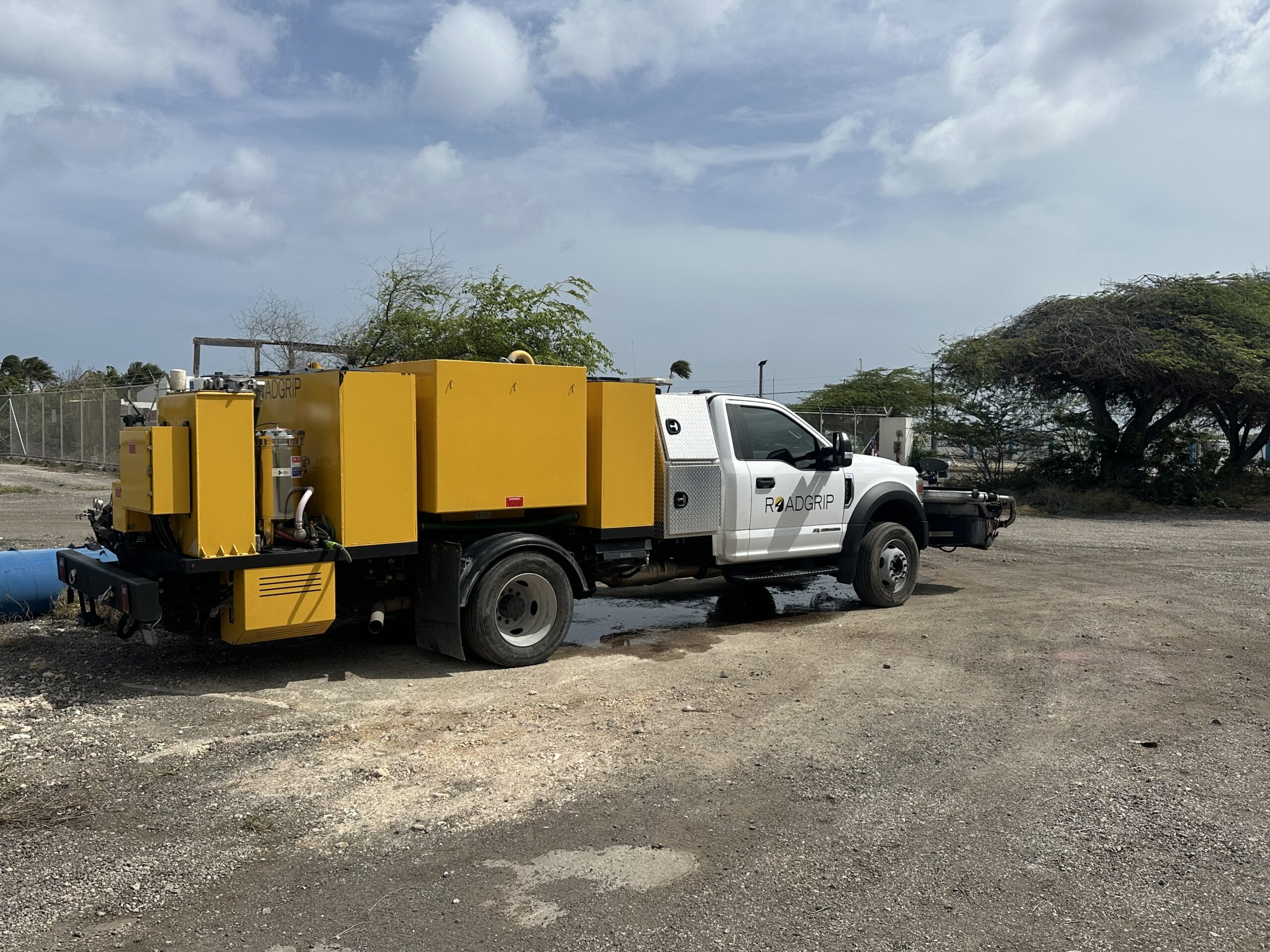
Rubber removal is an important part of routine airfield maintenance and safety, which is why our Roadgrip LATAM team has recently been at Queen Beatrix International Airport in Aruba, removing 11,540m² of accumulated rubber using ultra-high-pressure (UHP) water jetting.
As tyres make contact with a runway at speed, heat and friction cause rubber to be deposited onto the pavement, particularly around touchdown zones. One landing makes little difference, but thousands of landings gradually create a layer that can begin to mask the texture of the runway beneath.
Runway pavement is engineered with surface texture that contributes to tyre grip and helps water escape from beneath an aircraft’s tyres. As rubber deposits accumulate, they can begin to fill that texture. The FAA notes that contaminants building up on runway pavements can reduce friction, while heavy rubber deposits can affect aircraft braking and directional control, particularly in wet conditions.
Rubber can also begin to obscure painted runway markings, creating another reason for airports to keep deposits under control.
Importantly, rubber removal shouldn’t be based purely on whether a runway looks dirty. Friction monitoring, aircraft movements, aircraft mix and the rate at which deposits accumulate can all inform an airport’s maintenance programme. FAA guidance, for example, recommends different removal frequencies depending on the number and type of turbojet landings at each runway end.
Queen Beatrix International Airport operates a single asphalt runway, 11/29, approximately 45 metres wide and up to 2,808 metres long. Like any airport handling regular commercial traffic, repeated aircraft movements inevitably result in rubber accumulating in the touchdown areas.
For the removal, Roadgrip LATAM used specialist UHP water jetting equipment to remove 11,540m² of rubber from the runway surface.
The process uses extremely high-pressure water jets to break the bond between the accumulated rubber and the pavement beneath. When carried out by experienced operators with the correct equipment and settings, water jetting can remove the contaminant while preserving the underlying runway surface.
It is a well-established technique for airfield maintenance. FAA research into high-pressure water-jet cleaning found that appropriate equipment and procedures could remove above-surface rubber deposits without visible pavement damage and improve wet-runway friction in rubber-contaminated touchdown areas.
For an operational airport, it also allows substantial areas to be treated methodically within carefully planned maintenance windows.
Removing accumulated deposits exposes the pavement texture again, helping to maintain the surface characteristics intended to provide aircraft with appropriate braking and directional control. It also prevents deposits from progressively covering important runway markings.
Our teams work on runways throughout the world improving safety and runway longevity. Contact our head office to discuss your airfield maintenance.