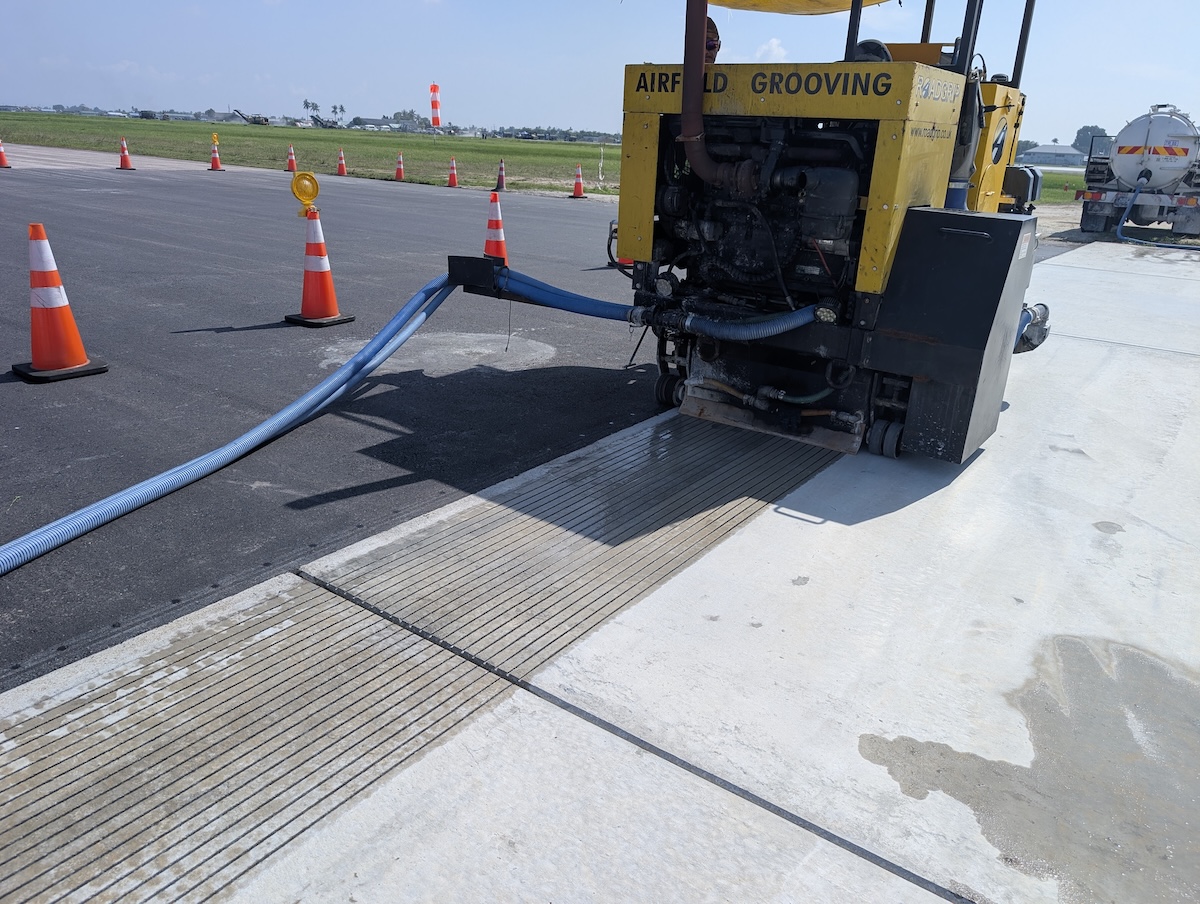
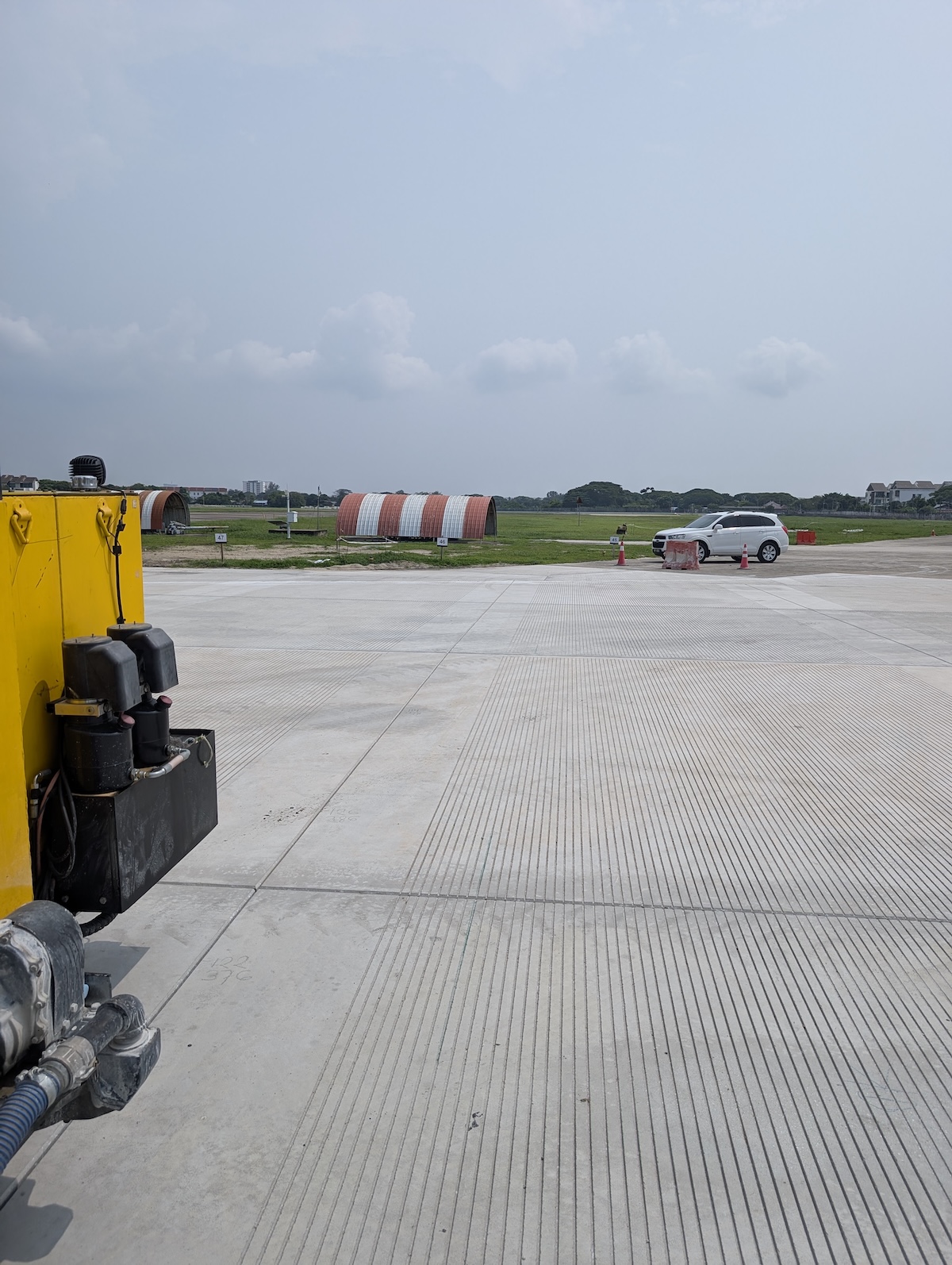
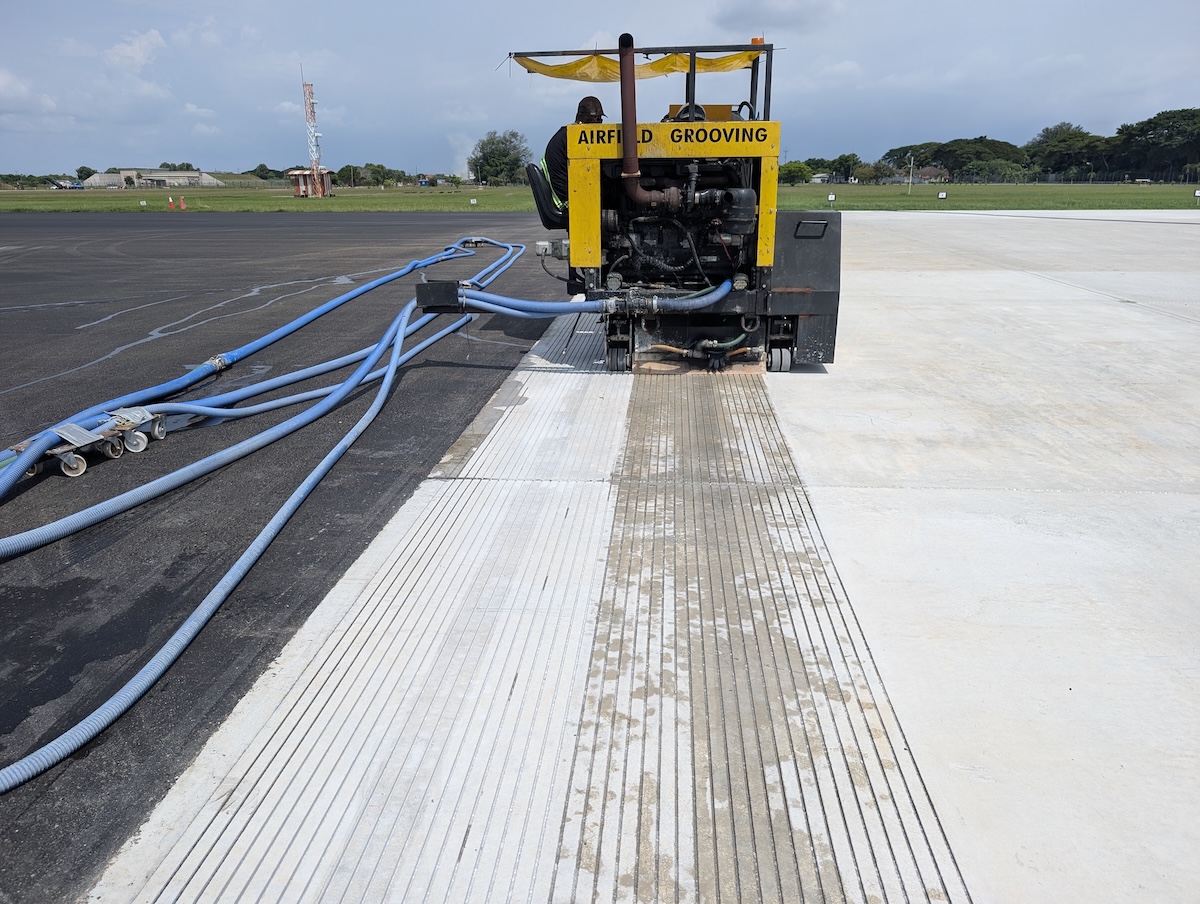
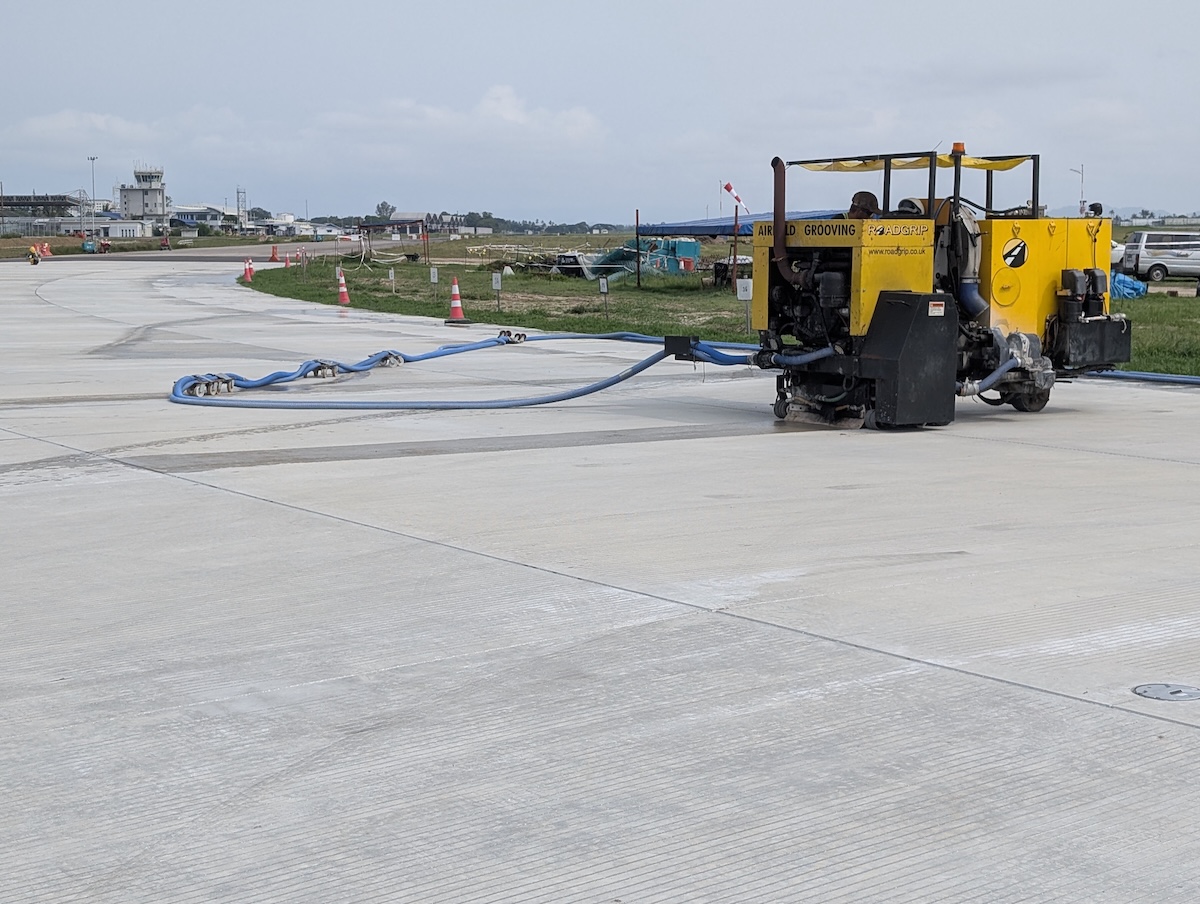
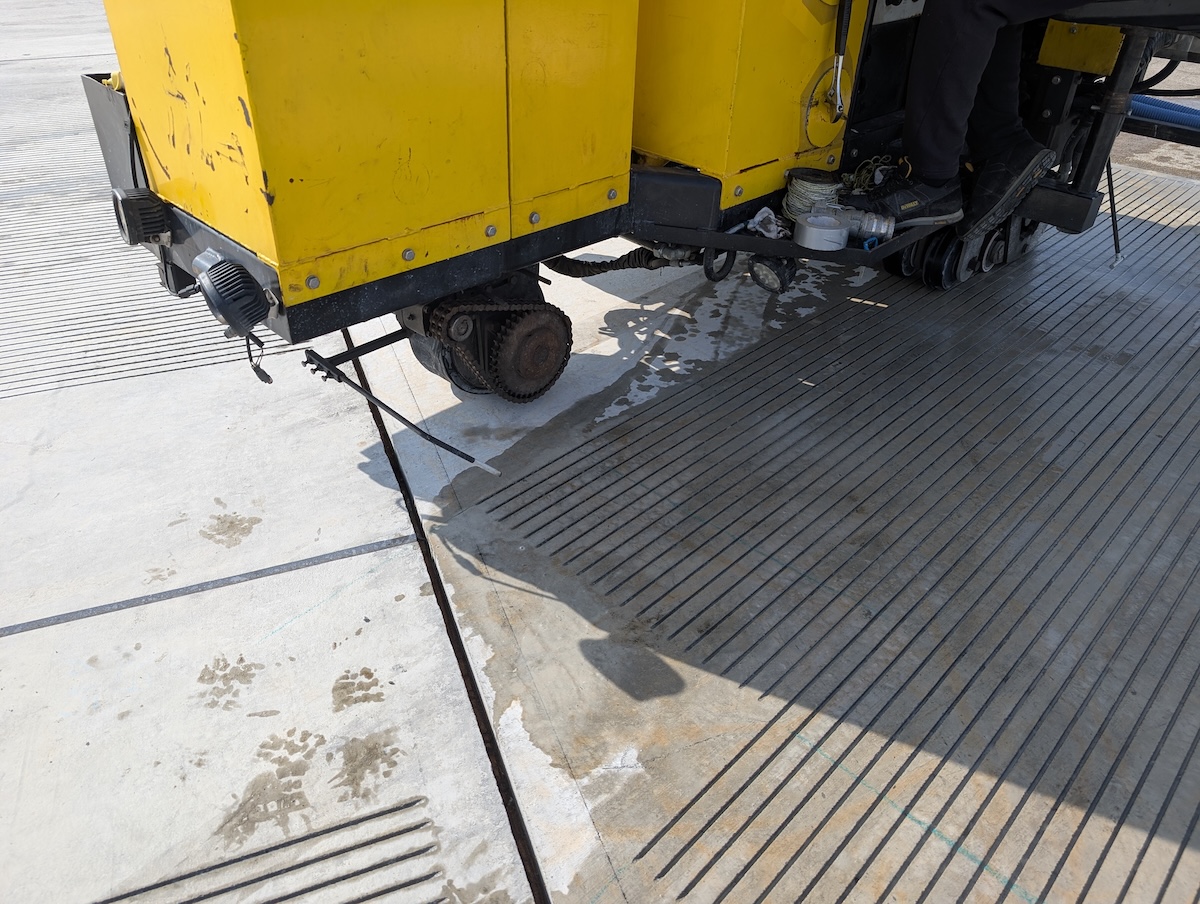
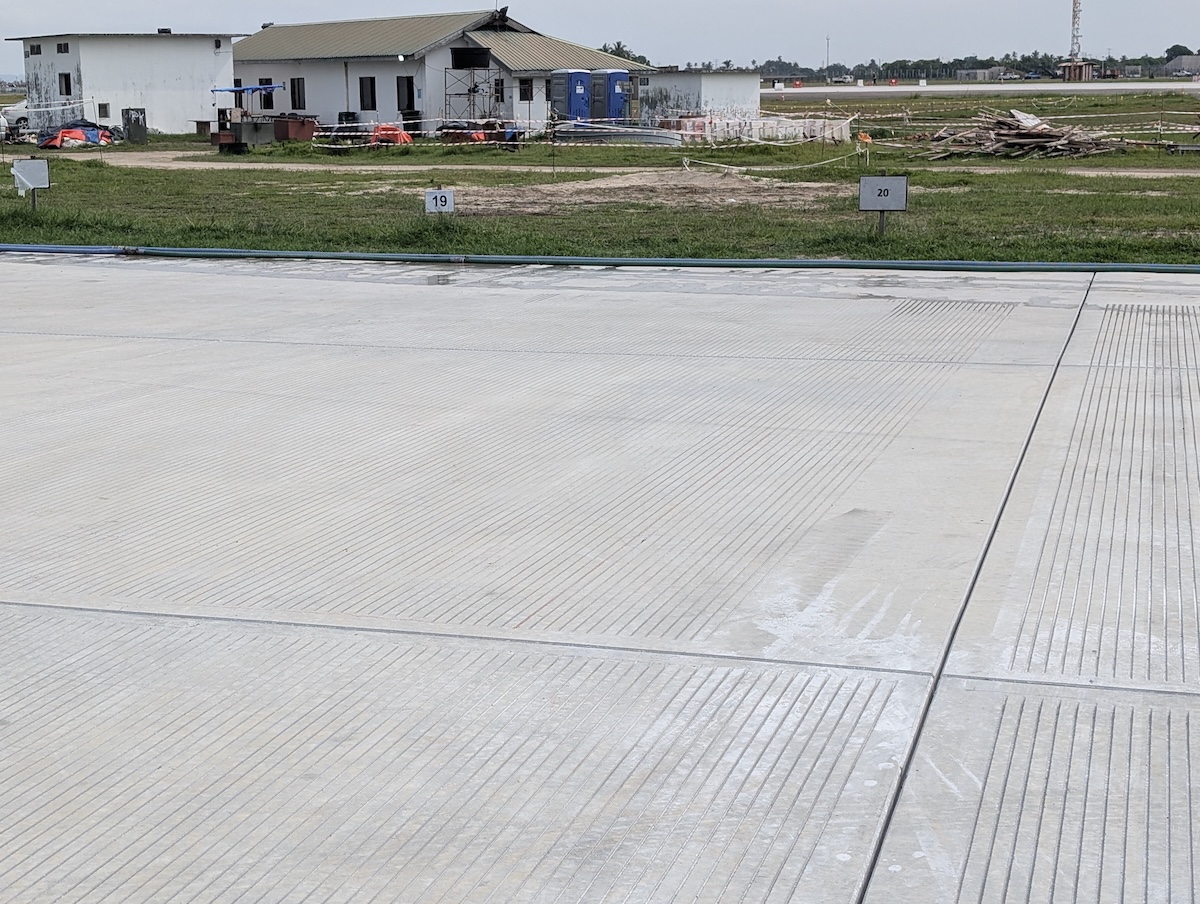
Roadgrip Airports has completed concrete runway and taxiway grooving works in Malaysia to improve wet-weather performance and help reduce the risk of aircraft hydroplaning.
With Malaysia experiencing some of the heaviest tropical rainfall in Southeast Asia, effective runway drainage is particularly important. Our specialist team carried out the grooving works using diamond-bladed machinery designed to cut accurately into hard concrete surfaces, creating consistent channels that allow water to escape from beneath aircraft tyres.
The project highlights both the safety benefits of airport pavement grooving and the technical expertise required to deliver it on concrete.
Malaysia’s equatorial climate brings high humidity, frequent thunderstorms and substantial rainfall throughout the year.
Unlike countries with sharply defined wet and dry seasons, Malaysia receives rain in every month, although the intensity varies by region and monsoon period.
For airport operators, these conditions make effective surface drainage an important part of maintaining reliable runway and taxiway performance.
When water accumulates on a runway, it can form a layer between the aircraft tyres and the pavement. At higher speeds, this increases the risk of hydroplaning, potentially reducing braking effectiveness and directional control.
Runway grooving helps to address this by providing channels through which surface water can escape, improving water dispersal within the tyre contact area.
Taxiway grooving offers similar drainage benefits, supporting aircraft braking, turning and manoeuvring on wet pavement, although taxiway operating speeds are considerably lower.
Grooving concrete is a more demanding cutting operation than grooving asphalt.
Concrete’s hardness, aggregate composition and abrasive properties place significant demands on the diamond blades used to form the channels. The machinery must maintain consistent groove width, depth and spacing while working through a material that can vary in hardness across the pavement.
Blade selection and cutting speed are therefore critical. The blades must cut cleanly without excessive wear, while water is used for cooling and to manage the dust and slurry generated during the process.
Concrete airfield pavements also contain joints that accommodate construction and pavement movement. These require careful handling as the grooving machinery crosses them, particularly where joint edges or sealants could be vulnerable to damage.
Roadgrip Airports uses specialist grooving machinery fitted with multiple diamond blades to cut parallel channels into the pavement.
The grooves are formed to the project’s specified dimensions, creating a consistent pattern across the treated runway and taxiway areas.
Working within an operational airport also requires careful coordination. Runway and taxiway access may be restricted to defined closure periods, and all machinery, personnel and materials must be managed in accordance with airside safety procedures.
Our experienced international teams are accustomed to these requirements, combining specialist pavement engineering with the practical demands of working at active airports.
By completing concrete grooving works across runways and taxiways, Roadgrip Airports has helped improve surface water dispersal on critical aircraft movement areas.
Learn more about our specialist runway and taxiway grooving services, and how our global teams help airports to manage airfield maintenance and safety, at Roadgrip Airports.