
Removing paint from road surfaces and pavements isn’t as simple as stripping it back and starting again. The method you choose has a direct impact on surface performance, safety, programme time and long-term durability.
Whether you’re dealing with temporary event branding, outdated road markings or multiple layers of legacy paint on a racetrack, selecting the right removal technique is critical. Different surfaces and coatings behave in different ways, and using the wrong method can damage the substrate, reduce skid resistance or leave behind inconsistent finishes.
The key is understanding which approach suits the surface, the environment and the outcome you need.
Road markings and coatings are designed to bond strongly to the surface beneath them. That’s what makes them durable – but it also makes them difficult to remove.
On asphalt, coatings tend to sit closer to the surface. On concrete, they often penetrate deeper and bond more aggressively. Add in factors like traffic wear, weather exposure and multiple repainting cycles, and removal becomes a technical process rather than a simple clean-up job.
At the same time, the surface beneath must be protected. Roads, airfields and hardstandings all rely on maintaining their microtexture, the fine surface detail that provides grip and allows water to drain. Any removal method must preserve this.
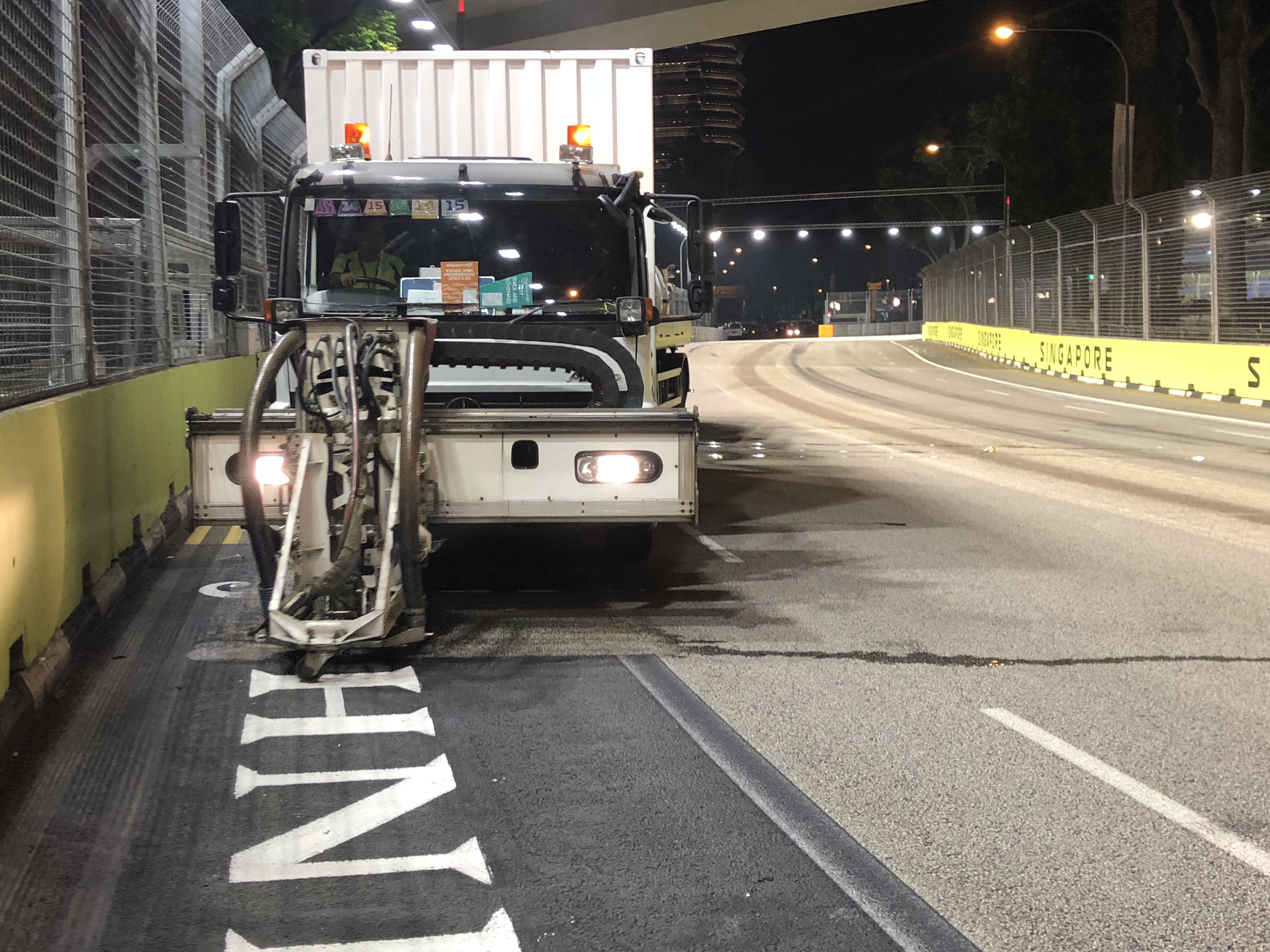
On most projects, ultra high pressure water jetting is the preferred method.
UHP uses extremely high-pressure water to break down and lift paint from the surface without damaging the underlying asphalt. It is precise, chemical-free and highly effective, making it ideal for:
Because it removes paint without grinding or scarring the surface, UHP maintains the road’s texture and friction characteristics. This is particularly important in high-speed environments where safety is critical.
It also allows for controlled removal, meaning specific markings can be taken out without affecting surrounding areas.
UHP isn’t always the best solution, however.
On concrete surfaces, where coatings can bond more deeply, a mechanical approach is often more effective. This is where dry captive shot blasting comes into play.
Shot blasting works by propelling steel shot at the surface in a controlled, enclosed system. The impact breaks the bond between the coating and the concrete, removing paint while simultaneously capturing debris.
This method is particularly suited to:
Because the process is enclosed, it keeps the work area clean and controlled, making it suitable for busy, indoor or operational environments.
The result is a uniform, clean surface, ready for repainting or reinstatement.
Paint removal is rarely the end goal. It’s usually the first step in a wider process — whether that’s reinstating road markings, applying new branding or returning a surface to its original condition.
That’s why the quality of removal matters. A clean, properly prepared surface ensures that whatever comes next will bond correctly, perform as expected and last longer.
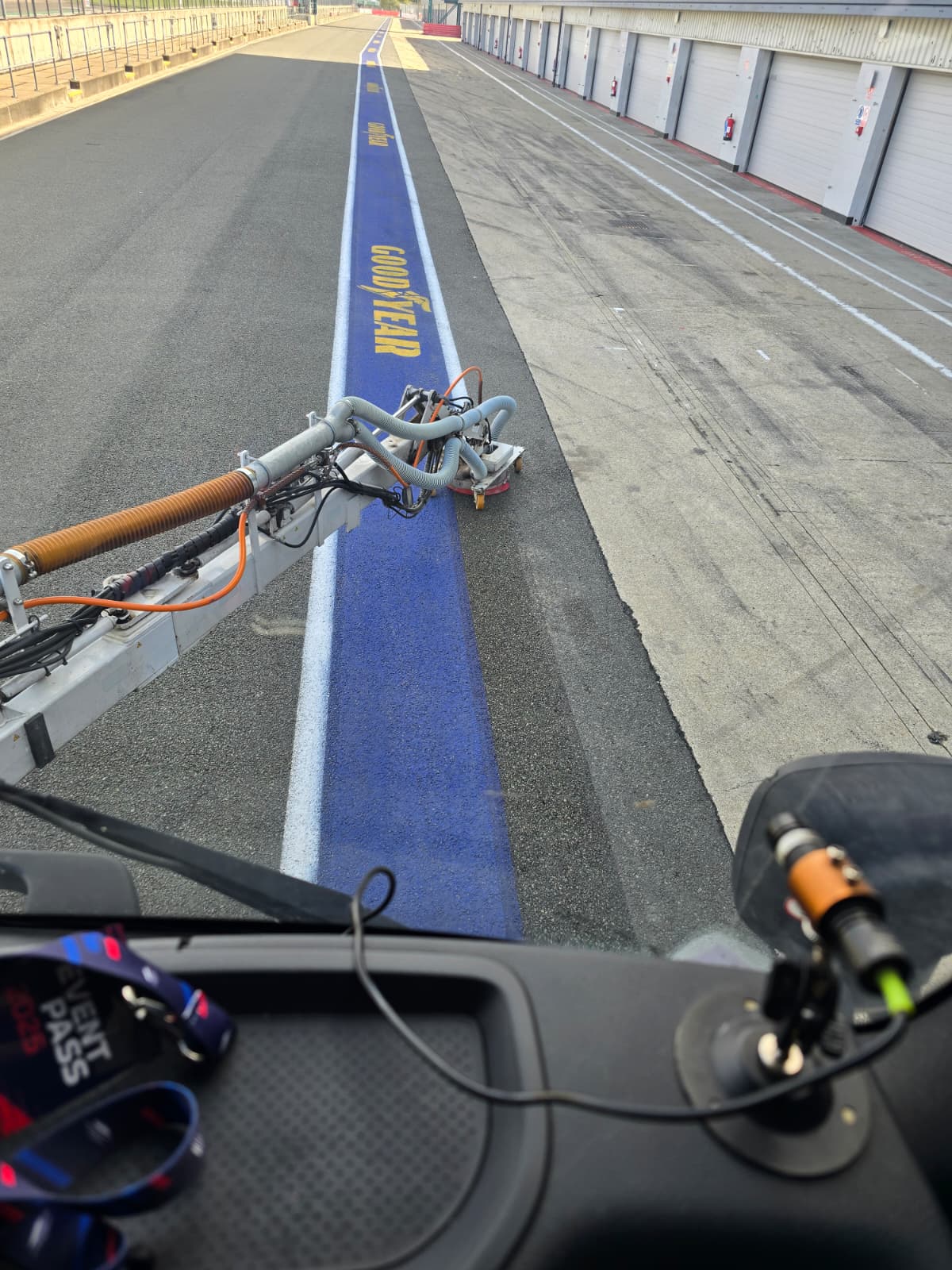
The most important factor in paint removal is matching the method to the surface and the objective.
For asphalt surfaces where preservation of texture is essential, UHP water jetting is typically the best choice. It delivers clean removal without damaging the road.
For concrete surfaces with heavily bonded coatings, shot blasting provides a faster and more effective solution, particularly on large areas.
In many cases, the decision also comes down to logistics, programme requirements and the condition of the surface.
There is no one-size-fits-all solution when it comes to paint removal.
The best results come from understanding the surface, selecting the right method and applying it with precision. Whether that’s ultra high pressure water jetting or shot blasting, the goal remains the same: remove the coating efficiently while preserving the integrity of the surface beneath.
We work on pavements on roads, runways, racetracks and car parks around the world. Get in touch with our friendly team to discuss your requirements.