
When a pilot approaches a runway at night or in poor weather, visibility isn’t coming from one source.
It’s not just the markings; it’s not just the lighting – and it’s not just the surface.
It’s the combination of all three, working together, that allows a pilot to see, interpret and land safely.
At Roadgrip Airports, that’s how we approach runway infrastructure: as a connected system, not isolated elements.
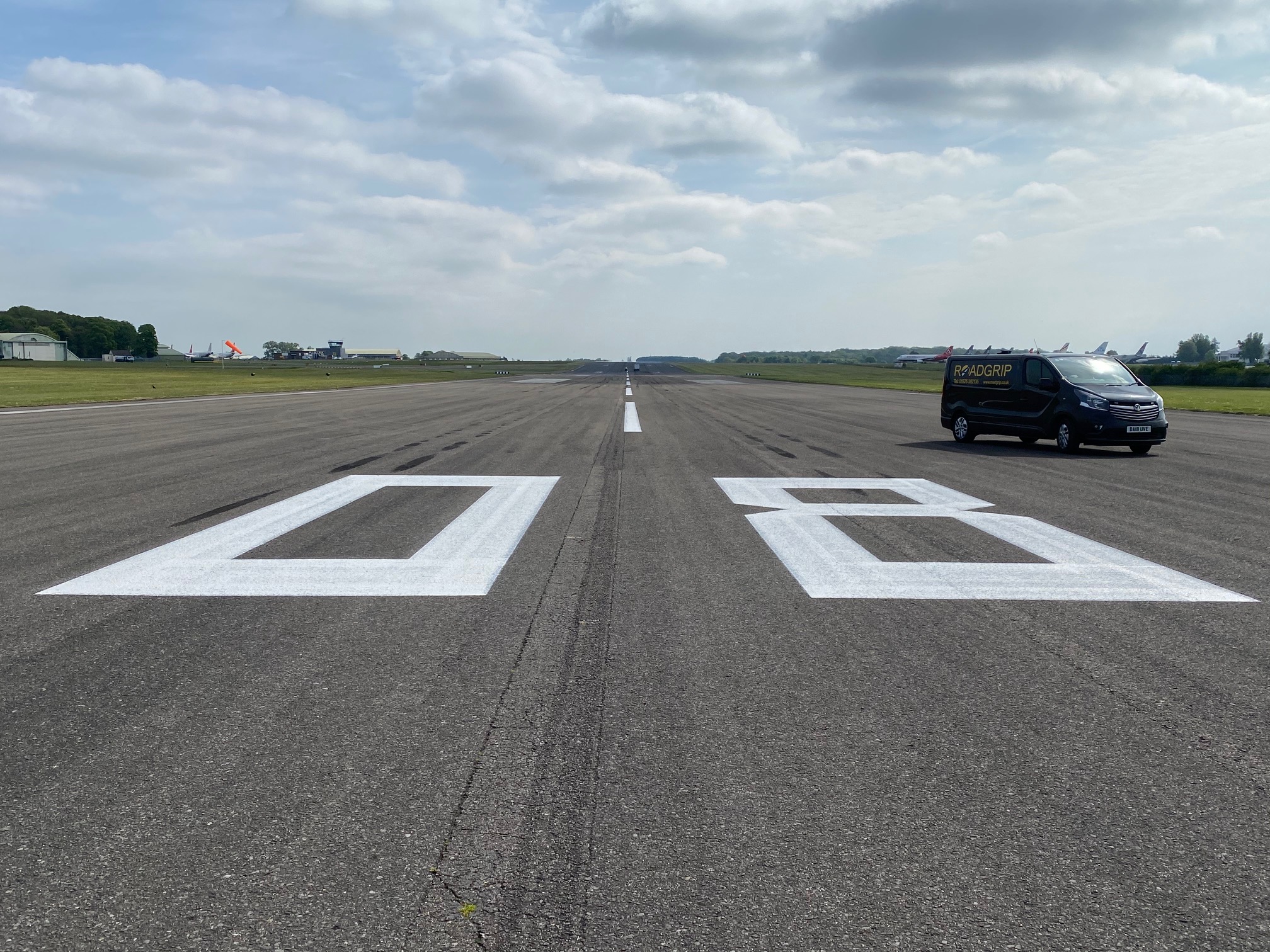
Runway markings provide the foundation of visual guidance.
Applied using high-performance, aviation-grade coatings, they deliver strong contrast against the runway surface and define critical zones such as thresholds, centrelines and touchdown areas.
To maintain visibility in low light, reflective glass beads are embedded into the paint. These reflect light from aircraft landing lights back toward the pilot, making markings appear brighter and more defined during night operations.

Airfield ground lighting (AGL) provides the structure around those markings.
Runway edge lights, centreline lighting, threshold lights and approach systems give pilots depth perception, alignment guidance and spatial awareness, particularly in low visibility conditions where natural references are limited.
Lighting tells the pilot where the runway is.
Markings help them to interpret it.
What often gets overlooked is the surface itself.
Even with high-quality markings and lighting, if the runway surface is compromised, visibility and performance both suffer.
Two key factors come into play here: water and rubber.
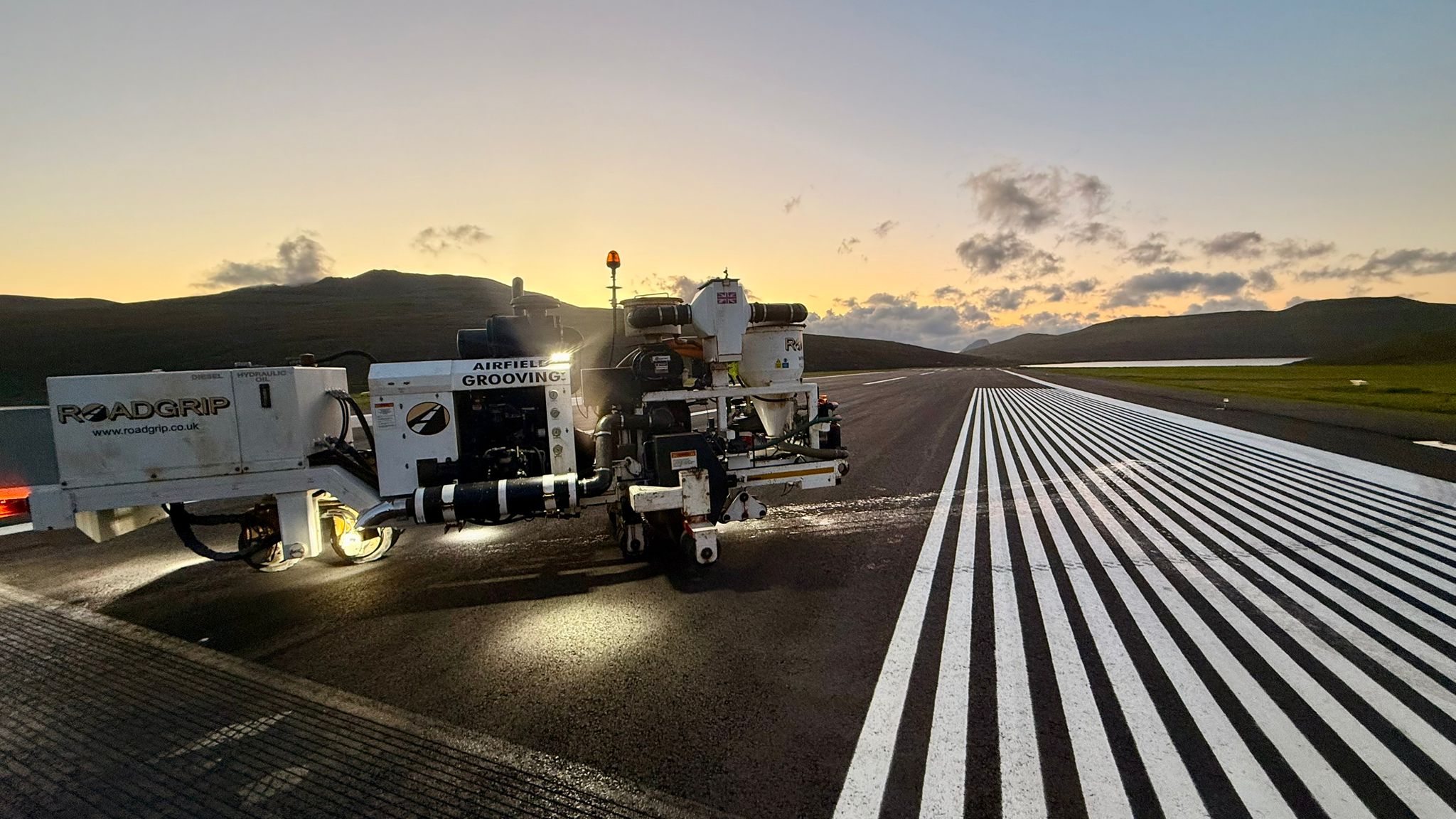
Runway grooving is primarily designed to improve drainage and maintain friction, but it also plays a supporting role in visibility.
By cutting precise channels into the surface, grooving allows water to escape from beneath aircraft tyres and across the runway. This reduces standing water and minimises surface reflection, the kind that can create glare or distort markings under landing lights.
The result is a clearer, more consistent visual field in wet conditions.
Not because the markings are brighter, but because they are less distorted.
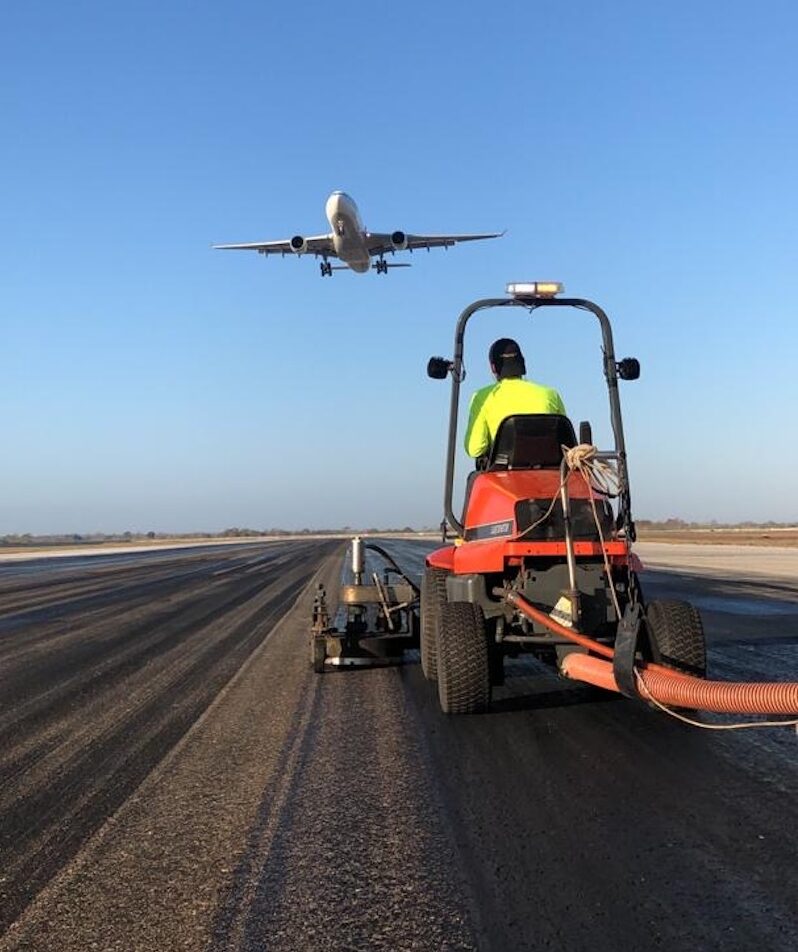
Over time, rubber build-up from aircraft tyres begins to cover runway markings, particularly in touchdown zones.
This has two effects:
It can also interfere with the reflective properties of the embedded glass beads, reducing how effectively markings respond to light.
Regular rubber removal restores both surface performance and visual clarity, bringing markings back to their intended brightness and definition.
Runway visibility isn’t delivered by one solution. It’s the result of multiple systems working together:
If one element underperforms, the whole system is affected.
For pilots, these aren’t separate features. They’re part of a single visual experience during one of the most critical phases of flight.
They rely on clear markings, consistent lighting and predictable surface performance, all working together, in all conditions.
That’s why runway maintenance isn’t just about repainting lines or upgrading lighting. It’s about understanding how each element interacts and making sure the whole system performs as it should.
Contact Roadgrip Airports to learn more about how we do this for airfields around the world – and how we can do the same for yours.