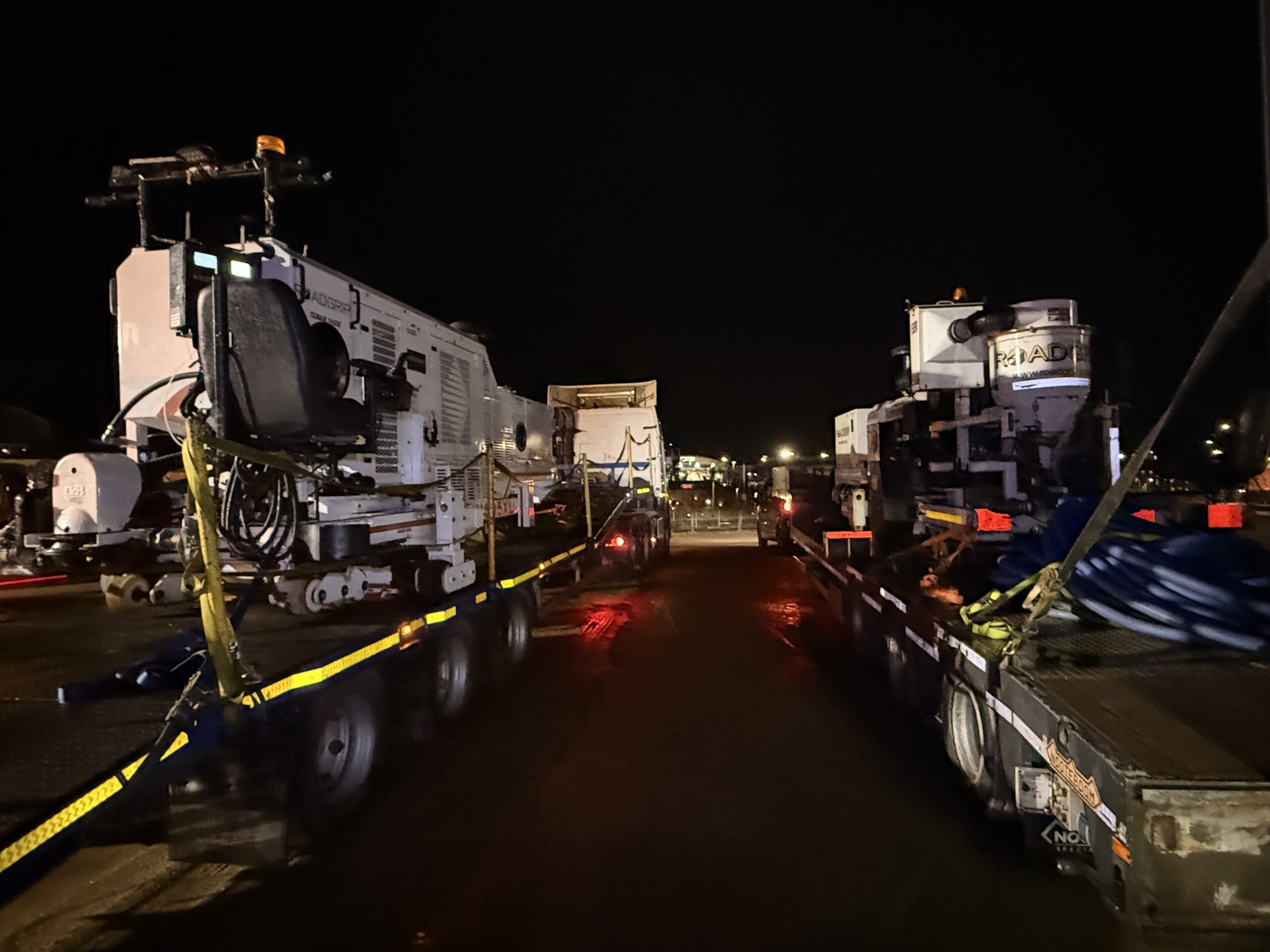
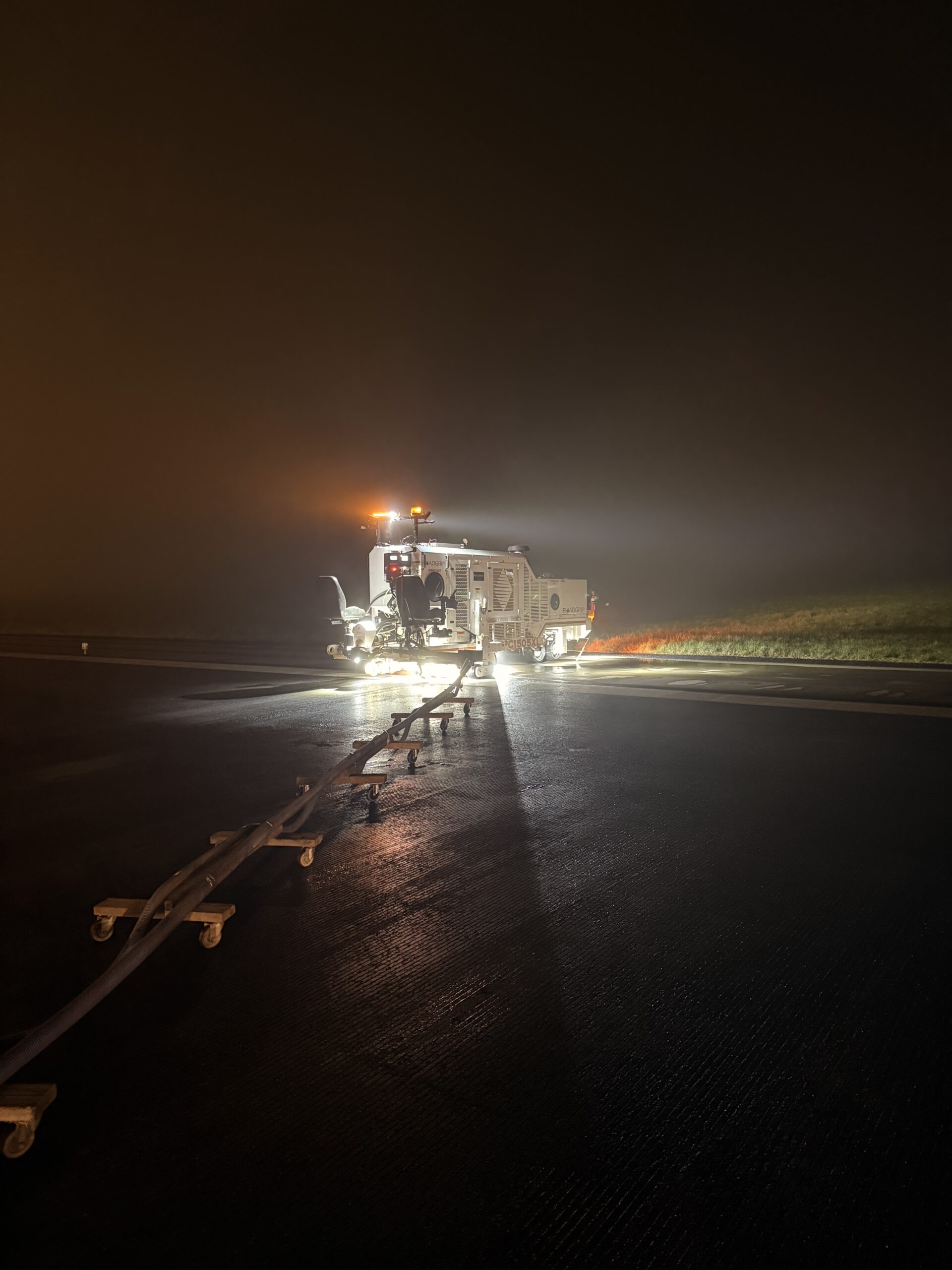
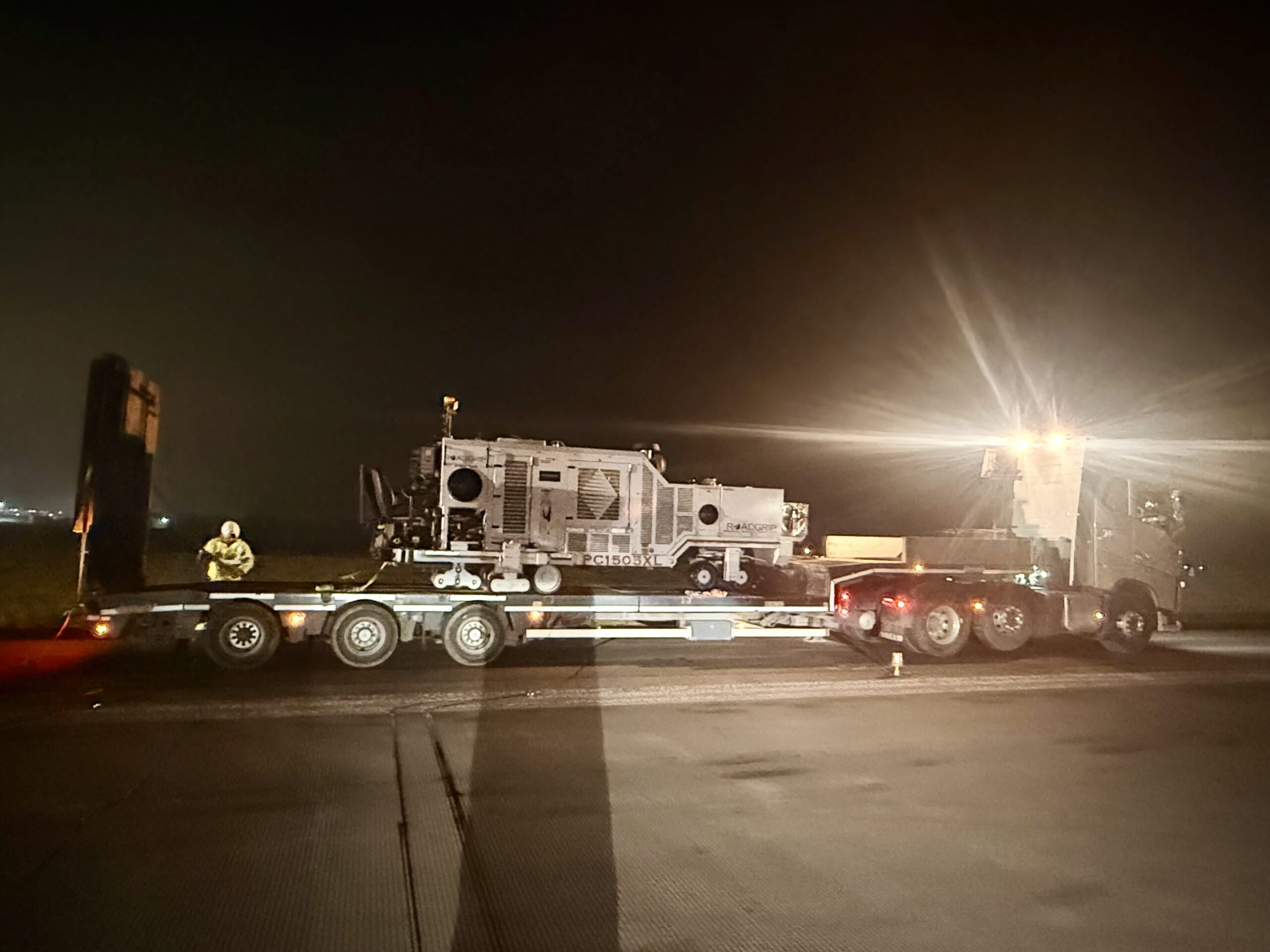
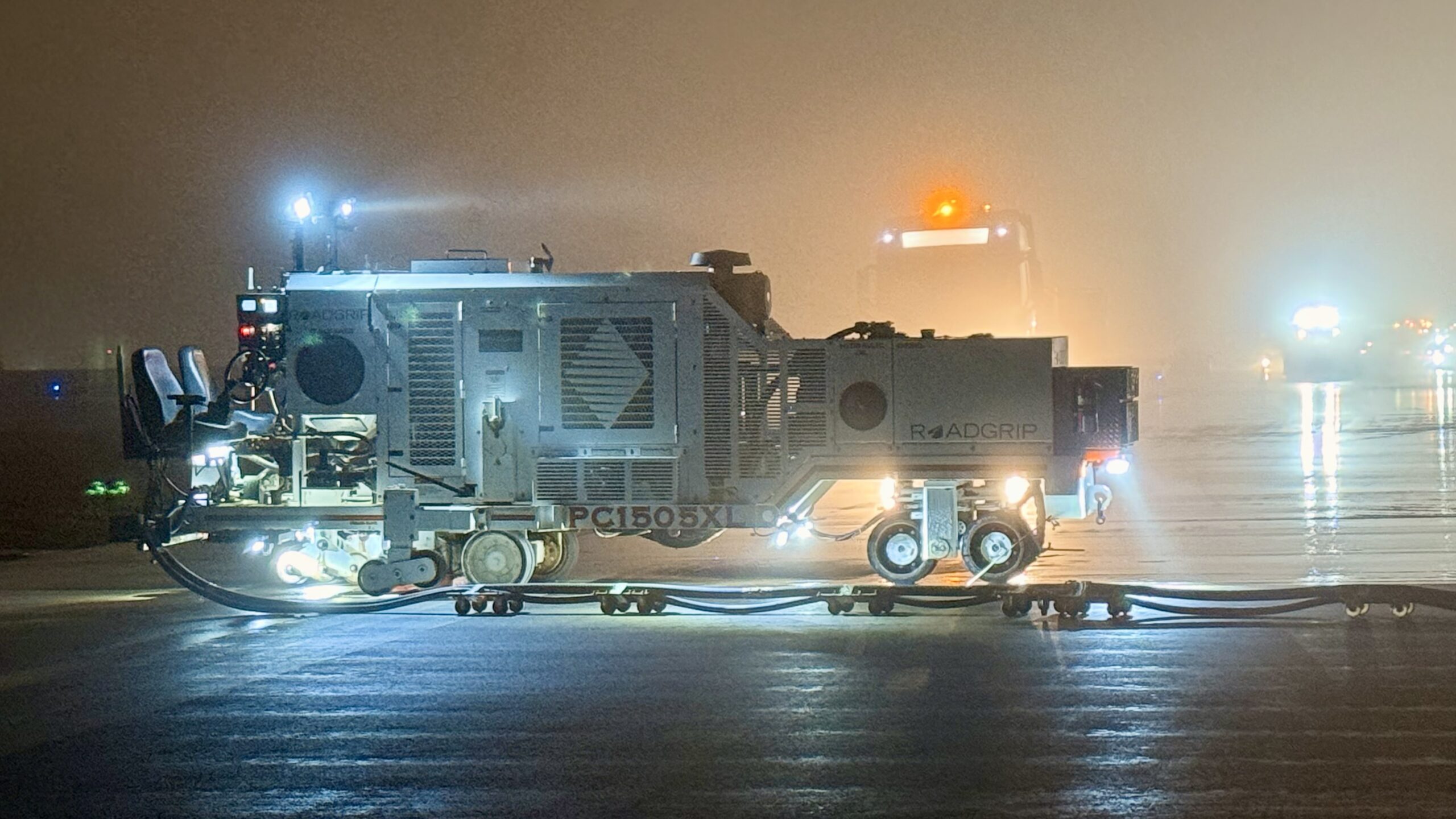
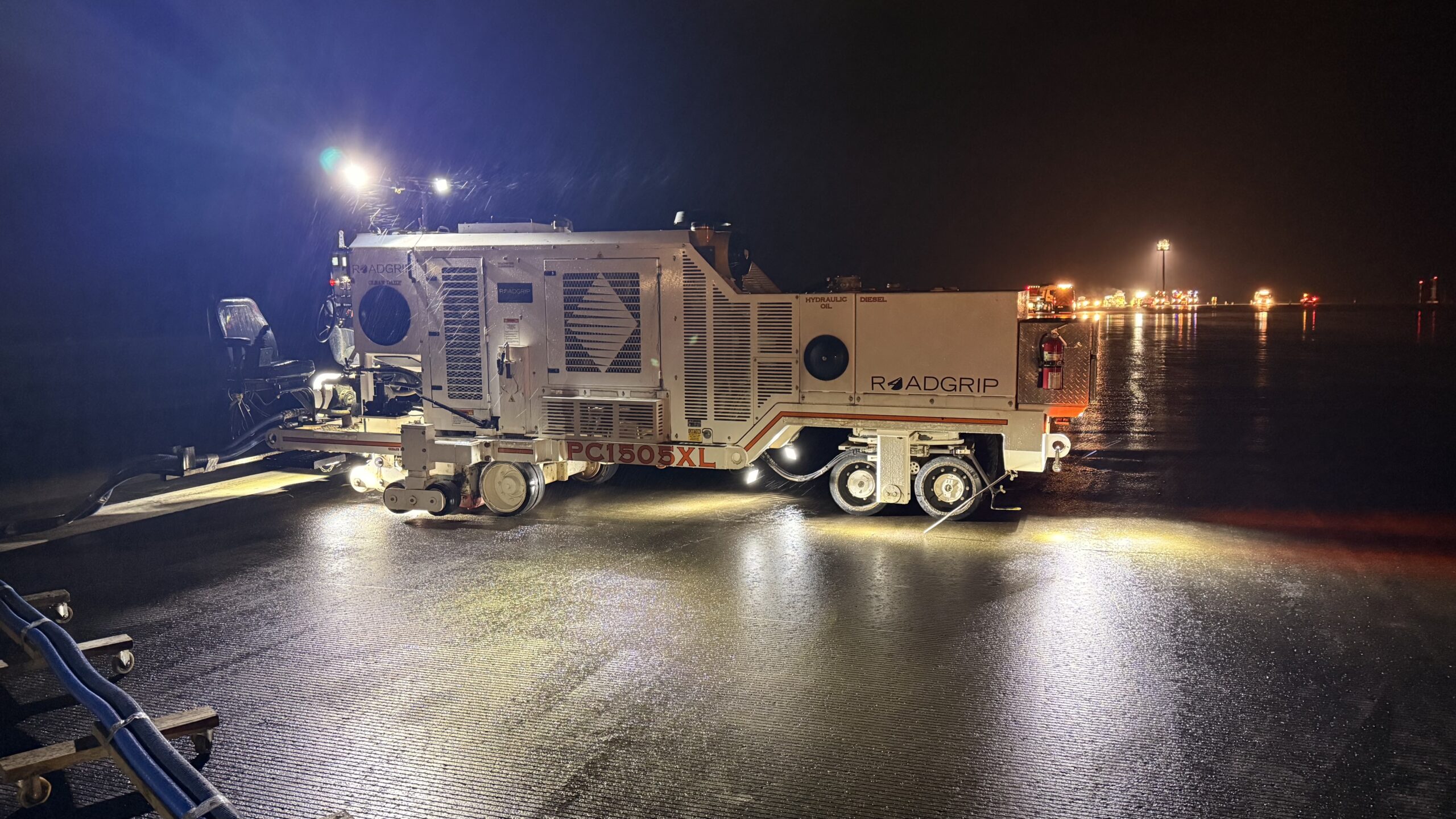
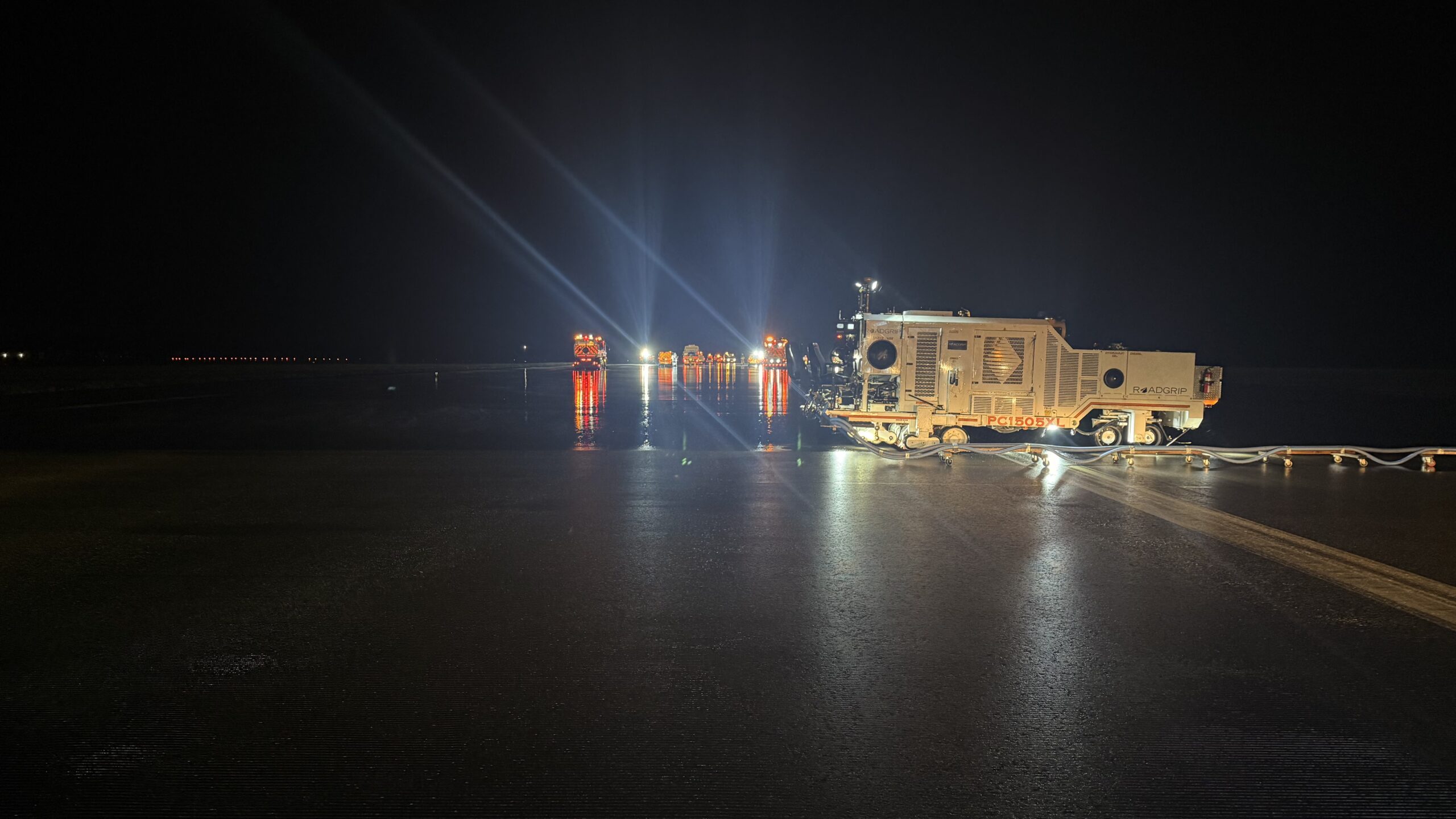
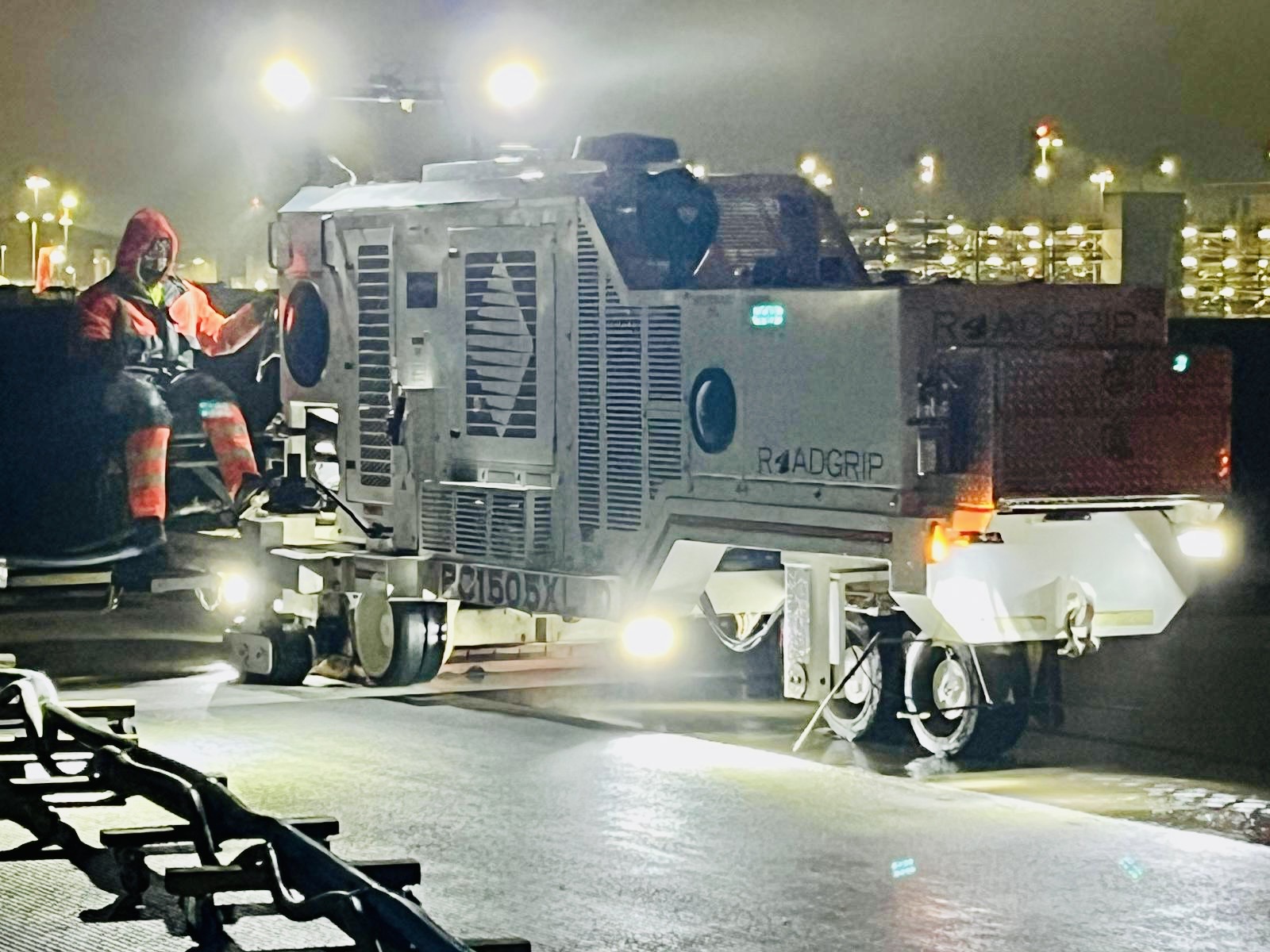
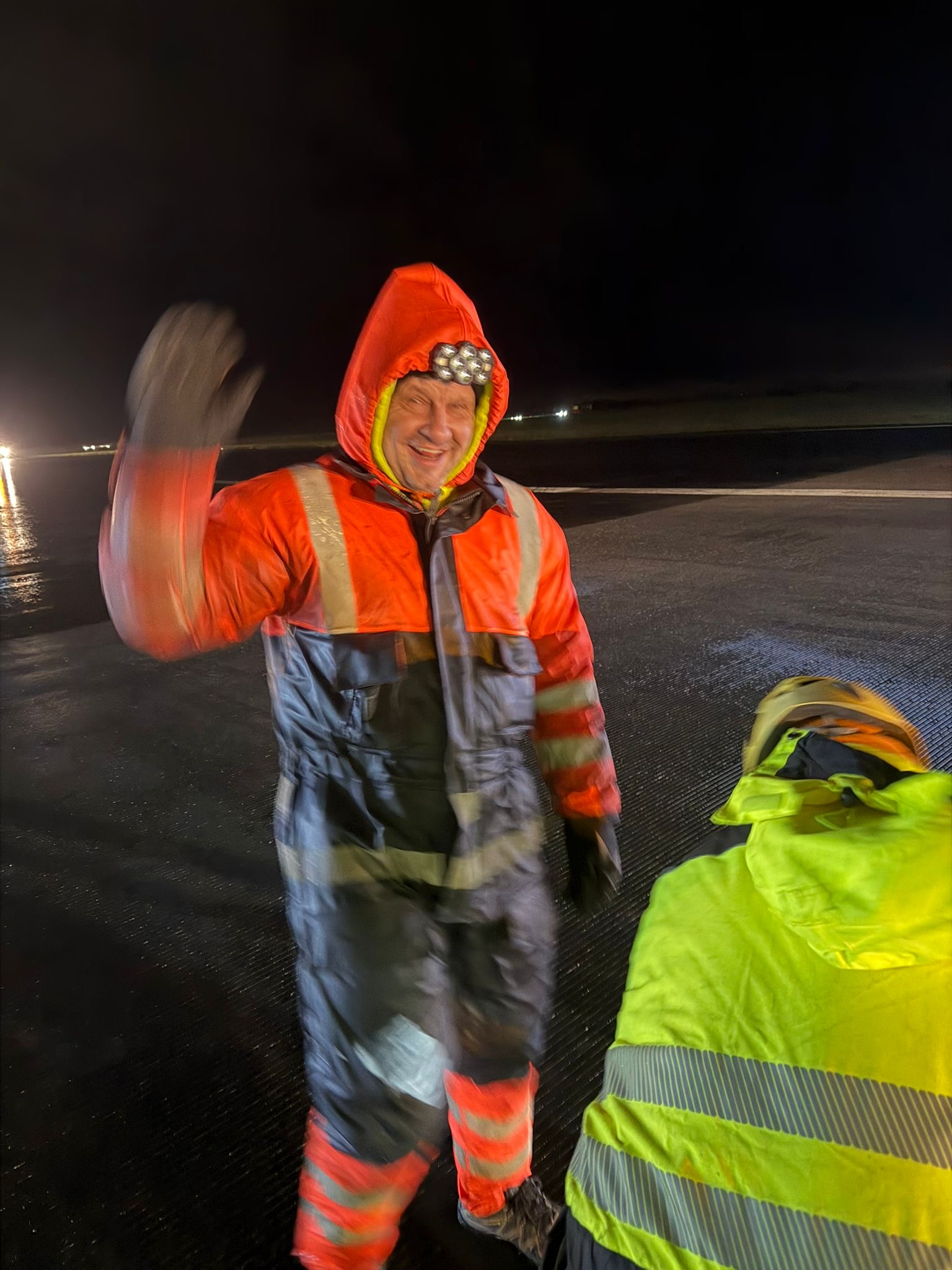
It’s pretty unusual to see people wearing North Sea survival suits in Luton but that’s exactly what our runway grooving operators needed in the winter of 2026.
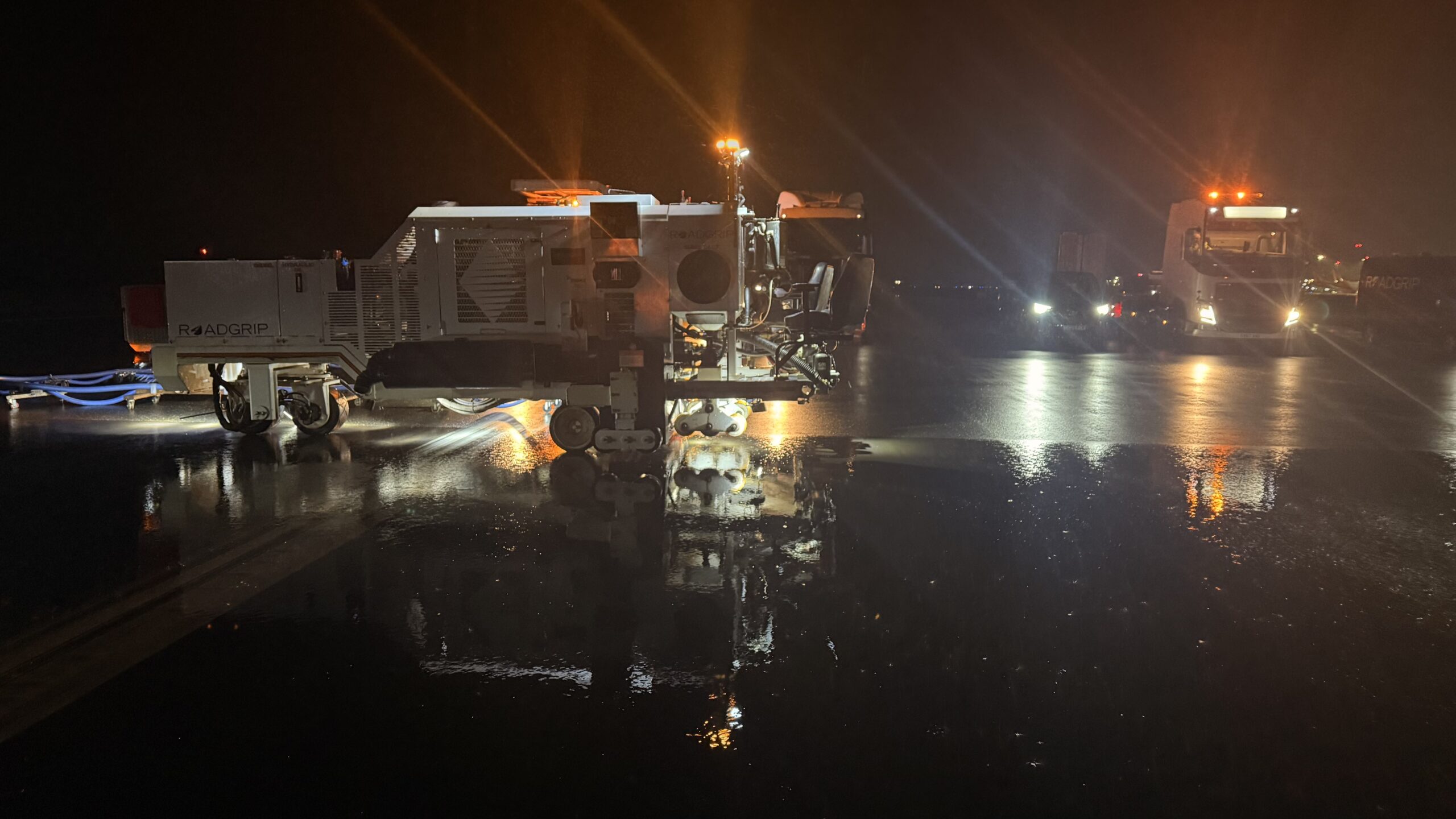
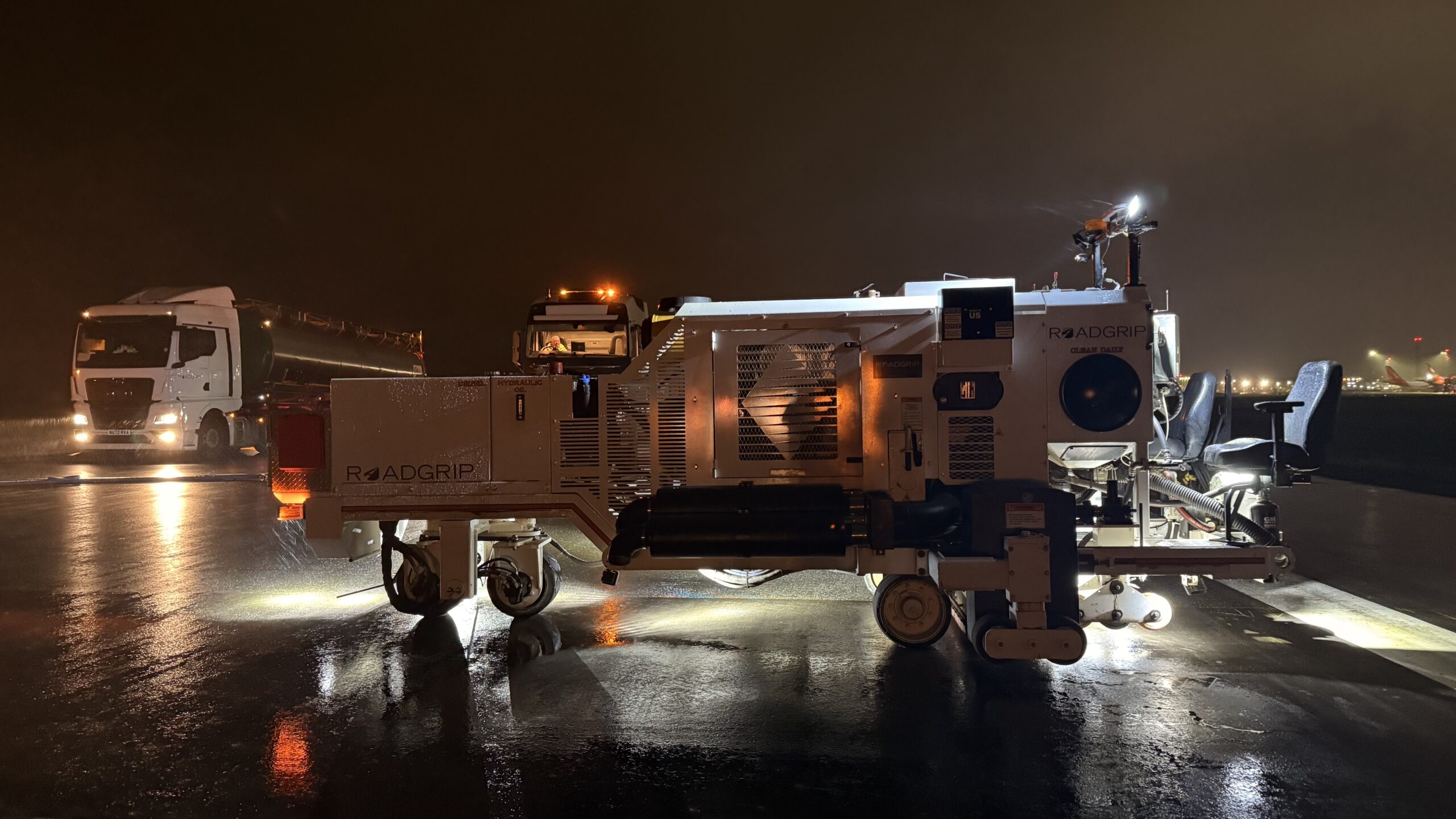
Roadgrip Airports has been working on the runway resurfacing programme at London Luton Airport, supporting the reconstruction works with precision runway grooving under some of the toughest wet conditions the UK winter could throw at us.
See the video: Luton Airport Grooving in Stormy Weather
With the exception of a short Christmas break, the team worked five nights a week between midnight and 05:00, operating within strict airfield closures to keep disruption to flights to a minimum.
This is standard for UK runway resurfacing projects. Winter schedules allow airports to take advantage of reduced flight movements, but they also mean working in the worst weather of the year.
Storms, heavy rain and strong winds became part of the routine. Through Storm Amy and Storm Chandra, the team continued working wherever possible.
Runway grooving is a critical safety process.
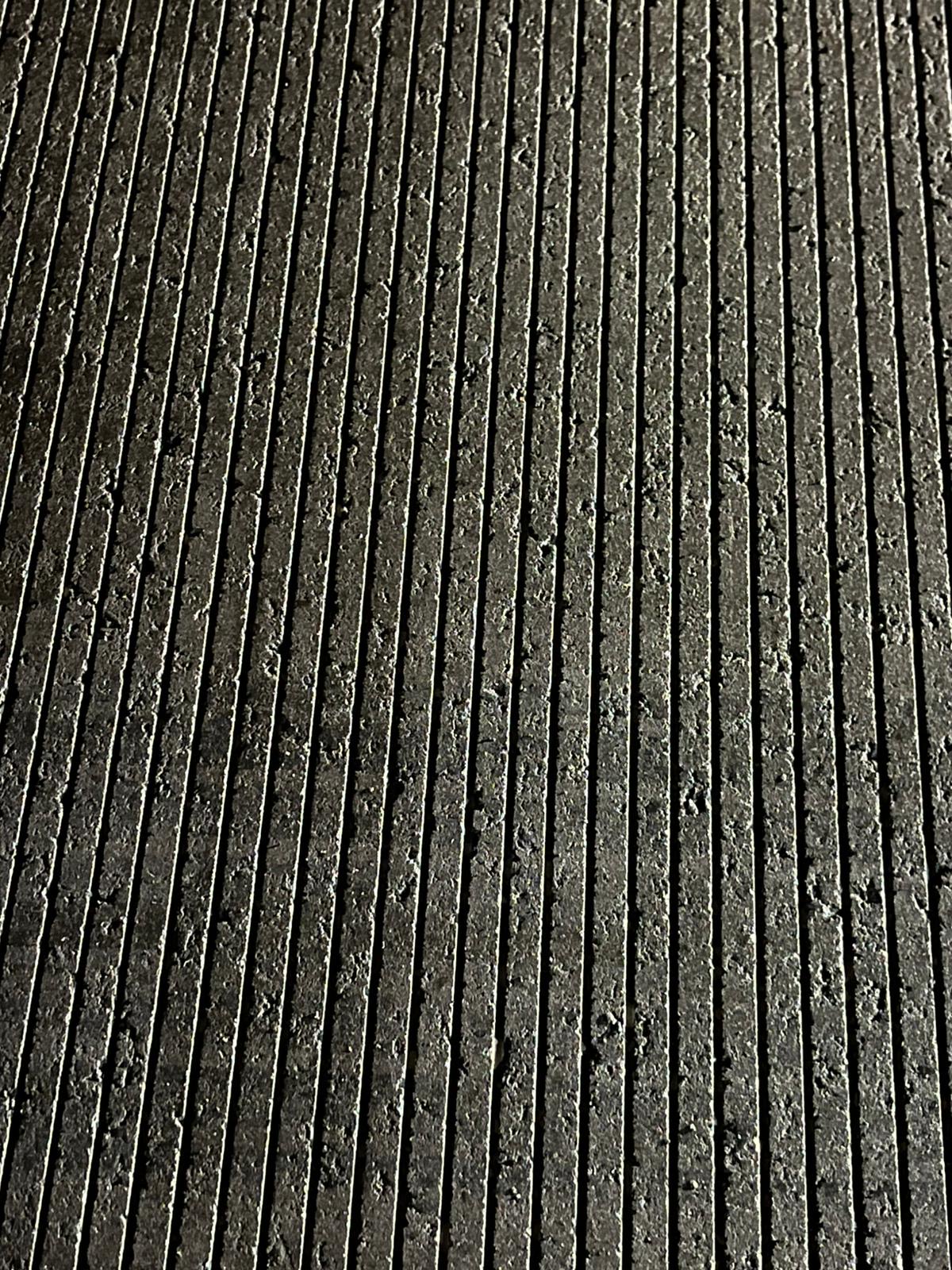
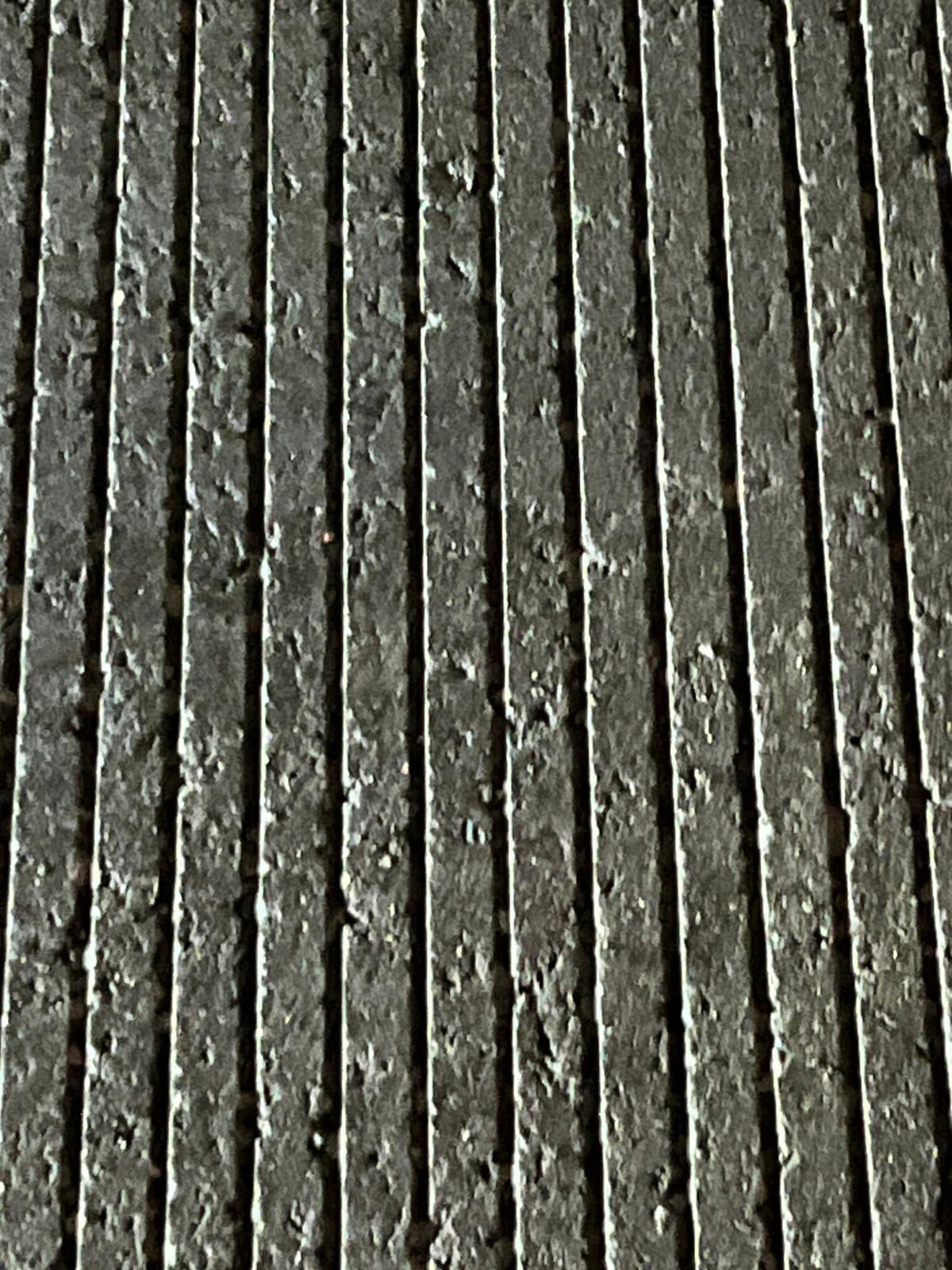
Unlike road vehicles, aircraft tyres don’t have tread. Instead, the “tread” is effectively cut into the runway itself. Using specialist equipment, we cut grooves 4mm wide and 4mm deep into the surface at 25mm centres.
These grooves allow water to escape from beneath aircraft tyres during landing, improving drainage, increasing skid resistance and significantly reducing the risk of hydroplaning.
In a country like the UK, where wet weather is a constant factor, this is essential for safe runway operations.
Grooving is not just physically demanding; it requires absolute accuracy.
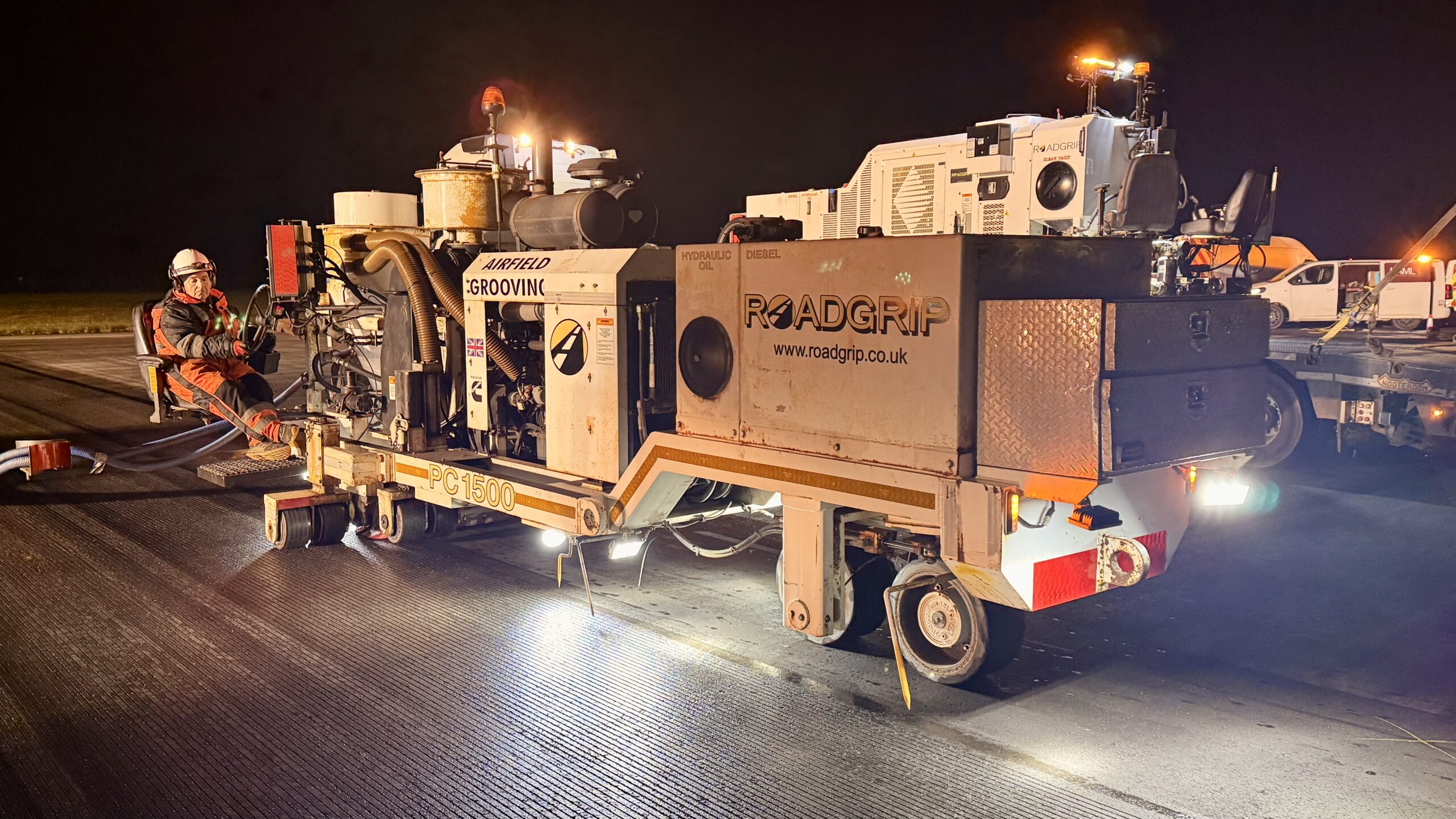
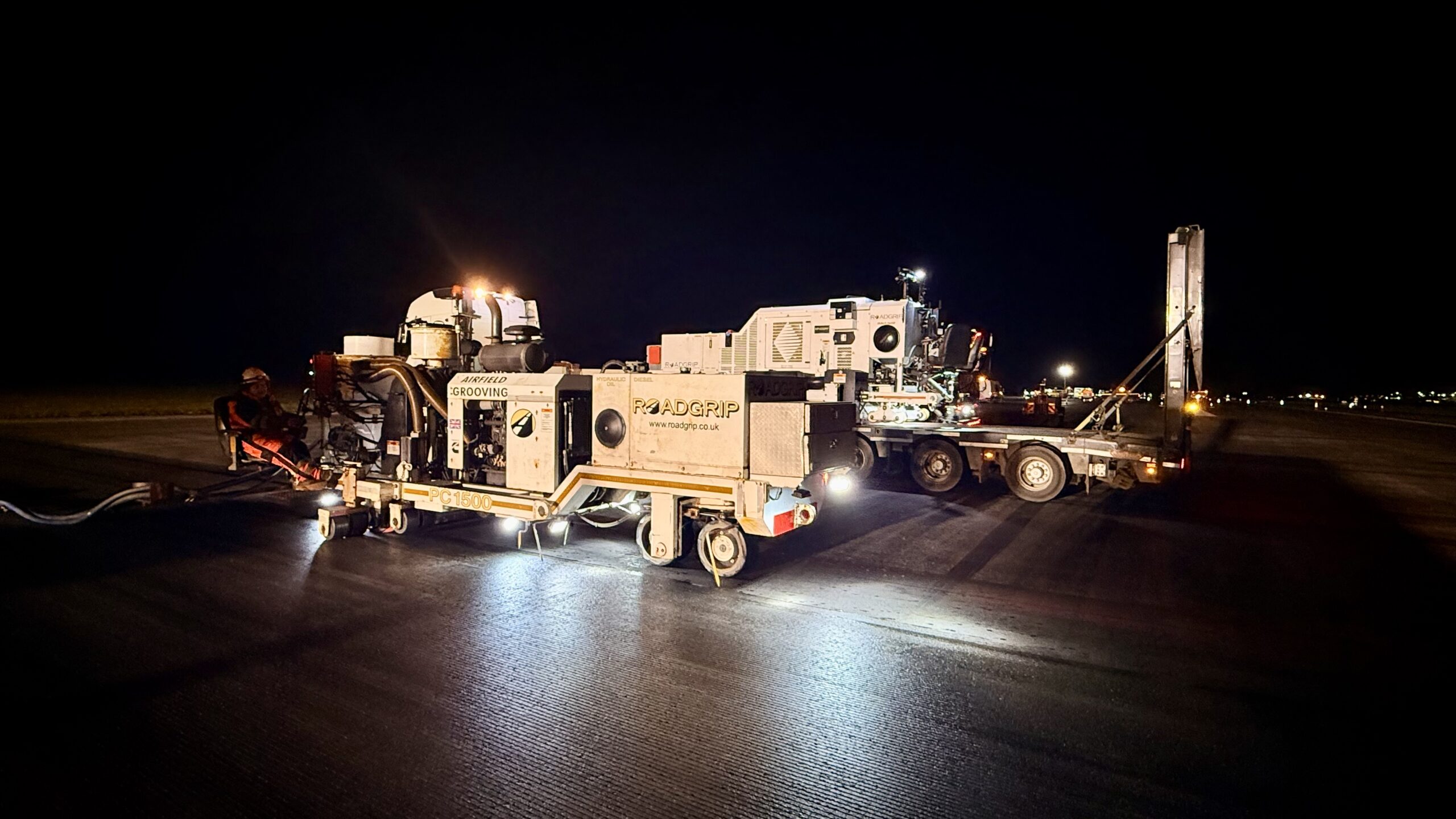
Unlike most heavy plant, grooving machines don’t have enclosed cabs. Operators sit exposed, high on the machine, so they can clearly see the guide bars and maintain alignment.
Each pass cuts a 1200mm-wide swathe across the runway. The operator must keep the machine perfectly straight, then reverse, realign and cut the next pass, ensuring the 25mm spacing between grooves remains consistent across the entire surface.
All of this is done while exposed to the elements, often in driving rain and strong winds.
It’s a combination of skill, concentration and resilience.
Despite the conditions, the grooving works were completed in line with the required programme.
With the grooving in place, the final phase of the project focused on applying over 10,000 square metres of runway markings, carefully timed between weather windows to ensure proper application and curing.
Call us about your runway grooving requirements or visit Roadgrip Airports to learn more